
Perfusion Pump for Microscope
Vibration-free pump for long term live cell imaging under flow
Incubator-friendly
Keep it inside your microscope incubator chamber
Pulsatile or linear flow? You can choose!
Programmable pump opens a myriad of physiological flow possibilities
Vibration-free
No interference on your microscope focus
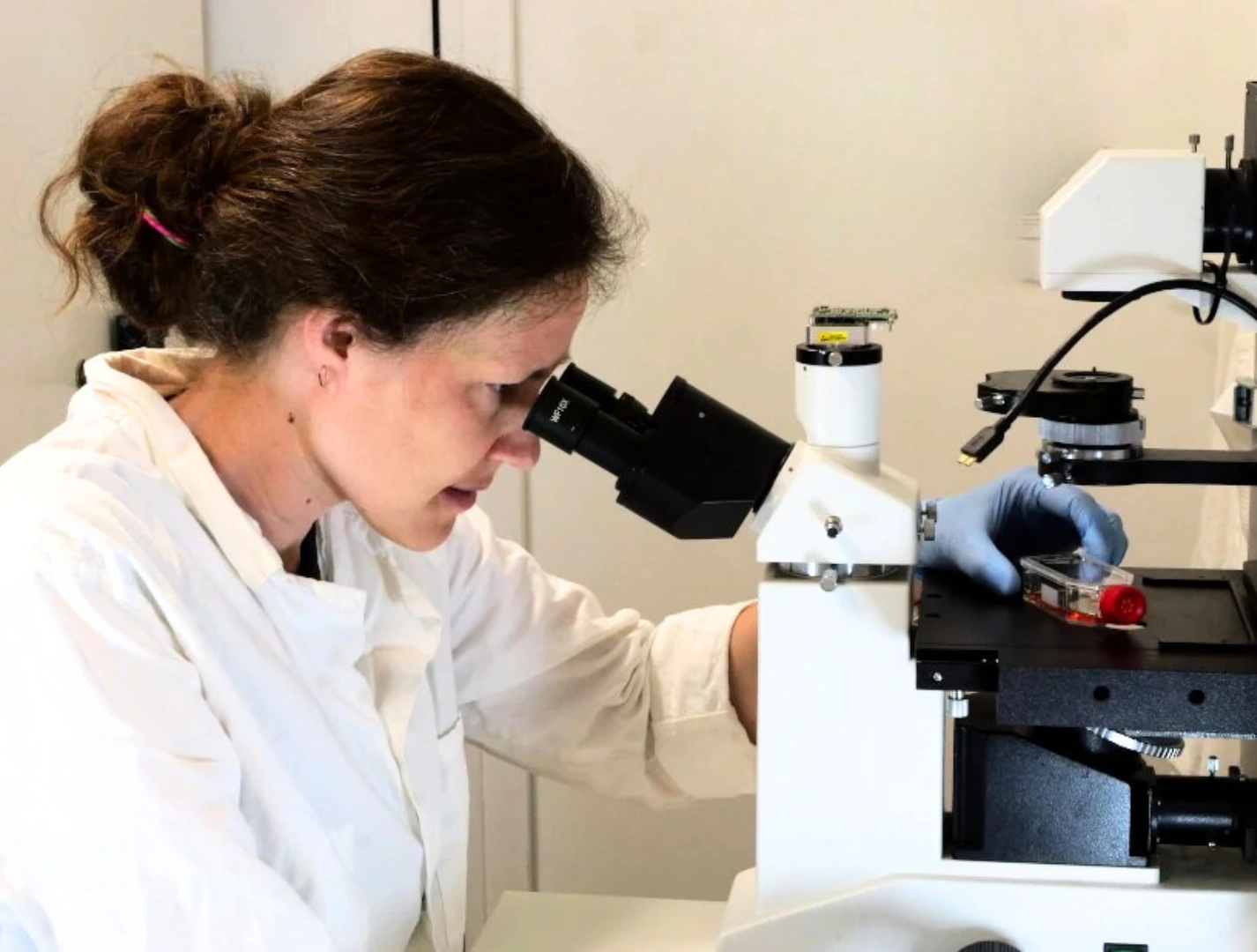
Need a microfluidic SME partner for your Horizon Europe project?
Perfusion pump for microscope
If your microscope is surrounded by an incubator chamber, that’s not a problem. The perfusion pump for the microscope is incubator-friendly, withstanding elevated temperatures and humidity without problems.
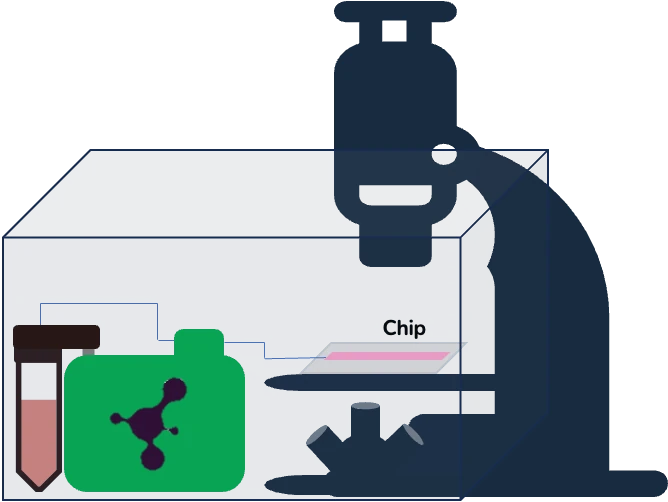
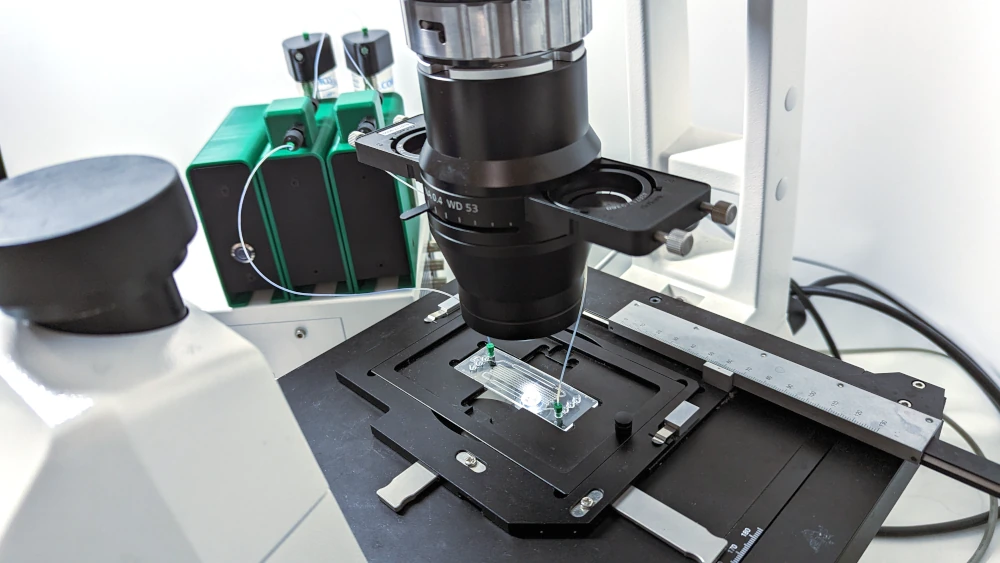
Vibration-free
The small working distance of objectives demands fine control of environmental perturbations, which can be complex with regular pumps with inherently pulsatile profiles.
Our perfusion pump for the microscope ensures that you can have stable flow without any perturbation in image gathering due to the pump vibrations, providing you with high-quality data acquisition.
Autonomous
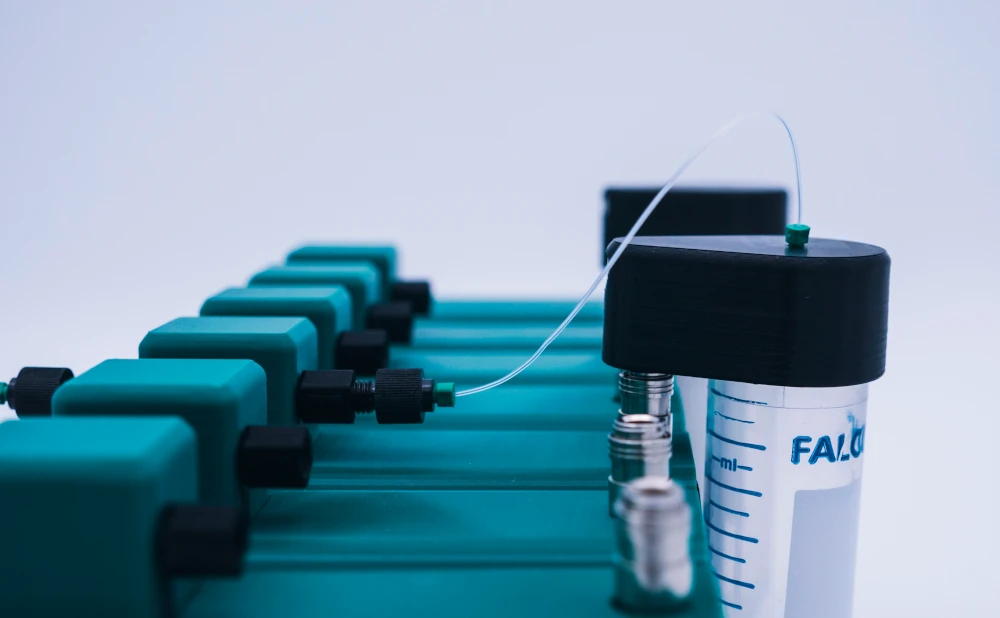
This microscope pump is self-contained; that is, it has everything that you will need to culture your cells dynamically: an integrated pump and a flow sensor combined in a way that substantially decreases the number of connectors and tubing! You need to connect it to a computer to control and collect data, and you are all set!
Applications and compatibility
The perfusion pump for the microscope is compatible with organ-on-chip applications, and it is not limited by your chip design or manufacturer.
Applications can include:
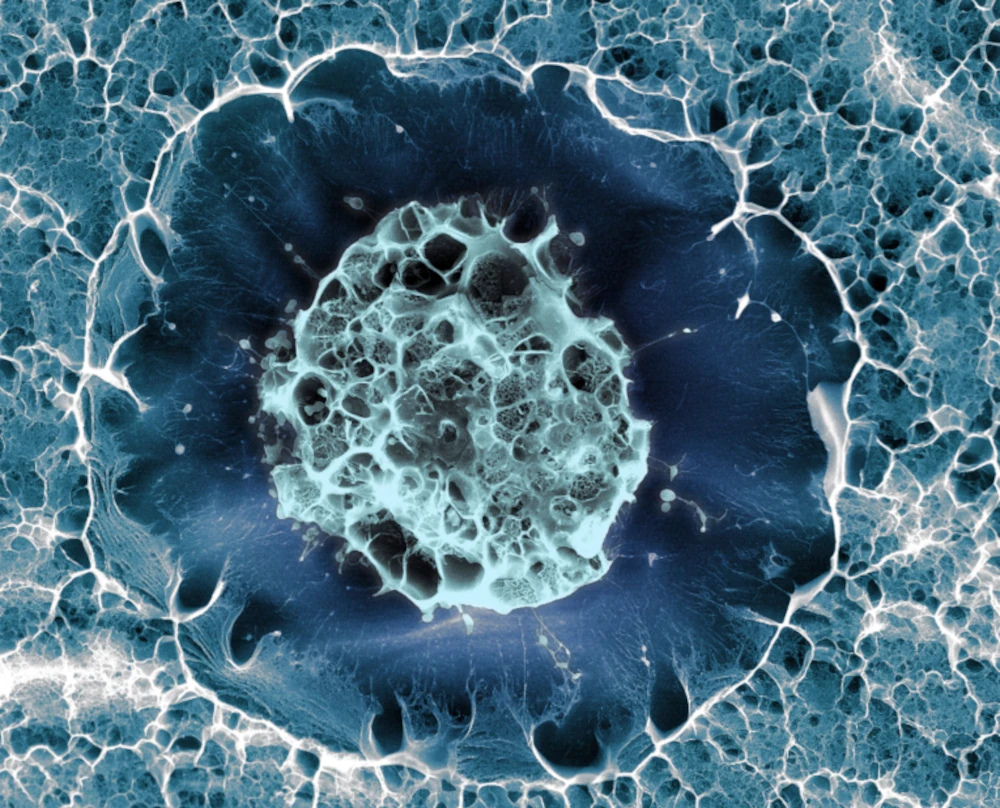
Stem cell culture
Automated and fail-safe long-term microfluidic cell culture system.
✓ Highly controlled microenvironment
✓ Fail-safe mechanism
✓ Automated sequences
Stem cell culture
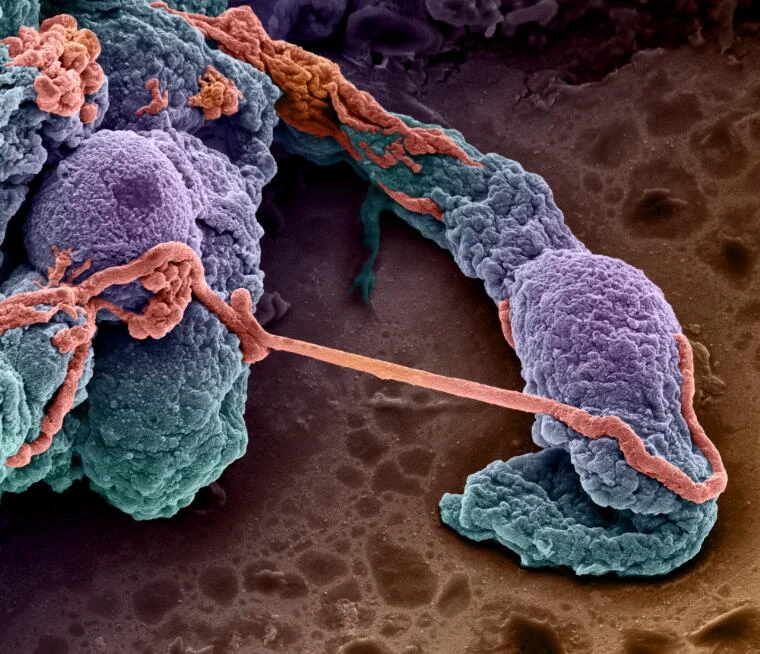
Blood-brain barrier on chip
Plug-and-play instrument pack for long term BBB on a chip study
✓ Relevant microenvironment
✓ Automatized organ-on-chip perfusion
✓ Plug-and-play microfluidic platform
Blood-brain barrier on chip
Sheer stress
Cell culture system for shear-sensitive cell lines
✓ Safe Neuron Culture Under Flow
✓ Highly Controlled Microenvironment
✓ Up to 3-week Long Cell Cultures
Sheer stress
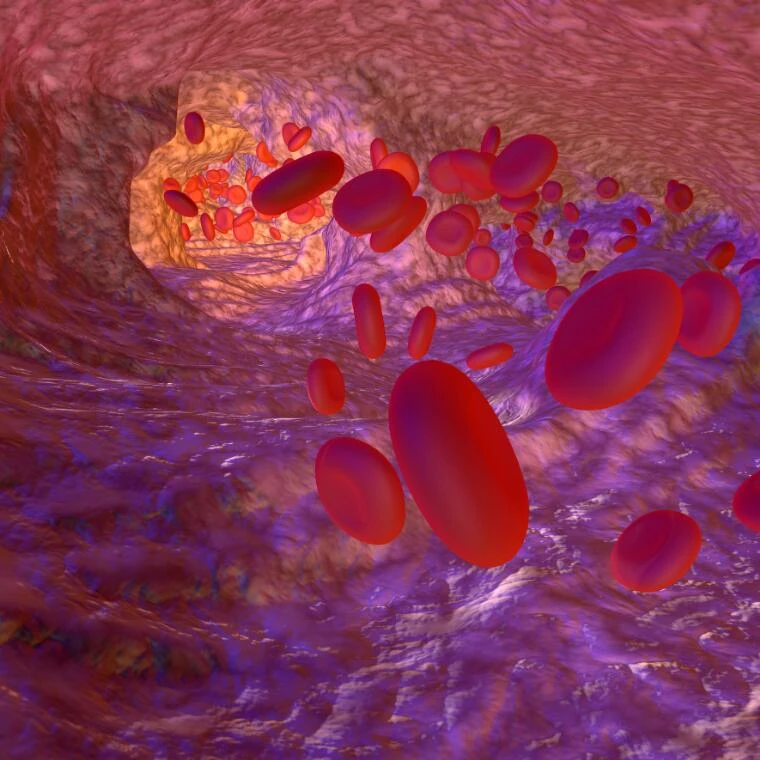
Blood-vessel-on-chip pack
Reproduce physiological flow conditions for vasculature assays
✓ Reproduce Physiological Shear Stress
✓ Unindirectional Flow
✓ Use the Device of Your Preference
Blood vessel formation & occlusion (Atherosclerosis)
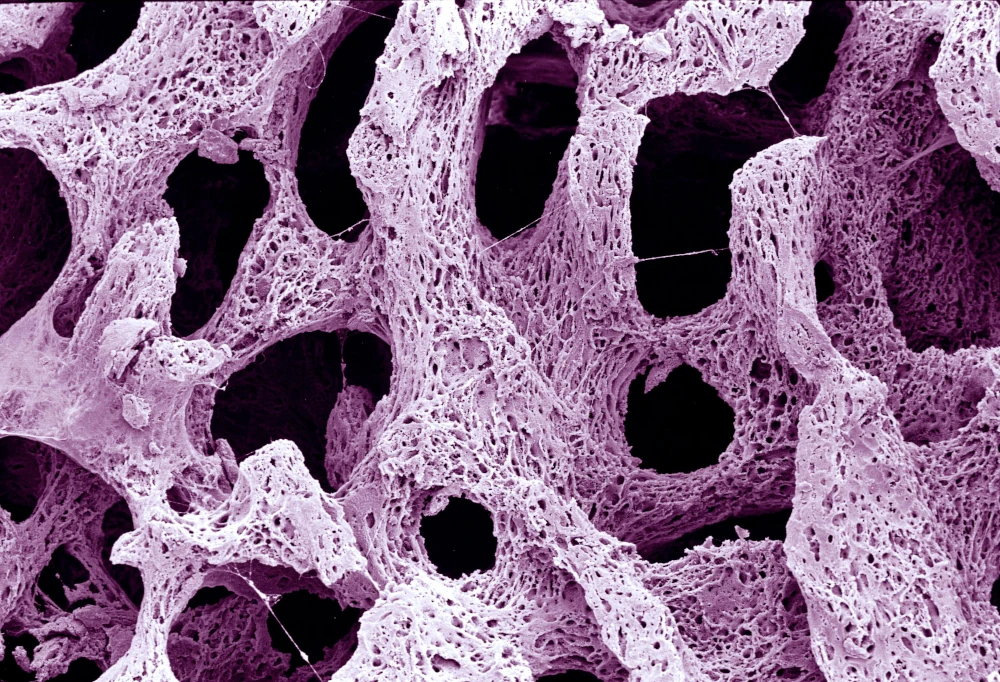
Bone-on-a-chip pack
Easily mimic the complex bone physiology and extracellular environment
✓ Control Complex Microenvironments
✓ Up to 3-week Long Cell Cultures
✓ Fail-Safe Mechanism
✓ Plug-and-Play Platform
Bone homeostasis and disease (Osteoporosis)
Immune response
Drug screening
Models of physiology and disease
And many more!
Chips
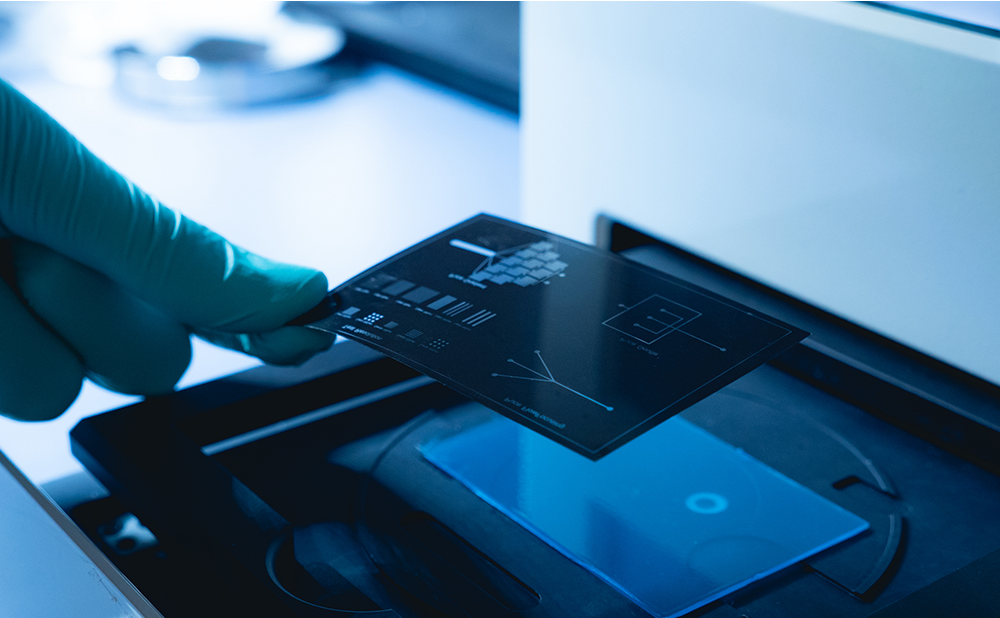
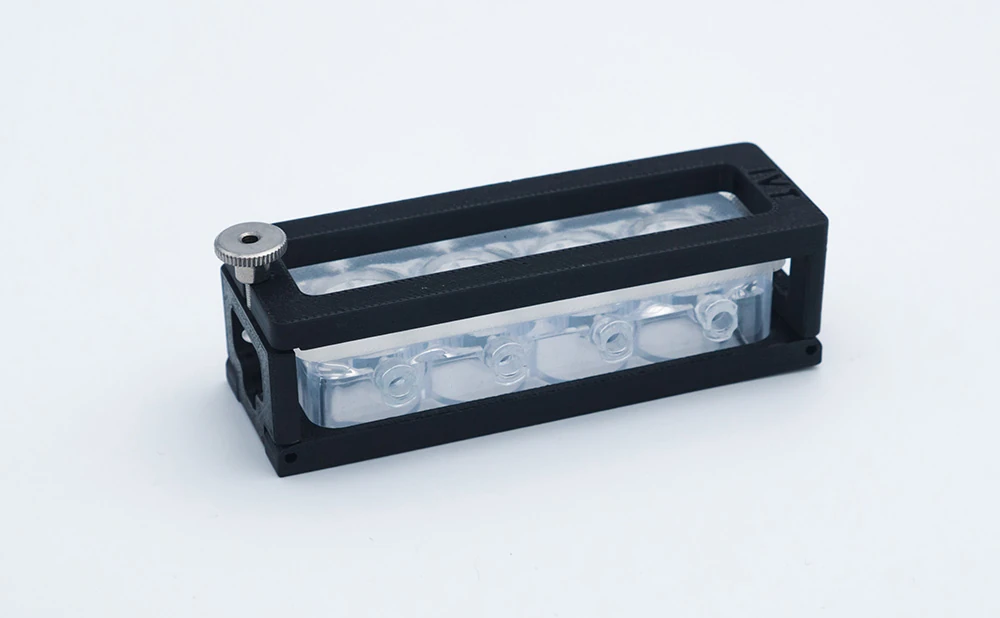
PMMA device station
From mold development to high-resolution PMMA chip fabrication
✓ Fast process
✓ Multiple applications
✓ Simple and innovative setup
PMMA
Homemade devices, PDMS
Synvivo
Ibidi
Microfluidic ChipShop
And many more!
Other equipment
Microscope incubation chambers
Stage top incubators
CO2 incubators
Reservoirs
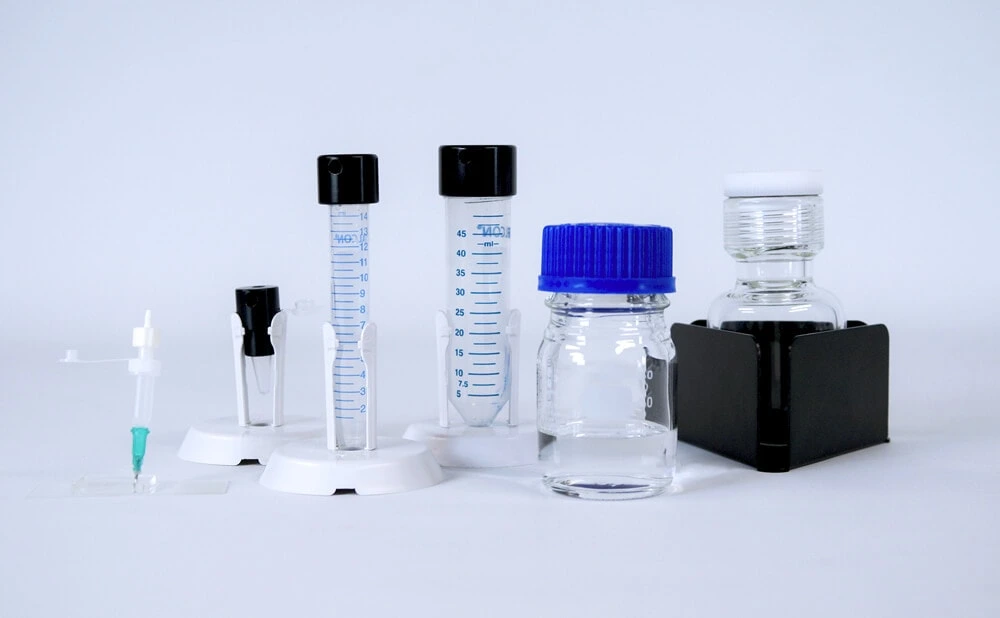
The perfusion pump can be connected to any reservoir, from Eppendorfs to large bottles, in fully closed or open systems.
Perfusion pump technical specifications
The perfusion pump’s technical specifications are below. If you have any questions, don’t hesitate to contact us at innovation[at]microfluidic.fr!
| Pressure control | |
|---|---|
| Pressure range | -400 to 600 mbar |
| Pressure stability | 0.2 mbar |
| Air flow rate | 0.1 L/min at atmospheric pressure Possibility to work with higher air flow rates by reducing the pressure range |
| Flow control | |
| Microfluidic flow sensor | Monitoring and feedback loop flow control available |
| Flow rates | From 0.1 µL/min to 5 mL/min |
The cell culture system is compatible with standard incubator conditions (37 oC, 5 % CO2, and 95 % humidity). Electronic components (except flow sensors) should be kept outside the incubator.
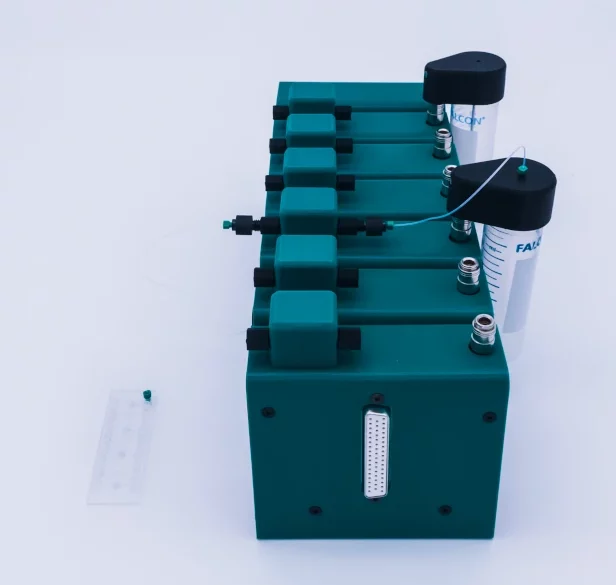
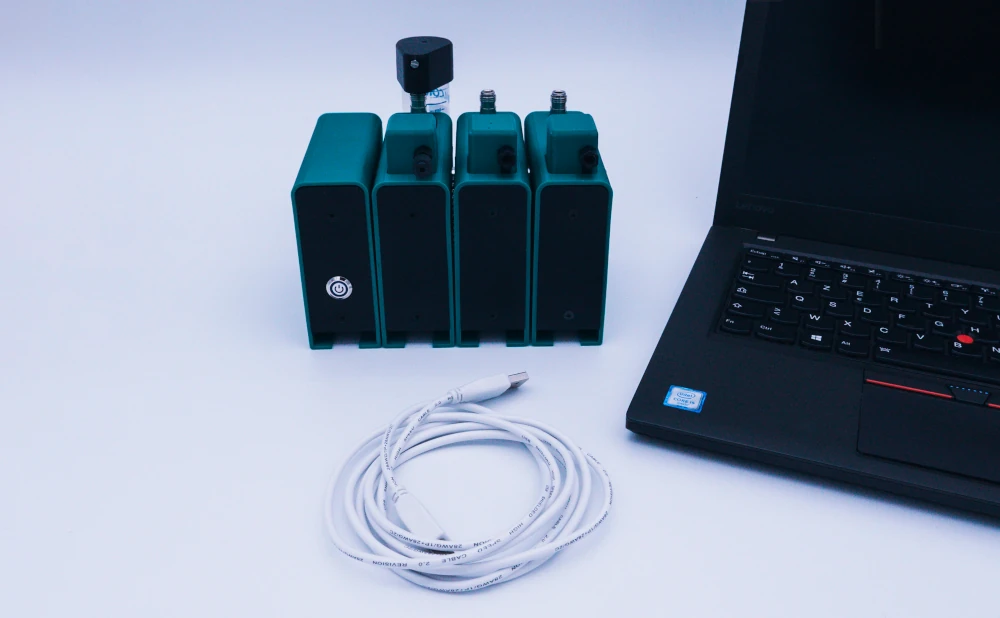
What comes inside the box?
When you order the perfusion pump for microscopy, you can expect to receive the motherboard with the desired number of units, the reservoirs, flow sensors, the software, and the cable to connect to the computer, as seen below (the laptop is only illustrative).
Customize your pack
Our instruments can be added to different setups depending on your specific needs. In this light, our microfluidic specialists will advise you on the best instruments and accessories depending on your needs and will accompany you during the system’s setup.
Frequently asked questions
Can the perfusion pump for microscopy be placed inside the CO2 incubator?
Yes, the perfusion pump for microscope can also be used inside the CO2 incubator and on the bench without problems.
Is the perfusion pump for microscopy powered by battery?
No, the perfusion pump for microscope is connected to a computer through a cable, which acts as a power supply.
Do I need a computer to operate the perfusion pump for microscopy?
Yes, the perfusion pump for microscopy requires a computer and software to work. Nonetheless, it does not require a compressed air source.


Funding and Support
The Tumor-LN-oC project helped develop this instrument. This project is funded by European Union’s H2020-NMBP-TR-IND-2020, grant agreement-no. 953234 (Tumor-LN-oC).
Products & Associated Accessories
FAQ - Perfusion Pump for Microscope
What is a microscope perfusion pump and what issue does it solve?
The compact, vibration-free Perfusion Pump for microscope is designed for long-term live cell imaging in flow conditions. It solves a fundamental problem in microscopy-based cell biology: when using high-magnification objectives with short working distances, conventional pumps cause vibrations and pulsatile flow profiles that impair image quality.
The purpose of this pump is to offer:
- Steady, uninterrupted flow that doesn’t disturb the sample or microscope mechanically,
- A form factor suitable for use within microscope chamber incubators,
- A self-sufficient, independent design that reduces the number of connectors and tubing complexity.
When conducting long-term live cell experiments where flow stability and imaging quality are crucial, it is the preferred tool.
Why is vibration-free operation so important for microscopy applications?
The working distance between the lens and the sample is extremely small for high-magnification microscope objectives. Even small mechanical vibrations that pass through the bench or tubing at this scale can result in:
- Loss of concentration while acquiring a time-lapse
- Motion artifacts in brightfield or fluorescence pictures
- Inconsistent data gathering over extended imaging sessions
These vibrations are completely eliminated by the perfusion pump for microscope, guaranteeing that pump activity does not interfere with image collection. This is especially crucial for experiments that run for hours or days because any instability will eventually compound.
Can the pump be placed inside a CO2 incubator or microscope incubation chamber?
The pump is completely compatible with incubators, it can be used in these cases:
- Working dependably in a CO₂ incubator with standard parameters of 37°C, 5% CO2, and 95% humidity,
- Located on or close to the microscope stage within a microscope incubation chamber.
- For experiments that don’t need temperature-controlled settings, on the benchtop.
It should be noted that, in accordance with standard procedure for microfluidic cell culture setups, the electronic components should be kept outside the incubator, but the pump and flow sensors can be placed inside.
Does the pump require a computer to operate?
Yes. The perfusion pump for the microscope needs a computer connection to operate, in contrast to the standalone pump in the product line. The computer performs two functions at once:
- Control interface: Pressure settings, flow sequence programming, and experimental automation are all made possible by specialized software.
- Power supply: No additional power source or battery is needed because the pump is powered directly by the cable that connects it to the computer.
The our website offers software and a user manual for download.
What is included in the box when ordering the pump?
The following is a typical order for the perfusion pump for the microscope:
- The motherboard containing the appropriate quantity of pump units
- Reservoirs for storing media or reagents
- Flow sensors for monitoring in real time
- The software for control
- The cable computer connection.
Although not included, a laptop or desktop computer is necessary. Before using the software for the first time, researchers should download the user manual from the oor website.
What scientific applications is the pump suited for?
Regardless of chip design or manufacturer, the pump is compatible with a wide range of organ-on-chip and dynamic cell culture applications. Important use cases consist of:
- Stem cell culture: Extended perfusion in a highly regulated microenvironment with automated sequences.
- Sustained perfusion for modeling the blood-brain barrier under physiologically relevant flow on a chip
- Shear stress studies: carefully regulated flow conditions for the safe culture of shear-sensitive cell lines, such as neurons,
- Blood vessel on chip: simulating physiological shear stress for vascular tests, such as models of atherosclerosis.
- Bone-on-chip: Using prolonged culture times of up to three weeks, it mimics complex bone physiology.
Immune response research, drug screening, and disease and physiology models
What chips and equipment is the pump compatible with?
The pump is made to work with a wide range of chips and lab configurations:
- Chips: Synvivo, Ibidi, Microfluidic ChipShop, PMMA devices, homemade PDMS devices, and numerous others.
- Incubation equipment: Stage-top incubators, CO₂ incubators, and microscope incubation chambers are examples of incubation equipment.
- Reservoirs: Any kind of reservoir in both open and completely closed systems, ranging from large bottles to Eppendorf tubes.
Because of its adaptability, the pump can be incorporated into an already-existing workflow without necessitating modifications to the infrastructure for chip sourcing or incubation.
Can the pump be customized or combined with other instruments?
Yes. The pump can be paired with complementary instruments from the range and incorporated into larger experimental setups, such as the following:
- Stage-top incubators for gas and temperature regulation
- Flow splitters to divide flow among several channels
- Systems for automated sampling for analysis downstream
- Perfusion workflow-optimized cell culture tubes.