Patented technology
Air Bubble-Free Microscope Slide
Micropatterned microscope slides for confocal microscopy
No more air bubbles under a microscope slide
Micropatterns automatically remove air bubbles
No need for valap or paraffin
Seal your sample without exposing your cells to external substances
Quick and easy setup
Simply place your sample in the center of the slide and cover with the coverslip
Need a microfluidic SME partner for your Horizon Europe project?
How our solution for air bubbles under a microscope slide works
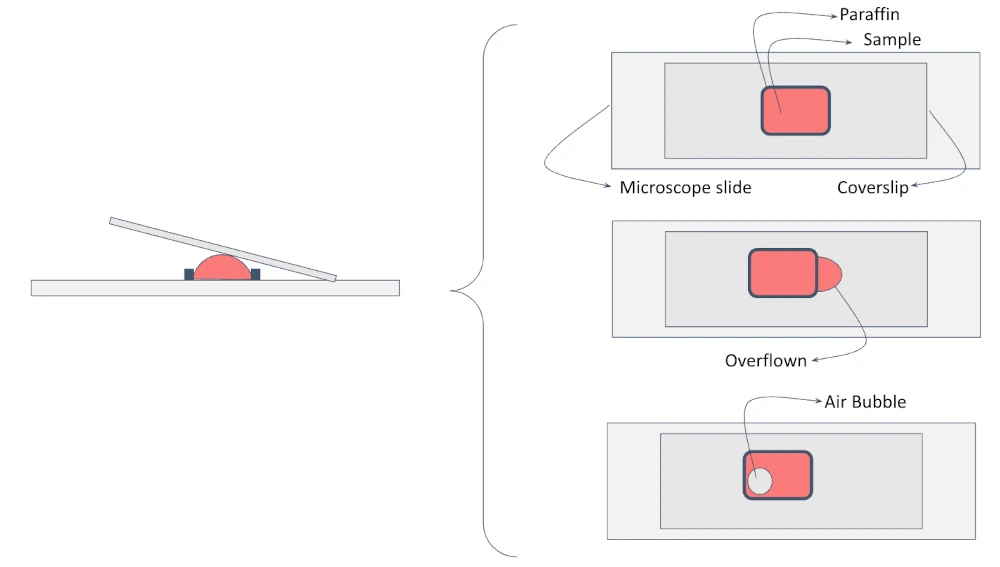
A single air bubble unintentionally created when placing a coverslip with your fixed cells on top of the microscope slide can ruin days of work.
Air bubbles can damage the cells, prevent the acquisition of quantifiable data and lower the overall image quality in confocal microscopy.
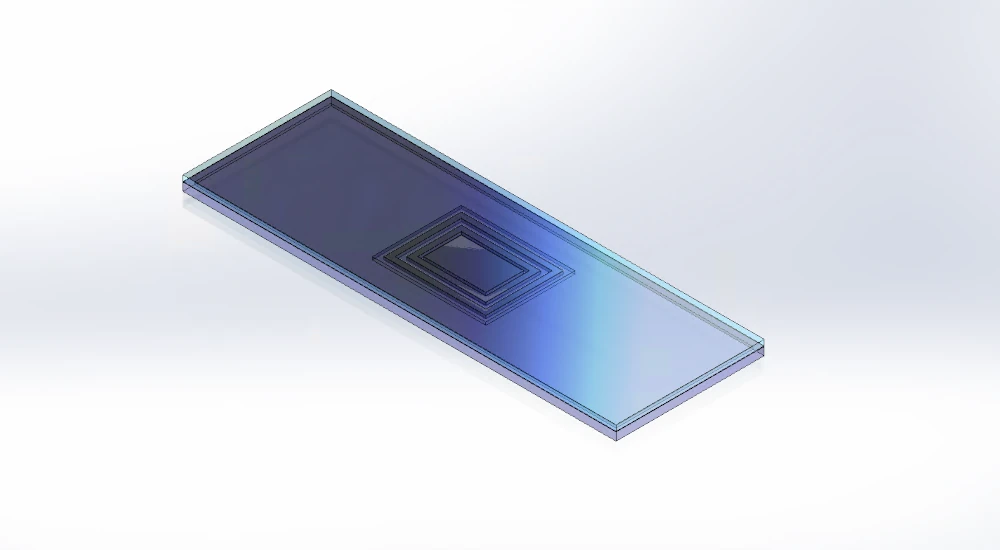
With these limitations in mind, we specifically designed a micropatterned sample holder to avoid air bubbles under microscope slides. It consists of a glass slide with engraved micropatterns or grooves around the sample visualization area. These micropatterns, which act as capillary barriers, are continuous and help contain the liquid within the area of interest without the formation of air bubbles.
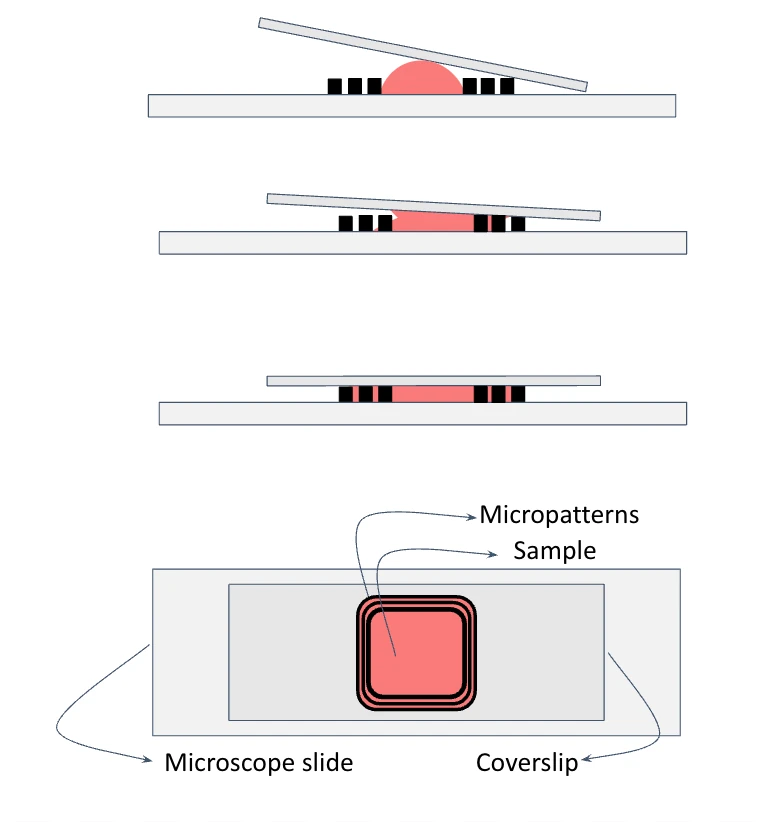
Also, capillary forces secure the coverslip on top of the micropatterns, forgoing the need to add wax or paraffin to seal the slide and prevent evaporation.
The surface of the glass slide and the grooves can be modified to better host different sample types.
References
Image reference: Ed Uthman from Houston, TX, USA, CC BY-SA 2.0, via Wikimedia Commons
Other applications for air bubble-free microscope slides
Some other biological applications also include:
Immunohistology
Clinical diagnostic
Immunofluorescence
Immunohistochemistry
And many more!
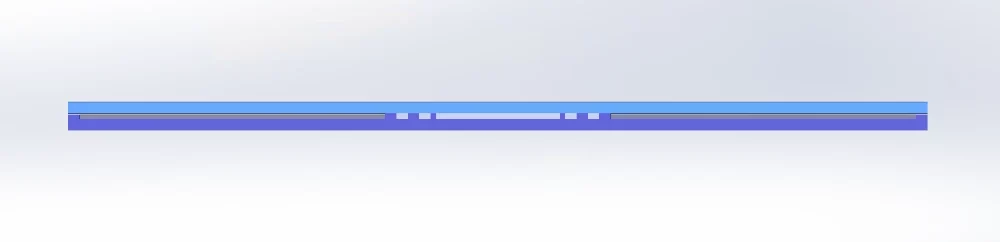
Air bubble-free microscope slides
| Technical Specifications | |
|---|---|
| Wetted materials | Glass or thermoplastics (PVD, CVD, PECVD) |
| Dimensions | Micropatterns:
|
| Working volumes | TBD |
Frequently asked questions
Can the working volume of the microscope slides be altered?
Yes, our solution can work with custom volumes. Contact our team for more information.
Do they work with any type of coverslip?
Yes, currently our slides to prevent air bubbles are made on demand, so we can adjust the features to any coverslip dimensions.
Can the shape of the micropatterns and observation chamber be altered?
Yes, contact our team for more information on custom designs.
Download the MIC Horizon Europe 2026/2027 Calls Calendar:
Products & Associated Accessories
FAQ - Air Bubble-Free Microscope Slide
What is the Air Bubble-Free Microscope Slide, and how does it work?
Air Bubble-Free Microscope Slide is a patented micropatterned glass slides used to remove air bubbles when preparing confocal microscopy samples. There are microgrooves carved around the sample visualization center of the slide, that act as a capillary resistance that directs the liquid out of the imaging area and avoid formation of air bubbles upon the addition of the coverslip. The outcome is a constant, clean, and bubble-free optical field without any manual operation or application of any sealing compound.
What is so bad about air bubbles beneath a microscope slide?
One air bubble under a coverslip is enough to invalidate an experiment. In particular, the air bubbles can:
- Destroys sample integrity, permanently inactivates fixed cells, or displaces them.
- Block light beams and decrease image resolution in confocal microscopy,
- Avoid getting measurable, repeatable data,
- As a result, make sample preparation hours or days unusable.
What is the mechanism of how the micropatterns suppress the formation of air bubbles?
The micropatterns engraved serve as capillary barriers in the sample region. These grooves remove any trapped air when both the liquid and the coverslip are put on the slide, and lowering the coverslip takes place. The capillary geometry causes the air to flow out instead of being trapped under the coverslip. The mechanism is an automatic and structure-driven system, that does not require a manual adjustment, the application of pressure, or post-placement adjustment.
Does this slide do away with Valap, paraffin, or any other sealing compounds?
Yes. The main benefits of the micropatterned design are that the capillary forces created by grooves are enough to hold the coverslip in place. This means:
- No valap or paraffin or wax, are required
- No external substances that may interfere with staining or biological activity are subject to cells
- The passive control of evaporation is by the capillary seal.
- There is quicker and cleaner sample preparation.
This is especially useful in sensitive immunofluorescence and immunohistochemistry preparations where chemical contamination is to be reduced to a minimum.
Which biological applications can be used with this slide?
It is intended to accommodate a wide variety of biological imaging processes, such as:
- Immunohistology
- Immunohistochemistry
- Immunofluorescence
- Clinical diagnostic
What are the technical specifications of the slide?
The present slide layout has the following parameters:
- Wetted materials: Glass or thermal plastics (made through the PVD, CVD, or PECVD processes of depositing)
- Micropattern depth: 100 µm
- Micropattern width: 100 µm
- Separation between micropatterns: 100.0 mm.
The working volumes are calculated by per-project basis and are customizable. Our team would be happy to get in touch with researchers who have non-standard sample volumes/chamber requirements.
Is the slide customizable to other sizes or work volumes of the coverslip?
Yes, on both counts. Due to the on-demand production of the slides, our engineers can prepare any type of experimental setup:
- The working volume may be set to the unique sample of the researcher.
- Coverslip compatibility: No standard form is required for coverslip compatibility, slide sizes can be customized to suit any size of coverslip.
- The micropattern geometry and shape of the observation chamber may also be adjusted on demand.
- Custom design should be discussed by the team with researchers who have particular needs.
To what extent does this slide outperform traditional methods of dealing with air bubbles?
Conventional procedures that can be used in air bubble management are the application of Valap or paraffin around the edges of the coverslip when it is in place or the use of nail varnish as a temporary adhesive. The following are the similar disadvantages of these approaches:
- They are no more preventive of the formation of bubbles than they are remedial.
- Sealing agents may seep into the specimen and interfere with cell viability or staining.
- They take more time to handle and provide a manual process, which can vary.
- The overflowing of excess liquid can cause the slide edges to be overrun before they have been totally sealed.