
Mini Pump for Cell Culture
Easy cell culture media recirculation inside the incubator
Incubator-friendly
Place everything neatly inside the incubator
Autonomous
Control everything with the built-in screen
Easily used with large volume reservoirs
Use the reservoir of your choice
Need a microfluidic SME partner for your Horizon Europe project?
Mini pump for cell culture
The mini pump was designed to facilitate the recirculation of media for long-term cell culture inside the CO2 incubator.
Its simple design, with only one inlet, one outlet, and a screen that controls everything through a handle, takes care of all the fluidics and allows you to focus on biology. It is also easily adapted to different reservoir volumes, from Eppendorfs to 1 L bottles.
The mini pump can be used in two main configurations.
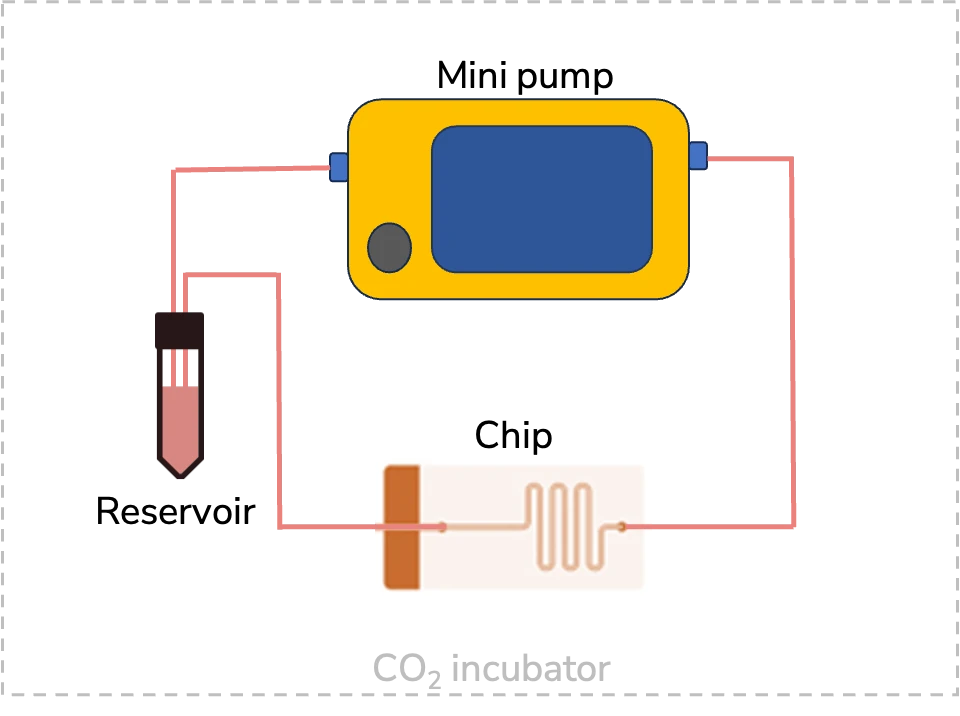
First, as a closed-loop using only one reservoir as inlet and outlet of media.
The second configuration comprises two reservoirs and can be used as a reservoir-to-waste system, meaning there is no media recirculation. One reservoir provides fresh media, and the second collects used media. The cells only receive fresh input.
It is also possible to turn this configuration into a recirculation setup by adding level sensors that automatically switch between reservoirs.
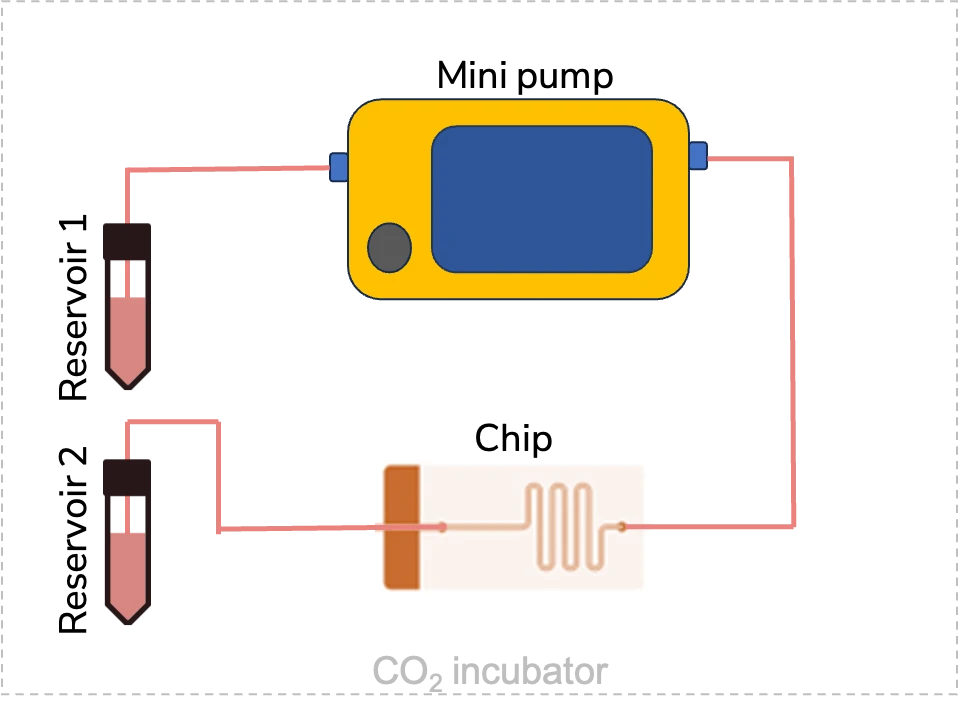
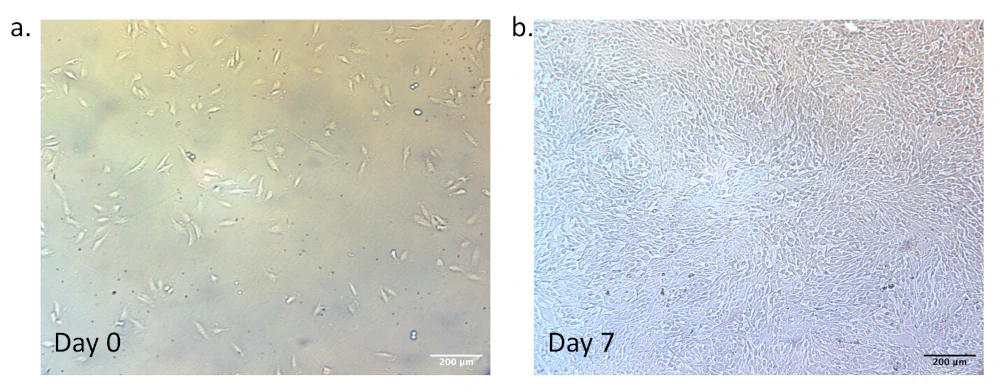
U251-MG (glioblastoma cells) cultured for 7 days inside the CO₂ incubator with the mini pump at 3 µl/min. The cells were cultured inside a microfluidic straight-channel chip, connected to a reservoir with fresh medium on the inlet and a waste container on the outlet, as illustrated in the schematics above.
Applications and compatibility
The mini pump is compatible with organ-on-a-chip applications and is not limited by your chip design or manufacturer.
Applications can include:
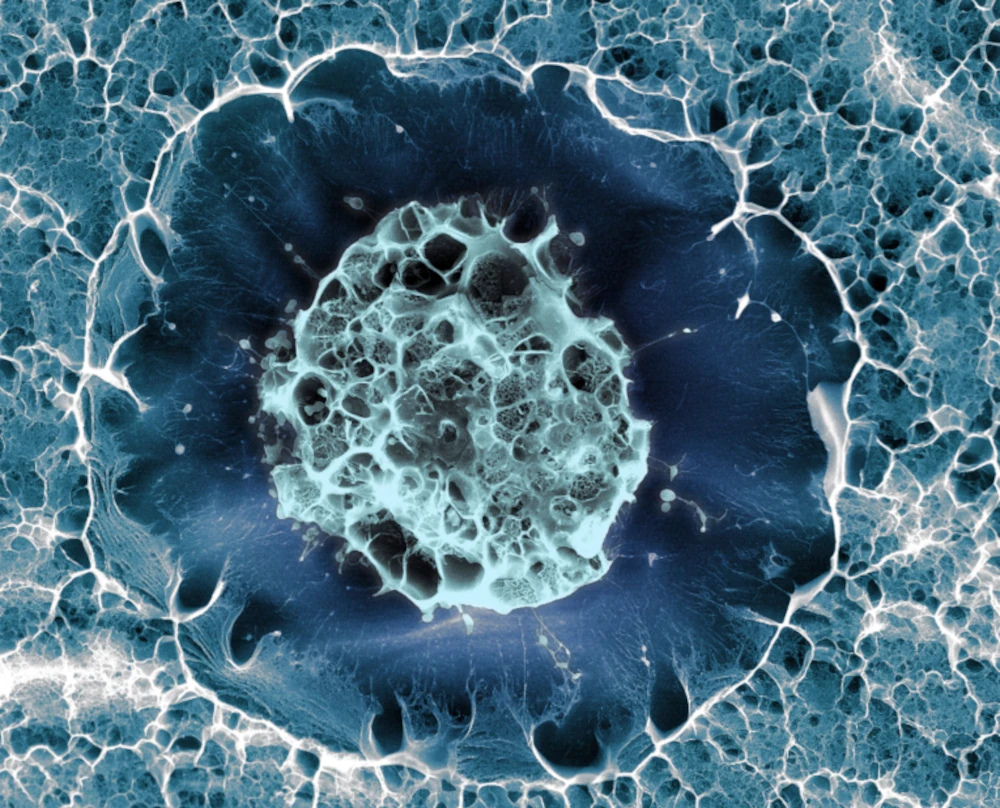
Stem cell culture
Automated and fail-safe long-term microfluidic cell culture system.
✓ Highly controlled microenvironment
✓ Fail-safe mechanism
✓ Automated sequences
Stem cell culture
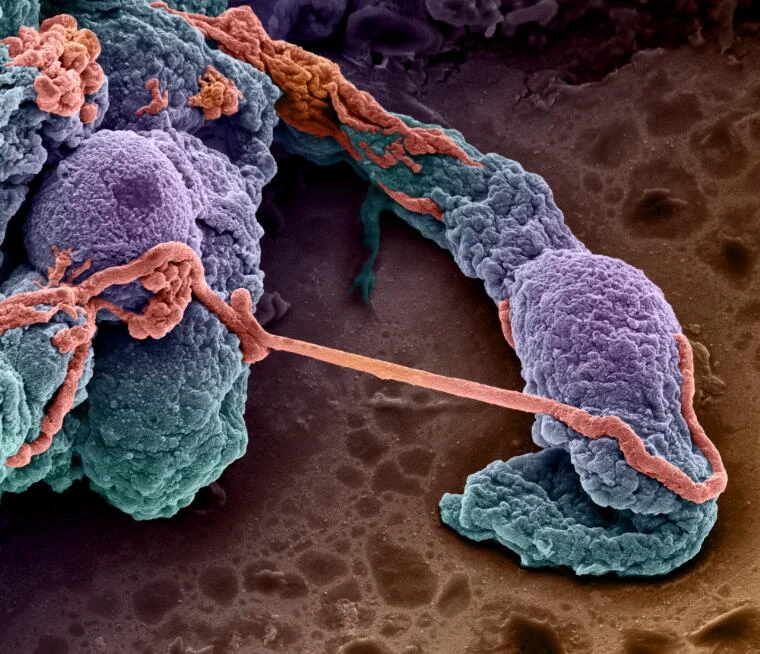
Blood-brain barrier on chip
Plug-and-play instrument pack for long term BBB on a chip study
✓ Relevant microenvironment
✓ Automatized organ-on-chip perfusion
✓ Plug-and-play microfluidic platform
Blood-brain barrier on chip
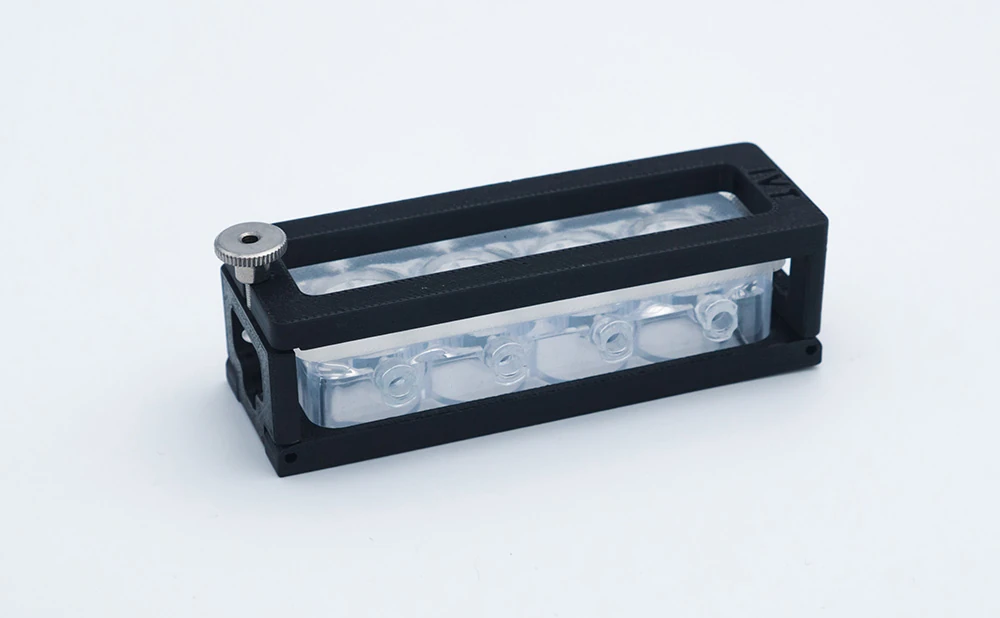
Sheer stress
Cell culture system for shear-sensitive cell lines
✓ Safe Neuron Culture Under Flow
✓ Highly Controlled Microenvironment
✓ Up to 3-week Long Cell Cultures
Sheer stress
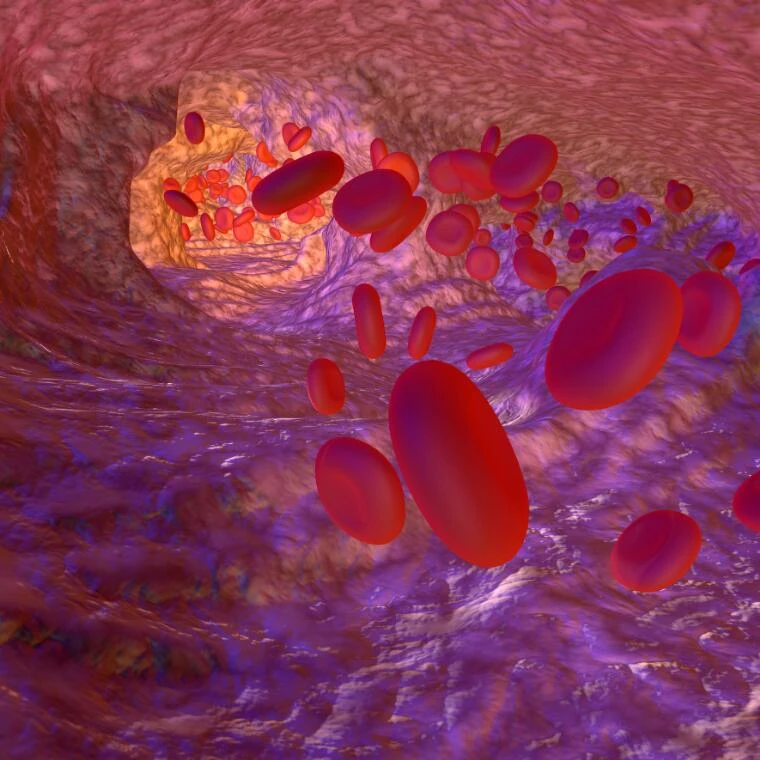
Blood-vessel-on-chip pack
Reproduce physiological flow conditions for vasculature assays
✓ Reproduce Physiological Shear Stress
✓ Unindirectional Flow
✓ Use the Device of Your Preference
Blood vessel formation & occlusion (Atherosclerosis)
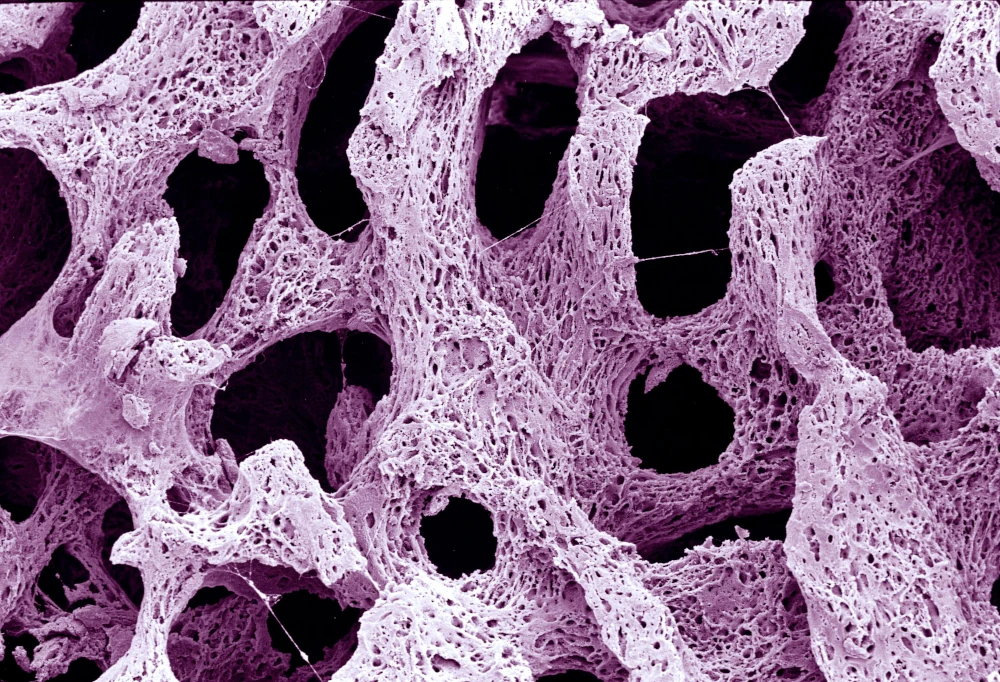
Bone-on-a-chip pack
Easily mimic the complex bone physiology and extracellular environment
✓ Control Complex Microenvironments
✓ Up to 3-week Long Cell Cultures
✓ Fail-Safe Mechanism
✓ Plug-and-Play Platform
Bone homeostasis and disease (Osteoporosis)
Immune response
Drug screening
Models of physiology and disease
And many more!
Chips
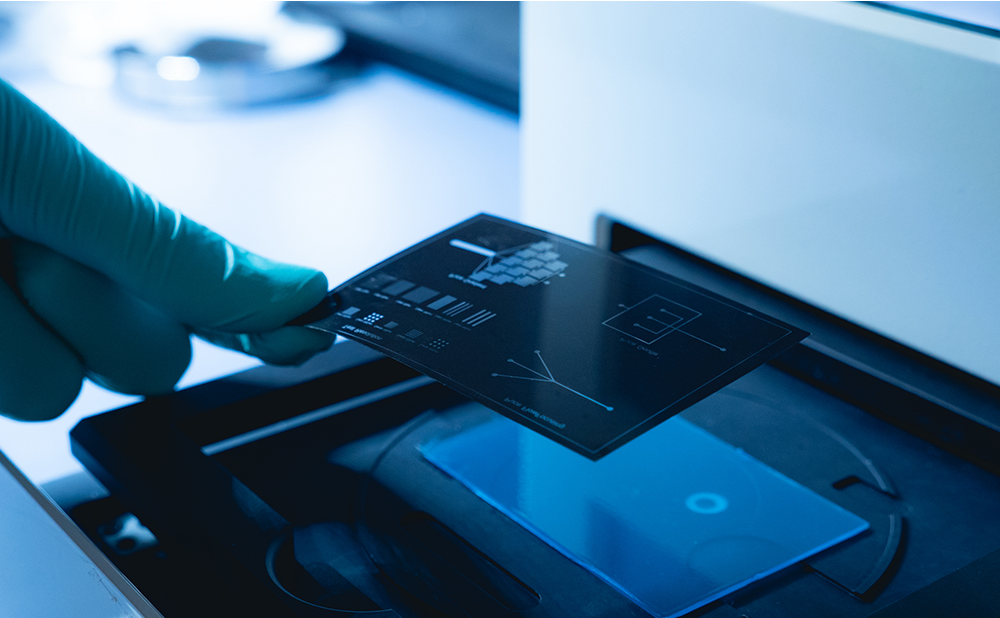
PMMA Device Station
From mold development to high-resolution PMMA chip fabrication
✓ Fast process
✓ Multiple applications
✓ Simple and innovative setup
PMMA
Homemade devices, PDMS
Synvivo
Ibidi
Microfluidic ChipShop
And many more!
Reservoirs
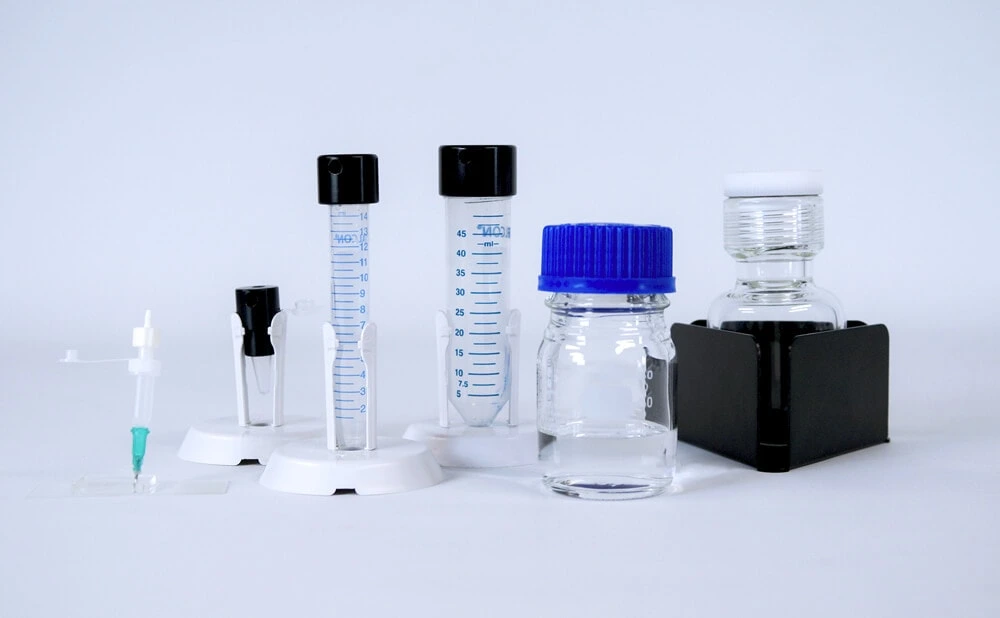
The mini pump can be connected to any reservoir, from Eppendorf to large bottles, in fully closed or open systems.
Mini pump technical specifications
The technical specifications of the mini pump can be found below. Don’t hesitate to contact us using the green button above.
| Components | Technical Specifications |
|---|---|
| Flow Rates | down to 1 µl/min |
| Wetted material | Polyphenylsulfone (PPSU) or stainless steel |
| Operating Temperature | 5-50 °C |
| Maximum pressure | up to 500 mbar |
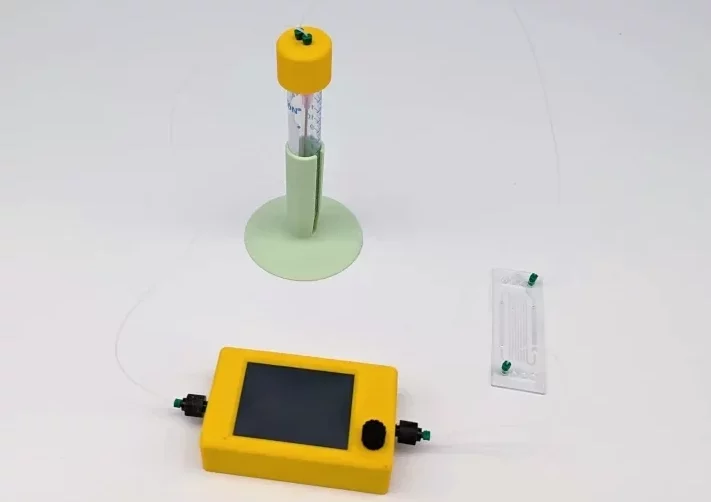
Customize your pack
Our instruments can be added to different setups depending on your specific needs. In this light, our microfluidic specialists will advise you on the best instruments and accessories depending on your needs and will accompany you during the system’s setup.
Frequently asked questions
Can the mini pump be placed inside the CO2 incubator?
Yes, the mini pump was designed to be used inside the CO2 incubator. It can also be used on the bench without problems or near a microscope.
Is the mini pump powered by battery?
No, the mini pump is connected to a power outlet through a cable.
Do I need a computer to operate the mini pump?
No, the mini pump is autonomous. You can control all its functions through the built-in screen.
Download the MIC Horizon Europe 2026/2027 Calls Calendar:


Products & Associated Accessories
FAQ - Mini Pump for Cell Culture
What is the Mini Pump and what problem does it solve?
The Mini Pump is a fluidic device that is small in size, created specifically to address issues that arise during long-term cell cultures that require recirculation of medium. Anyone who has tried to manually change medium within a CO₂ incubator knows that the interruption of cell activity is quite obvious. This device solves such issues, providing a constant fluidic environment that doesn’t require much interference from the researcher’s side. Its design is quite simple, with only one inlet, one outlet, and a screen that is operated manually using a handle. Its purpose is to take care of all fluidics, leaving the researcher free to focus on the biology side of things.
What is one way the mini pump could help cells grow healthily?
The mini pump is essential to provide a healthy environment to cells by ensuring that nutrients are always supplied while, at the same time, waste materials are properly removed. If not, cells would run out of nutrients or develop harmful byproducts. The mini pump creates a dynamic environment similar to what cells experience naturally, such as blood flow, by providing fluid flow.
Where is a mini pump typically used?
Many scientific and medical applications often require the use of mini pumps, which are essential in microfluidic applications where precise control of fluids is required at the nanoscale. Mini pumps are also used in drug analysis, tissue engineering, cell biology studies, and organ-on-a-chip technologies that mimic the functions of human organs. They are also used in academic and pharmaceutical industries for conducting studies that need to be extremely precise and consistent in nature.
What flow rates is the Mini Pump able to deliver?
The pump is appropriate for microfluidic applications where extremely low and precise perfusion is required. This is because the pump is able to deliver a flow rate as low as 1 µl/min. A maximum operating pressure of up to 500 mbar is also possible. This is consistent with the kind of low and physiological flows that are typically required for cell culture studies, especially those that need to be precise and consistent in nature.
What types and sizes of reservoirs are compatible with the pump?
The versatility of this device with the reservoir is one of its benefits. It is compatible with all types and sizes of reservoirs. For instance, it could be connected to an Eppendorf tube as well as a 1-liter container. This gives you a wide variety of choices based on the size of your experiment since you are not limited to a consumable item or a specific type of container.
What are the possible settings for the pump and how does it control the media flow?
The pump has two major settings. In the first setting, the medium constantly recirculates. This is because the medium recirculates in a closed-loop system with a single reservoir acting as the input and output. In the second setting, the cells are constantly supplied with fresh medium. This is because the system has two separate reservoirs for the medium. One reservoir is for the fresh medium, and the other is for the used medium. Depending on the requirements of your experiment, level sensors that switch the reservoirs could be included in this setting.
What biological applications is the Mini Pump designed for?
The pump is designed for a number of applications in microfluidic cell culture. This means that it is not specific to any particular chip or brand. It is also designed for use with organ-on-chip technology. Some examples of applications include stem cell culture, blood-brain barrier studies using an organ-on-chip system, measurement of shear stress in neuronal or vascular cells, studies of blood vessel formation and occlusion, bone-on-chip for the study of osteoporosis, and studies of the immune response. These applications have in common the need for regulated and continuous flow over several days or weeks. This is exactly what the Mini Pump is designed for.
What microfluidic chips does it work with?
The pump is designed to work with homemade chips as well as those that are commercially available. This means that it is designed to work with PMMA chips, Homemade devices, PDMS chips, Synvivo, Ibidi, and Microfluidic ChipShop chips. This is because the pump is designed to connect to any microfluidic chip using standard tubing. This means that it is not specific to any particular chip or brand.