
Precision Sampling for Cell Culture
Automatically sample molecules released by your cells under flow through time.
Monitor extracellular signaling in time
Automatically collect samples in a defined period
Sample up to 12 data points under flow
Precisely collect multiple data points during dynamic cell culture
Sample minute volumes
Collect samples down to 150 microliters
Need a microfluidic SME partner for your Horizon Europe project?
Precision sampling pack
Automated precision sampling for improved results
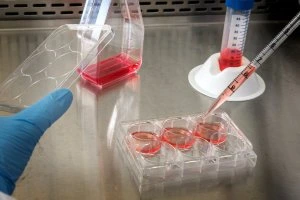
Manual sampling is time-consuming and prone to heterogeneity due to inherent human variability during the sampling process. This heterogeneity can negatively affect the reproducibility of the results, jeopardizing the research’s perceived value [1].
Also, human interaction during sampling usually requires the experiment to be halted and can inadvertently introduce contamination [2].
A precision sampler designed for cell perfusion
The advantages of dynamic cell culture regarding improved physiological relevance are becoming ever more established [3].
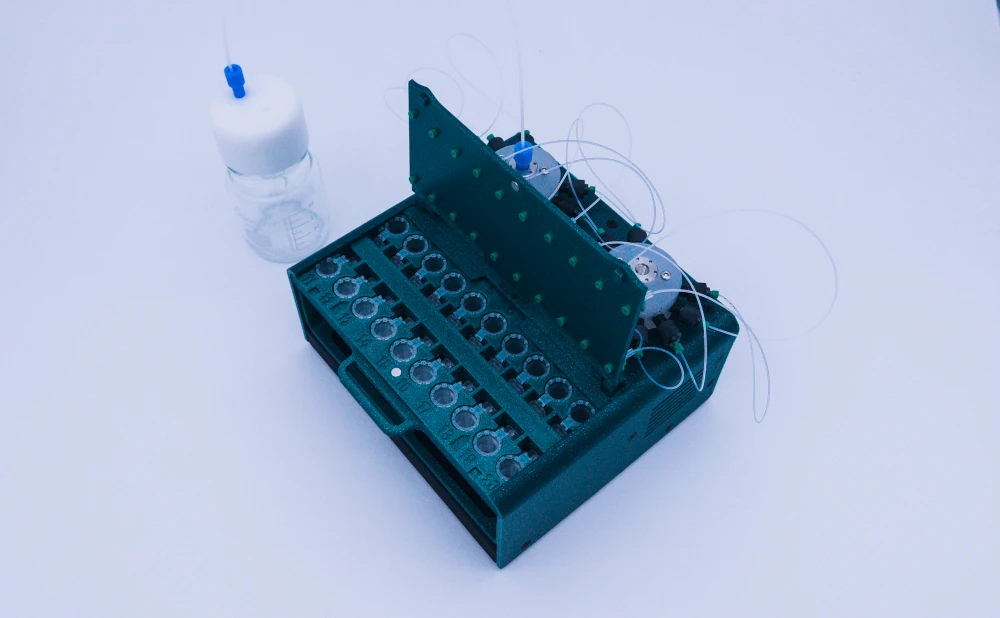
To profit from the advantages of dynamic cell culture, precision sampling must be adapted to the continuous media flow without disrupting cell culture. The precision sampling Pack was designed to precisely do that.
Collect samples adapted to your application
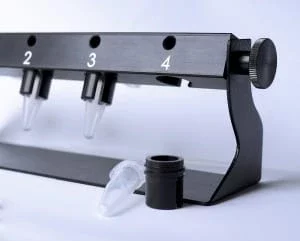
Precision sampling must match the analysis to be performed afterward. Some assays, such as Elisa and mass spectroscopy, require minute volumes as low as 100 µl.
A precision sampling system must enable sample volumes that align with these requirements.
The precision sampling Pack allows the collection of volumes down to 100 µl and at defined periods with an easy and user-friendly automation setup.
References
1. Csete, Marie. “Q&A: What can microfluidics do for stem-cell research?.” Journal of Biology 9.1 (2010): 1.
2. Daniszewski, Maciej, et al. “Automated cell culture systems and their applications to human pluripotent stem cell studies.” SLAS TECHNOLOGY: Translating Life Sciences Innovation 23.4 (2018): 315-325.
3. Mehling, Matthias, and Savaş Tay. “Microfluidic cell culture.” Current opinion in Biotechnology 25 (2014): 95-102.
Precision sampling setup
The precision sampling pack comprises state-of-the-art instruments for precise fluid control and sample collection automation. The pack can be used with the chip design of your preference.
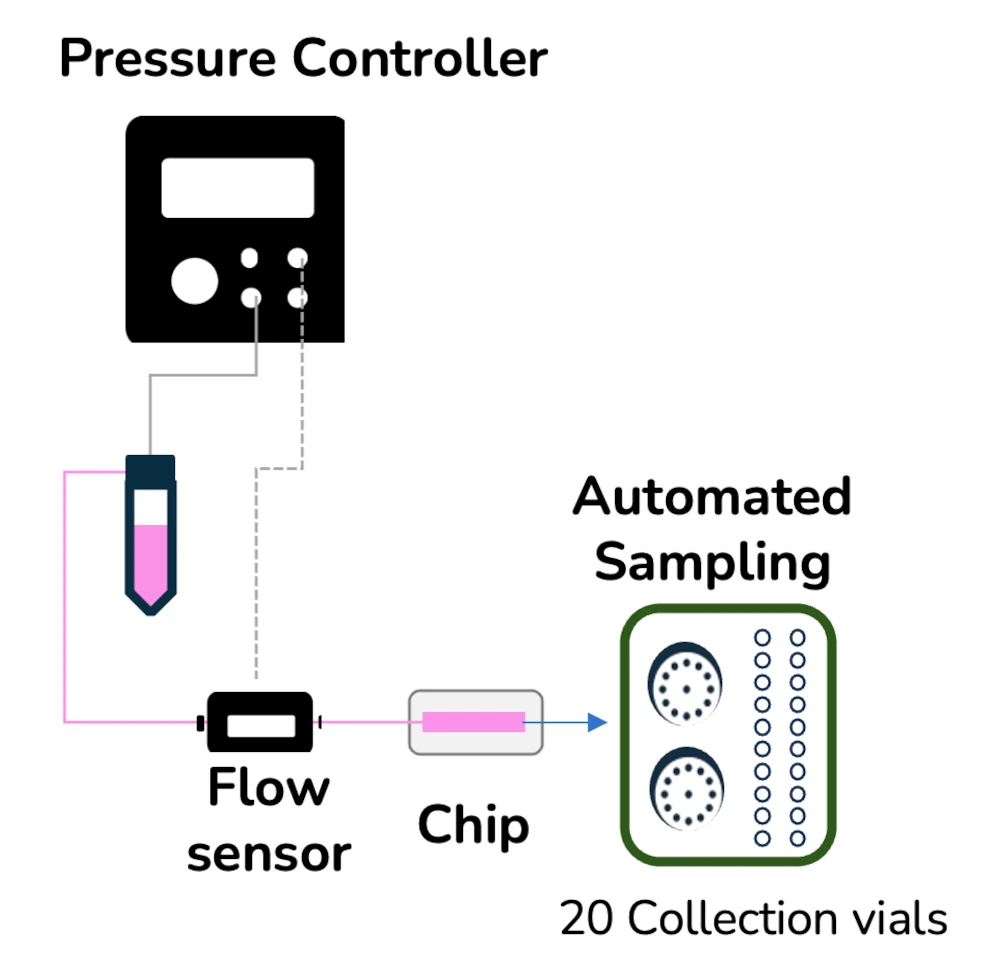
The precision sampling pack typically contains:
Flow sensor (Galileo, MIC)
Automated sampler
Microfluidic chip
Software (Galileo user interface)
Flow controller
Falcon reservoirs, connectors, tubing, filters,…
Precision sampling principle
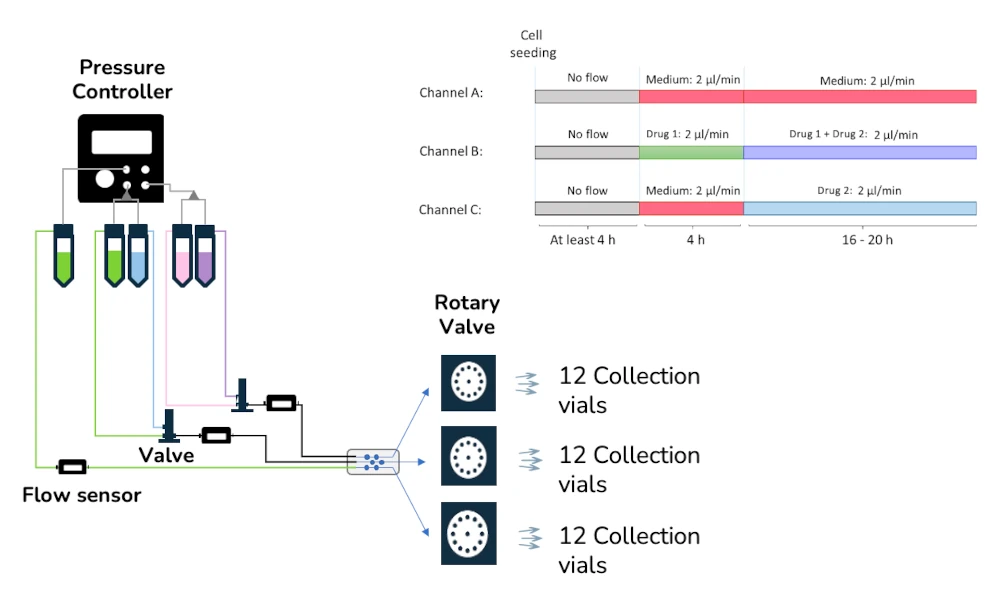
Several applications can benefit from automated precision sampling. Here, the synergistic effect of two drugs is explored as an example. A µ-Slide III 3D Perfusion from ibidi is used to culture cells.
Channel A is a negative control in which only the medium is perfused.
Channel B explores the synergistic effect of Drug 1 and Drug 2, with an initial exposure to Drug 1 followed by the concurrent perfusion of Drugs 1 and 2.
Channel C is a positive control, with the perfusion of only Drug 2. Each channel is connected to a rotary valve programmed to collect samples of 150 µl every two hours automatically. The samples are then analyzed for the temporal secretion of specific molecules linked to the action of the drugs on the cells.
Automated precision sampling applications
- Temporal release of cytokines by brain cells.
- Release of extracellular vesicles.
- Molecular released during inflammatory responses.
- Uptake and metabolism of substances of interest.
Customize your pack
Our instruments can be added to different setups depending on your specific needs. In this light, our microfluidic specialists will advise you on the best instruments and accessories depending on your needs and will accompany you during the system’s setup.
Frequently asked questions
Is the setup sterilizable?
Yes, we have developed a simple protocol for sterilization and cleaning that is provided along with the user guide.
Can the instrument be customized based on my specific application?
Yes! Our experts will establish which instruments are best suited for your application, such as the type of flow sensor or the number of flow controller channels you need to perform your experiment. Contact us using the “talk to our experts” green button above.
Can I buy individual instruments?
You can order our instruments on the product section of our website.
Download the MIC Horizon Europe 2026/2027 Calls Calendar:





Funding and Support
The LOCAi, NeuroTrans, and Enhpathy project results helped develop this instrument pack.
The LOCAi project has received funding from the French National Research Agency (ANR) and the German Federal Ministry of Education and Research (BMBF) in the frame of the 1st German-French Joint Call for Proposals on Artificial Intelligence.
The European Union’s Horizon 2020 MSCA-ITN has funded the Enhpathy and NeuroTrans projects under grant agreements No. 860002 (ENHPATHY project) and 860954 (NeuroTrans project).
About the author
Camila Betterelli Giuliano, PhD
Former Microfluidics Innovation Specialist
Camila Betterelli Giuliano is a biotechnology engineer with experience in research, business and innovation. During her time at the Microfluidics Innovation Center, she connected technology development with user needs. Her contributions to MIC’s scientific reviews and application packs explain microfluidic methods, experimental setups and applications, helping researchers assess their relevance and practical limitations.
Products & Associated Accessories
FAQ - Precision Sampling for Cell Culture
What’s the objective of the Precision Sampling Pack?
The Precision Sampling Pack is an automated sampling tool intended for dynamic cell growth with constant flow. It removes fluid samples from the cell culture loop at regular time intervals without halting the experiment or requiring human involvement.
What amount of sample does it collect? Why is this significant?
The quantity of the sample is around 150 µL per sampling point. This is based on the example given by the manufacturer. The device may collect as low as 100 µL. The quantity is significant because taking excessive quantities may affect the experiment because mass spectrometry and ELISA require relatively small quantities of the sample for analysis.
How many data points may an experiment have?
The experiment may have as many as 12 sample collection points. Since the device takes a sample at regular time points, the experiment may show the temporal pattern of the secretion of molecules throughout the experiment period.
Does the sampling affect the cell culture flow?
The device does not affect the cell culture flow because the precision sampling tool is intended for collecting samples without affecting the chip’s constant flow of medium. Stopping the flow during the experiment may alter the response of the cell because it may affect the shear stress experienced by the cell. The device’s design prevents this possible interference with the experiment’s result.
What’s included in the standard Precision Sampling Pack?
The standard package consists of Falcon reservoirs, connectors, tubing, filters, a Galileo flow sensor, an automated sampler unit, a microfluidic chip, the Galileo software interface, and a flow controller. The chip may vary based on the experiment’s requirements. The package is fully customizable. Experts may help in determining the appropriate flow sensor and the number of flow controller channels and other requirements.
What are this system's primary biological uses?
This system is most appropriate for any situation where precise time-resolved sampling of chemicals that cells release or take in while in flow is required.
The documented areas of application include:
- Brain cells temporal release of cytokines
- Extracellular vesicle release
- Molecular secretion during inflammatory reactions
- The absorption and metabolism of relevant chemicals
Can system run multiple conditions in parallel with precision sampling?
Yes. In one run of the experiment, it is possible to collect a control, a test, and a positive control simultaneously by attaching each of them to a rotary valve that will automatically collect the samples. This is very important for the statistical analysis of the results.
What key parameters need to be defined before starting a precision sampling protocol?
First of all, it is necessary to define the collection volume per sample (related to the assay), the sampling interval (related to the biological time frame of the phenomenon), and the length of the experiment (related to the number of tubes or wells that will be required). If the parameters are not correctly defined, it is possible to completely miss the phenomenon of interest or collect more material than the assay system is able to handle.