
Undirectional Cellular Perfusion
Take advantage of unidirectional cellular perfusion without mechanical damage
No unwanted mechanical damage
Perfuse cells unidirectionally without compressing the tubes
Controlled shear stress
Decide how much shear stress to apply by tightly controlling the flow
Autoclavable
No risk of contamination
Need a microfluidic SME partner for your Horizon Europe project?
Unidirectional cellular perfusion principle
We have developed a small system of valves that allow cellular perfusion in a unidirectional manner without the tubing compression generally employed in standard systems, such as peristaltic pumps. Also, the pressure-driven flow controller ensures a pulse-free, high-controllable perfusion, ideal for shear stress assays.
The principle behind it is simple. Passive valves are arranged so that media will always pass over the cells starting from the same side of the chip, regardless of which media reservoir is being pressurized, as shown below.
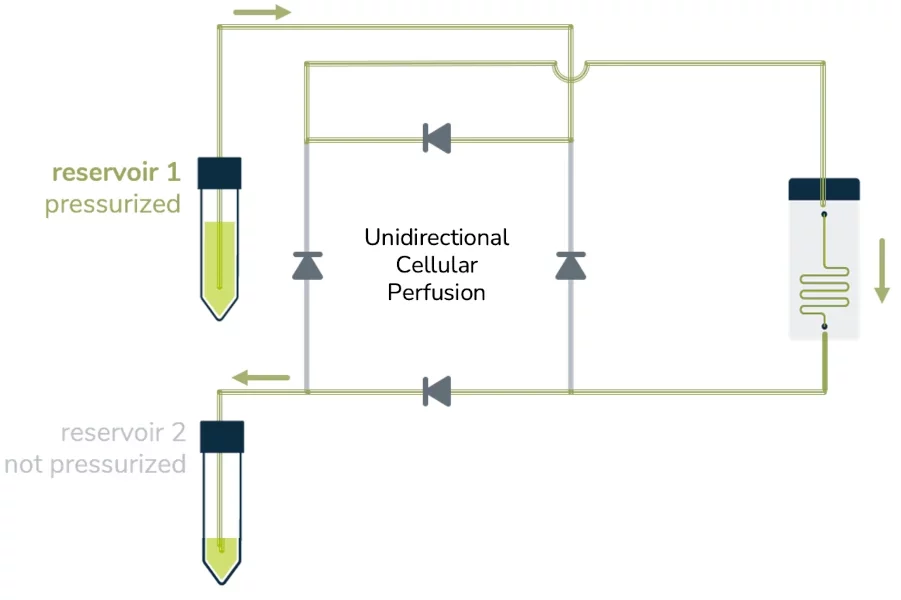
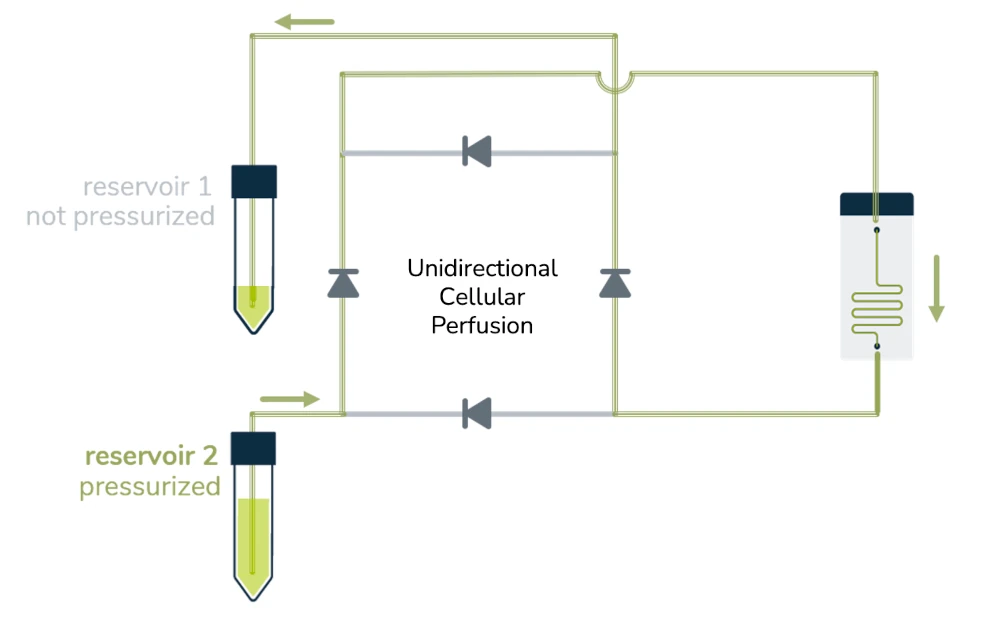
The valves are disposable, and the body that holds the media path is autoclavable, ensuring a contamination-free experiment. Designed for improved usability, mini-luer connectors easily plug into the media path.
Compatibility and applications
The Unidirectional cellular perfusion system is compatible with the CO2 incubator and with mini-luers that connect to 1/32″ (outer diameter) tubing, but it can be adapted to different tubings and connectors upon request.
It can also be employed in a variety of applications, such as:
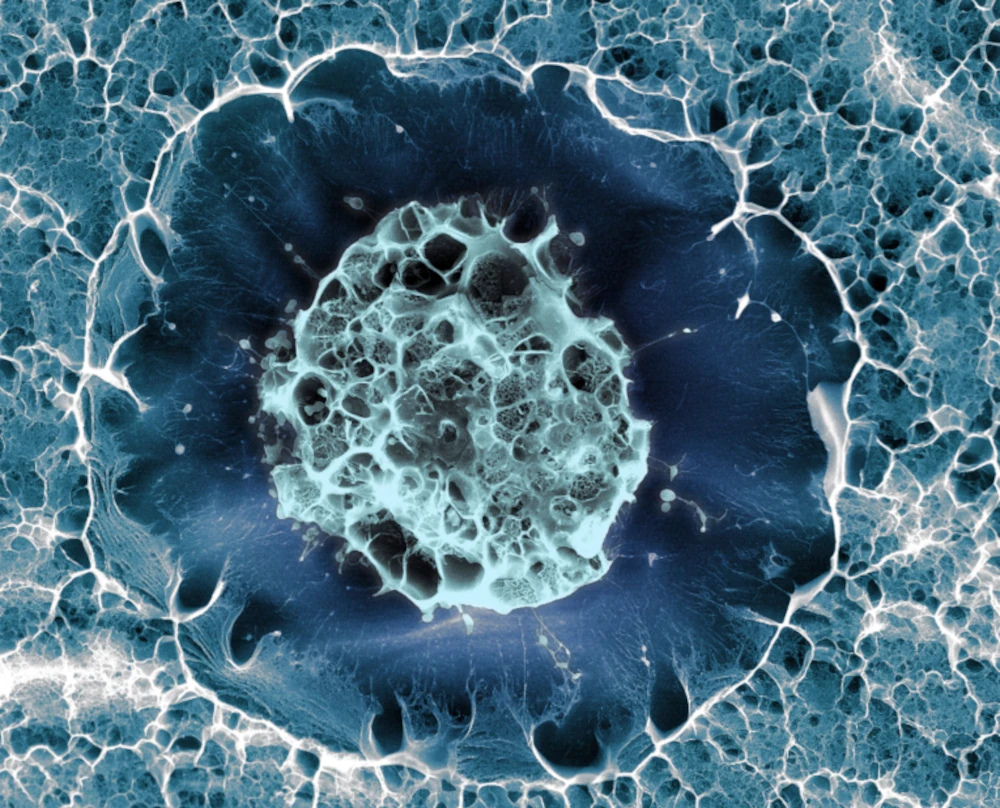
Stem cell culture
Automated and fail-safe long-term microfluidic cell culture system.
✓ Highly controlled microenvironment
✓ Fail-safe mechanism
✓ Automated sequences
Stem cell culture
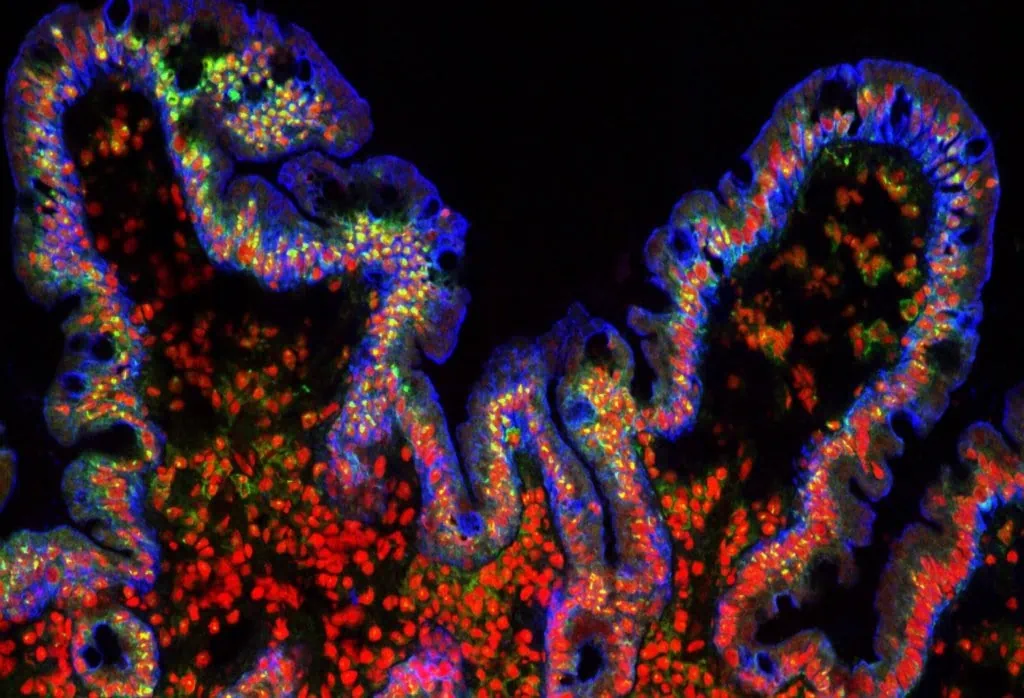
Gut-on-a-chip pack
Intestinal cells coculture under flow, mimicking the gut physiology
✓ All microfluidic pieces included, quick and easy assembly
✓ Dynamic culture conditions
✓ Advanced in viro/ex vivo
Gut-on-chip
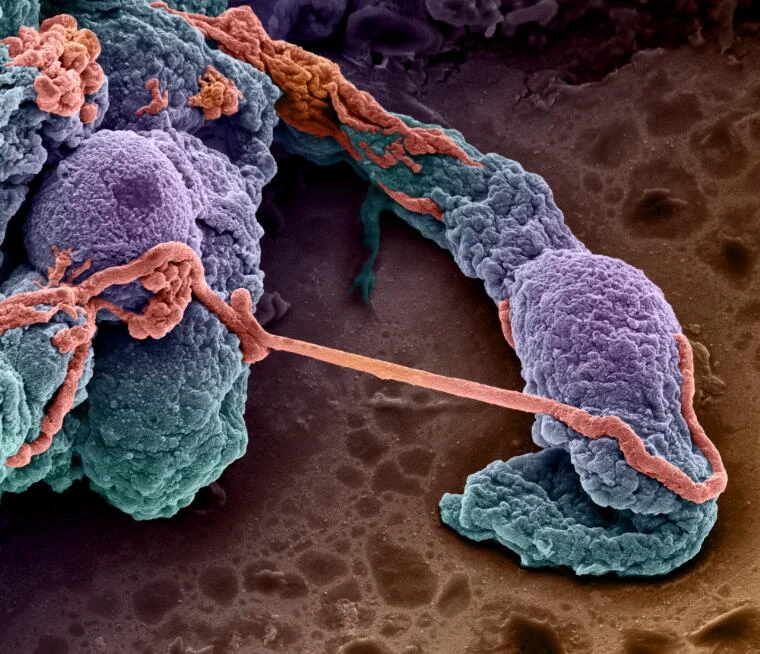
Blood-brain barrier on chip
Plug-and-play instrument pack for long term BBB on a chip study
✓ Relevant microenvironment
✓ Automatized organ-on-chip perfusion
✓ Plug-and-play microfluidic platform
Blood-brain barrier on chip
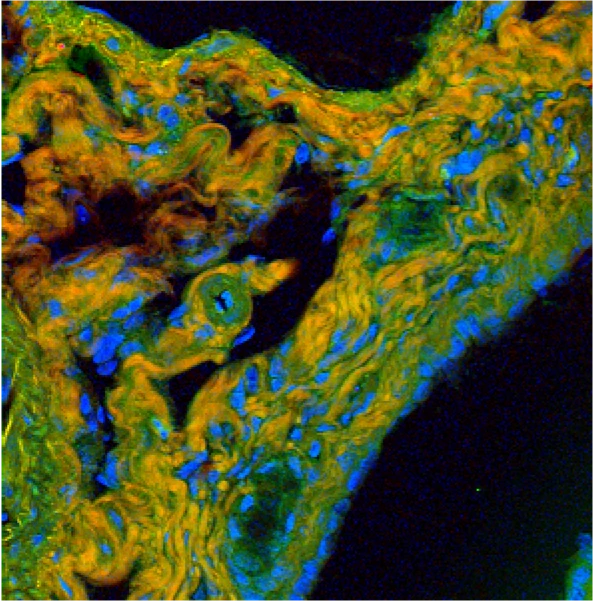
Liver-on-a-chip model
Mimic the liver microenvironment in long term experiments
✓ Improve your reproducibility with physiological culturing conditions
✓ Automated and controlled supply of nutrients in a stable flow
✓ Test different conditions at the same time
Liver-on-chip
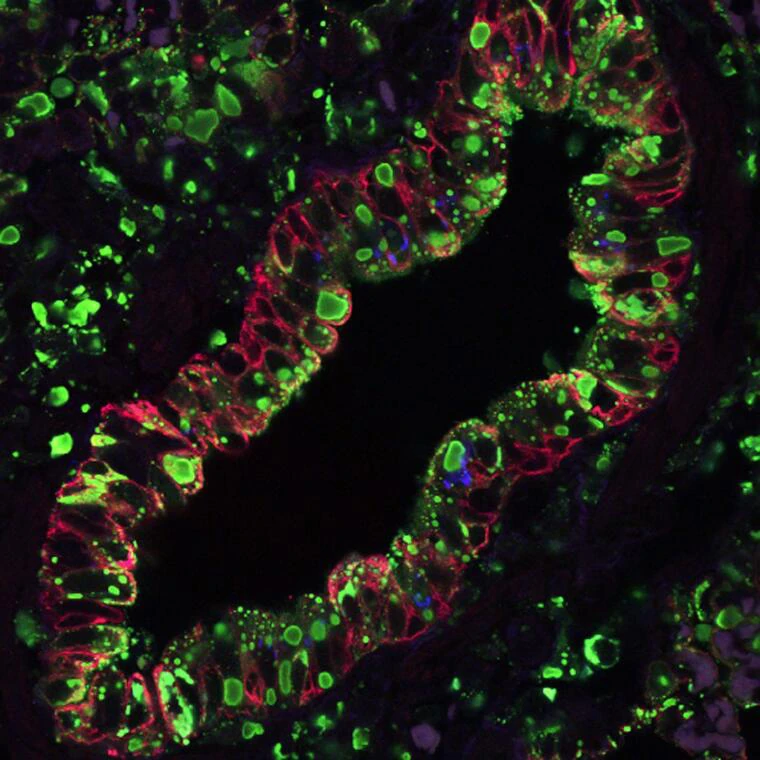
Lung-on-a-chip pack
Perform lung research in a physiologically relevant microenvironment
✓ Culture your lung cells in a physiological air-liquid interface
✓ Continuous and controlled supply of nutrients in a stable flow
✓ Stop losing your cell experiment due to clogging
Lung-on-a-chip
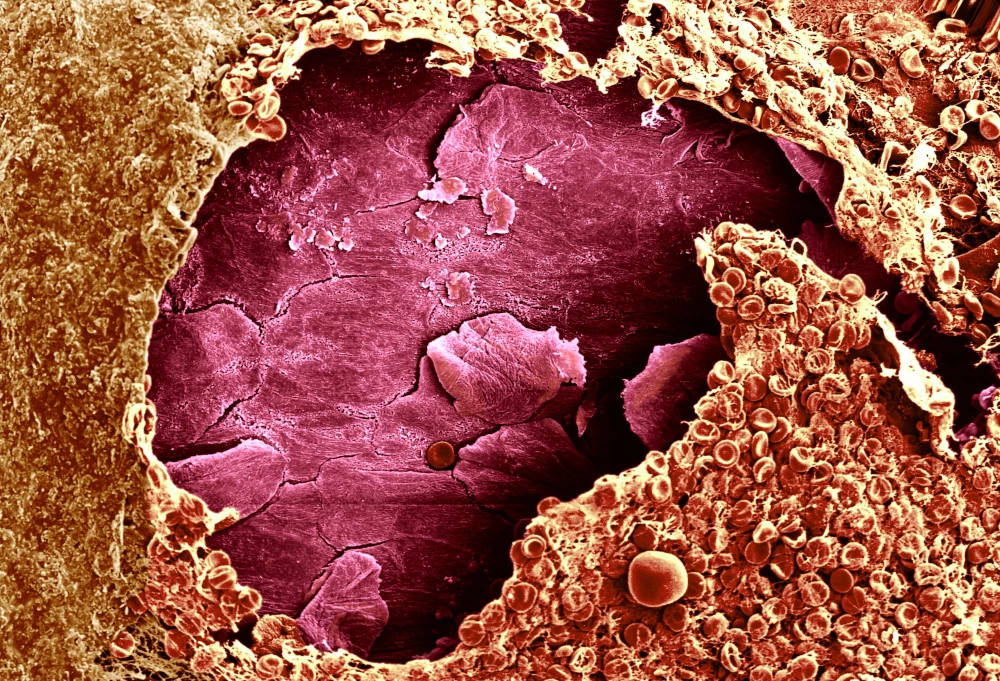
Skin-on-a-chip
Reproduce the dynamic extracellular environment of the skin with ease
✓ Compatible with air-liquid interfaces
✓ Compatible with teer measurements
✓ Compatible with live cell imaging
Skin-on-a-chip
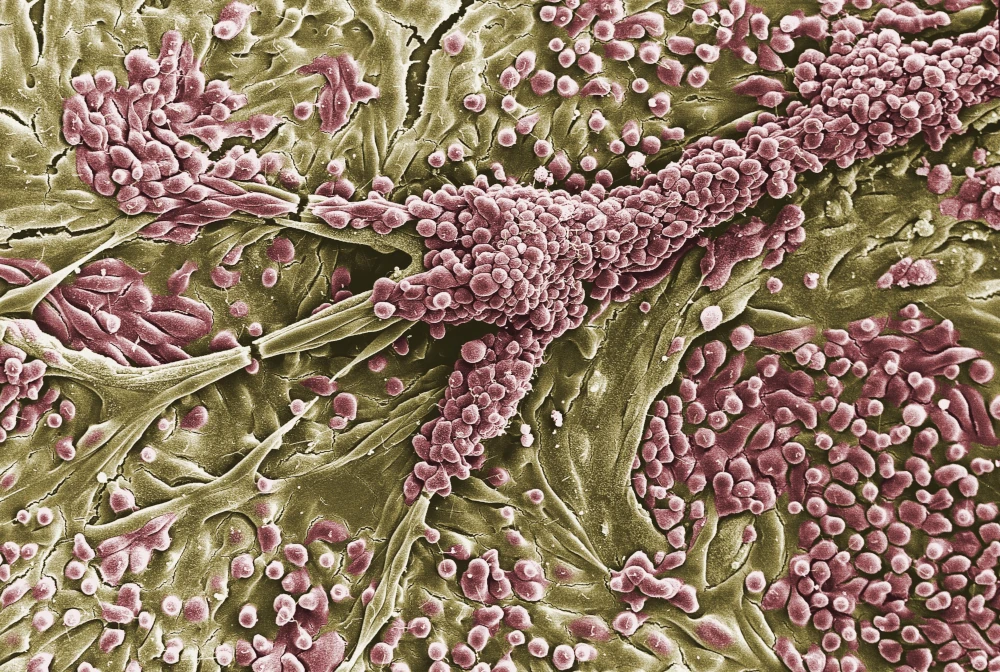
Kidney-on-a-chip
Physiological microenvironment for a more realistic in vitro kidney model
✓ Physiological flow rates
✓ Use the chip of your preference
✓ Enrich the media with metabolites
Kidney-on-a-chip
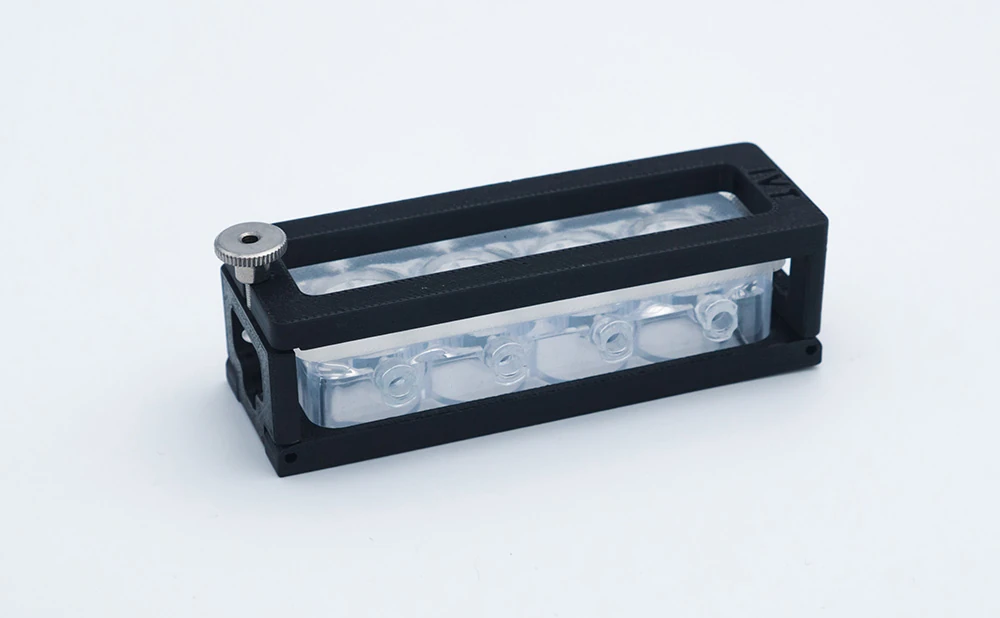
Neuron culture pack - Low shear cell culture
Cell culture system for shear-sensitive cell lines
✓ Safe neuron culture under flow
✓ Highly controlled microenvironment
✓ Up to 3-week long cell cultures
Neuron cell culture – low shear cultures
Customize your pack
Our instruments can be added to different setups depending on your specific needs. In this light, our microfluidic specialists will advise you on the best instruments and accessories depending on your needs and will accompany you during the system’s setup.
Frequently asked questions
Can the cellular perfusion system be placed inside the CO2 incubator?
Yes, the unidirectional cellular perfusion system was designed to be compatible with the CO2 incubator.
What is the maximum flow rate that can be applied?
The system works well with the range of MFS flow sensors (Elveflow, 0-5ml/min).
Can I combine the cellular perfusion system with other instruments?
Yes! Our team can help you design the setup that makes more sense for your application. Contact us using the “talk to our experts” green button above.
Download the MIC Horizon Europe 2026/2027 Calls Calendar:


Funding and Support
The ALTERNATIVE project helped develop this instrument. This project is funded by European Union’s H2020-LC-GD-2020-3, grant agreement No. 101037090.
About the author

Camila Betterelli Giuliano, PhD
Former Microfluidics Innovation Specialist
Camila Betterelli Giuliano is a biotechnology engineer with experience in research, business and innovation. During her time at the Microfluidics Innovation Center, she connected technology development with user needs. Her contributions to MIC’s scientific reviews and application packs explain microfluidic methods, experimental setups and applications, helping researchers assess their relevance and practical limitations.
Products & Associated Accessories
FAQ - Undirectional Cellular Perfusion
What is the core principle behind the unidirectional cellular perfusion system?
The basic idea behind the unidirectional cellular perfusion system is very simple: regardless of which media reservoir is pressurized, there’s a small number of passive valves that ensure the fluid always flows across the cells from the same side of the chip. This removes the need for active switching between the reservoirs, as the valve logic automatically handles this in a passive manner. This produces a steady, unidirectional fluid flow that minimizes the effects of direction on the cell response, while still mimicking physiological conditions such as intestinal lumen flow or vascular shear stress.
Why is unidirectionality important for cell culture studies?
There are a number of cell types that don’t just respond based on the amount of fluid that’s flowing past them, but they also need the direction of the fluid flow in order to respond correctly. For example, endothelial cells have very different responses based on whether the fluid flow is oscillatory, as opposed to constant, unidirectional fluid flow. In a traditional cell culture situation, the direction of the fluid could be reversing periodically, which could cause distortion in the data, especially in situations in which the cell’s polarity is important, such as in shear stress testing or testing the integrity of the cell’s barriers.
How does the system protect the cells from mechanical stress?
Traditional peristaltic pumps use flexible tubing that is squeezed in a rhythmic fashion. This works well for pumping fluids but causes pressure and vibration issues. For cell types such as neurons, stem cells, and primary cells, this type of stress could cause cell damage. The unidirectional system uses a pulse-free pressure-driven system. Since no tubing is compressed, the cell sees only the controlled amount of shear stress defined by the operator.
Will the system function inside a CO2 incubator?
Traditional peristaltic pumps use flexible tubing that is squeezed in a rhythmic fashion. This works well for pumping fluids but causes pressure and vibration issues. For cell types such as neurons, stem cells, and primary cells, this type of stress could cause cell damage. The unidirectional system uses a pulse-free pressure-driven system. Since no tubing is compressed, the cell sees only the controlled amount of shear stress defined by the operator.
What are the sterilization options for this system?
The system uses disposable media valves, so they’re changed between tests instead of being cleaned. The part of the system that carries the media path is autoclave-compatible, so thermal sterilization is also an option without having to replace the major component of the system. To make the system more convenient and easy to use, mini-luer connectors are used for fast and secure connections. This makes the system more convenient and easy to use in cell culture applications.
What cell culture applications is this system suited for?
It can also be employed in a variety of applications, such as:
- Stem cell culture
- Gut-on-chip
- Blood-brain barrier on a chip
- Liver-on-chip
- Lung-on-a-chip
- Skin-on-a-chip
- Kidney-on-a-chip
- Neuron cell culture – low shear cultures
What flow rates can the system handle?
The Elveflow MFS flow sensors, with a range of 0-5 mL/min, have been validated for this system. This covers all the cell culture conditions, ranging from low-shear neuronal cultures operating at µL/min flow rates to higher flow rates for vascular or intestinal organ-on-a-chip models. However, if the required flow rate is different, it is recommended that is contacted to discuss the compatibility of the sensors with the system.
What connectors and tubing formats are compatible?
The standard system uses mini-luer connectors, which are most commonly used with 1/32″ outer diameter tubing. The system is not locked into a specific standard and is easily adaptable to different tubing sizes and connector types. This is particularly important since the perfusion system will be integrated into an existing system that may be using a different size of tubing or a different type of connector.
How is shear stress managed?
In a microfluidics system, the wall shear stress is a function of the flow rate and the geometry of the channel. The pressure-driven system provided by the system will allow the precise control of the flow rate. This is a definite advantage of the system since the wall shear stress is easily controlled and measured. This is particularly important in cell culture since it is often necessary to apply a fixed amount of wall shear stress in an experiment. This is not easily achievable with a gravity-driven system.