
Skin-on-a-Chip
Reproduce the dynamic extracellular environment of the skin with ease
Compatible with air-liquid interfaces
Flow air or liquid through your model at your convenience
Compatible with teer measurements
Add your own TEER sensing device
Compatible with live cell imaging
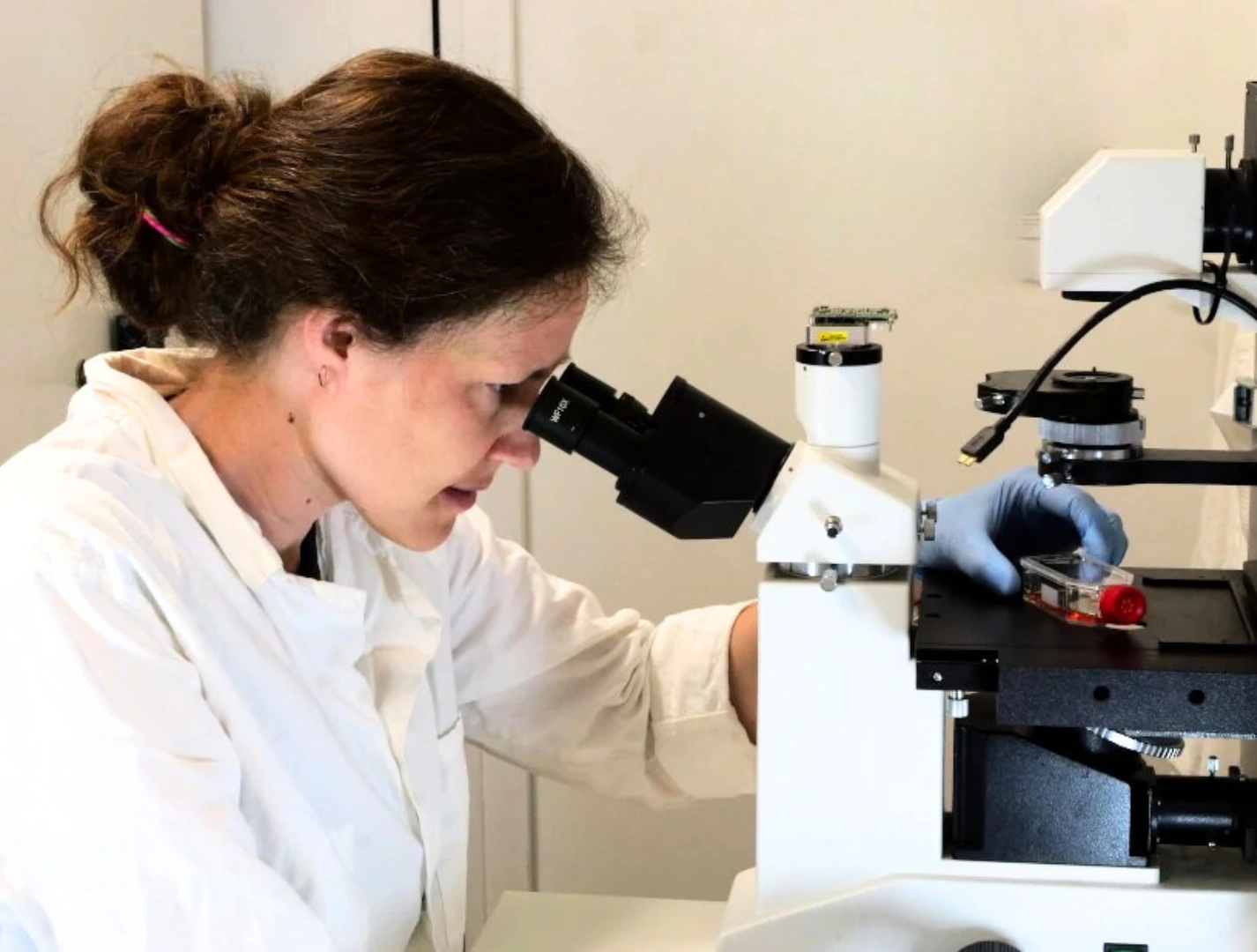
Keep ideal flow conditions on top of the microscope
Need a microfluidic SME partner for your Horizon Europe project?
Image Credit: Blood clot forming over a wound. David Gregory & Debbie Marshall. Licence: Attribution 4.0 International (CC BY 4.0)
Skin-on-a-chip pack setup
Our technology offers a versatile platform for creating skin-on-a-chip models that mimic the microenvironment of human skin and keep ideal conditions for long-term experimentation. Our technology enables the study of skin biology and drug responses with the flexibility of adding your preferred device and gathering data with the most relevant assay for you, be it TEER, microscopy, or biochemical.
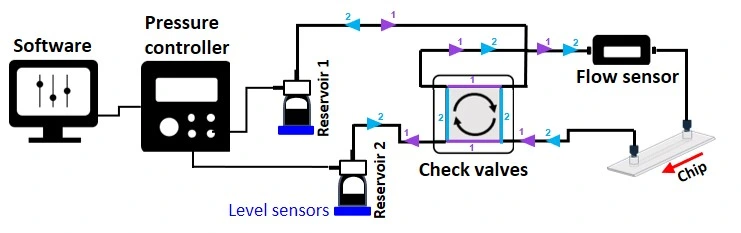
The skin-on-a-chip pack includes:
Flow sensor (Galileo, MIC)
Recirculation bridge
Level sensors
Software (Galileo user interface)
Flow controller
Several falcon reservoirs
Tubings and fittings
Microfluidic ChipShop Fluidic 480
User guide
Check our automated cell culture platform for more details on an integrated approach!
A little more about the suggested chip: Fluidic 480
The fluidic 480 cross-flow membrane chip from Microfluidic ChipShop comprises two in- and outlet ports above and below the membrane that allow molecule transfer. Different pore sizes, materials, and chip geometries with more inlets are also available.
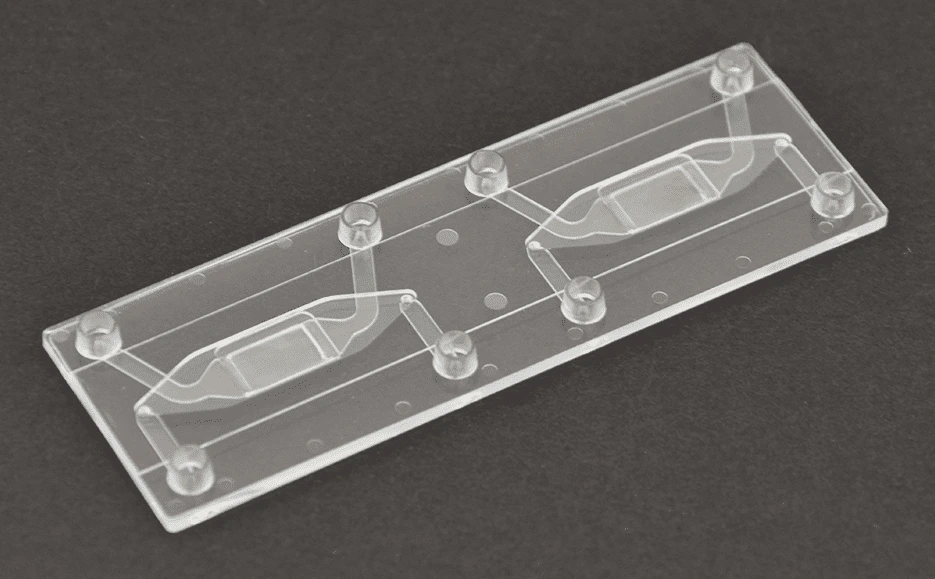
- Suitable for metabolic studies, cell co-culture, and organ-on-chip experiments
- Compartments divided by a permeable membrane
- Membrane pores from 8 to 0.2 µm
- Chip available in TOPAS or PS
- Interaction area of 36mm2
- Connectors: mini Luer
Other compatible chips include Fluidic 568 and Fluidic 846.
Compatibility of skin-on-a-chip pack
Our skin-on-a-chip Pack was designed to be compatible with commercially available or homemade chips (specific adaptors might be required) and the most common supernatant assays. If you have a particular chip or assay that is not listed, please contact us!
Chips
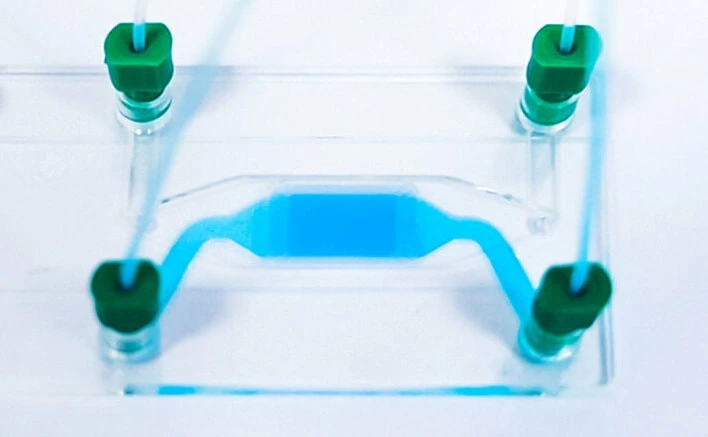
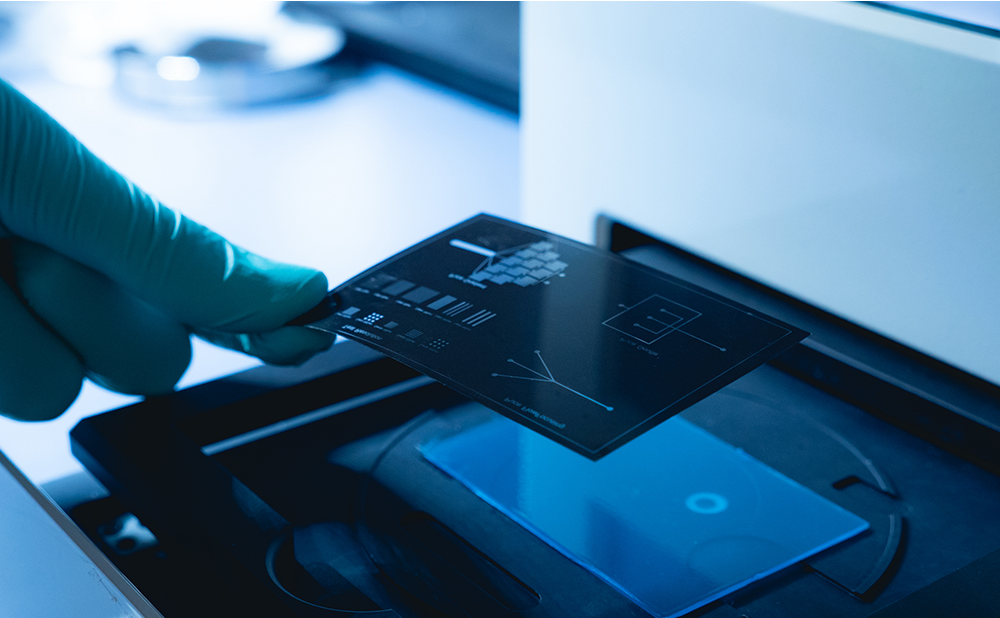
PMMA device station
From mold development to high-resolution PMMA chip fabrication
✓ Fast process
✓ Multiple applications
✓ Simple and innovative setup
PMMA
Synvivo
And many more!
Assays
TEER
Immunochemistry analysis
Extracellular acidification rate
Toxicity assays
And many more!
Skin-on-a-chip applications
- Drug discovery and development: Our skin-on-a-chip model can test the efficacy and toxicity of new drugs or drug combinations for treating skin diseases such as psoriasis, eczema, and skin cancer. This could speed up the drug development and lead to more effective patient treatments.
- Personalized medicine: By using patient-derived cells and tissues in the model, it may be possible to develop customized treatment plans for patients with skin diseases. This could improve treatment outcomes and reduce side effects.
- Disease modeling: The model could be used to study the underlying mechanisms of skin diseases and to develop new hypotheses about the diseases. This could lead to new insights and discoveries that could ultimately improve our understanding of skin diseases and lead to new treatments.
- Preclinical testing: The skin-on-a-chip model could be used to test the safety and efficacy of new drugs before they are tested in humans. This could reduce the number of animals used in preclinical testing and improve drug testing accuracy.
- Cosmetics testing: Our skin-on-a-chip model could be used to test the safety and efficacy of cosmetic products, such as creams and lotions. This could reduce the need for animal testing and improve the accuracy of cosmetic testing.
We have recently published a review about the different organ-on-a-chip models and current innovations.
Customize your pack
We offer compatible instruments for standard commercialized chips from various brands. We can customize your pack to suit your specific needs with guidance from our specialists, who will suggest the best instruments and accessories. We’ll also help you set up the perfusion platform.
Frequently asked questions
Can I order a pack?
Since Packs are products that are still being developed, we have a few eligibility criteria to maximize their success rate. A discussion with our experts is needed to determine your specific needs to offer you a personalized response.
Can the platform be sterilized/autoclaved?
Yes, we have developed a simple protocol for sterilization and cleaning that is provided along with the user guide.
Can a pack be customized based on my specific application?
Yes! Our experts will establish which instruments are best suited for your application, such as the type of flow sensor or the number of flow controller channels you need to perform your experiment. Contact us using the “talk to our experts” green button above.
Can I buy individual instruments?
Our instruments are in beta testing phase and can be tested as a pack or individually, so get in contact with our team to know how our beta testing program works.



Funding and Support
The ALTERNATIVE and LIFESAVER projects helped develop this instrument pack.
These projects are funded by the European Union’s H2020-LC-GD-2020-3, grant agreements No. 101037090 (ALTERNATIVE) and 101036702 (LIFESAVER).
Products & Associated Accessories
FAQ - Skin on a Chip
What causes this to be not only skin-relevant but also merely cells in a chip?
Things to note include that it is designed to be used in dynamic microenvironments (to allow perfusion of media, introduction of stimuli, recirculation, and at least maintain stable conditions), and that it is clearly compatible with air-liquid interfaces (ALI), which is important when you need an epidermal compartment to be exposed to air, but the basal side fed.
What is included in the pack?
A flow sensor (Galileo, MIC)
- A recirculation bridge
- Level sensors (helpful when you need consistent long-running regimes that do not encounter occasional dry-outs)
- Galileo software interface
- A flow controller
- Several Falcon reservoirs
- Tubing and fittings
- Microfluidic Chipshop Fluidic 480: a proposed microfluidic device.
- A user manual (along with support/training to be up and running sooner).
What is unique about the proposed chip (Fluidic 480)?
Fluidic 480 is a cross-flow membrane chip with ports above and below the membrane, enabling you to perfuse both sides and transfer molecules across a permeable barrier. Specification details: This information comes in handy when you are planning experiments:
- Partitions with a permeable wall.
- Available membrane pore sizes are 8 µm to 0.2 µm.
- The chip’s topography material is TOPAS or polystyrene (PS).
- Interaction area: 36 mm2
- Connectors: mini Luer
Not only is that range of pores not a mere nice-to-have: changes in barrier properties, passage through immune cells, and movement kinetics can be quite practical.
Is it possible to run TEER on this platform, or must it be reduced to optical readouts only?
TEER is usable, but the pack was designed to be TEER-ready, not TEER-imposed. That is, it is possible to add your TEER-sensing device. This is usually the most acceptable method when you already have a tested electrode system and do not want to re-test a new measurement chain in the middle of the project.
Would you require me to use the Fluidic 480 chip, or may I use my own device?
You’re not locked in. The platform has been designed to support commercially available chips or other (homemade) devices (including PDMS), though in practice, you might need specific adaptors based on the geometry and connector. If you already have a trusted device, the pack is designed to minimize the inconvenience of controlling and monitoring territories around it.
Would you require me to use the Fluidic 480 chip, or may I use my own device?
The page specifically enumerates typical downstream readouts, and the opportunities are open to countless more:
- TEER (with your own device)
- Immunochemistry analysis
- Acidification rate within the cellular exterior.
- Toxicity assays
- General Standard supernatant assays.
What are some common uses people can make of a skin-on-a-chip system like this?
The pack is provided with applications and case studies that are seen to have an academic and translational fit:
- Drug discovery and development (efficacy + toxicity of drug in diseases like psoriasis, eczema, skin cancer)
- Disease modelling (mechanistic studies, hypothesis testing)
- Preclinical trials where the minimization of animal testing and enhancement of physiological relevance are the objectives.
- Cosmetics testing (safety/ efficacy) with the evident pressure not to use animal testing.
Is the platform sterilizable or autoclavable?
Yes. A special sterilization and cleaning procedure is supplied along with the user guide. In practice, in the laboratory, this is more than people think, since long-term culture under flow is prone to penalize slight slackness in cleanliness.
Why not order it like an ordinary product?
This is because packs are being developed, and the MIC implements eligibility criteria to maximize the likelihood that your specific configuration will succeed. It may sound bureaucratic, but it often translates into a brief technical discussion, such that you get the system you desire in response to the chip selection and flow ranges, assay requirements, and time scale of the experiment- not some one-size-fits-all system.
What is the customization process (why is that important?).
The point is the customization of your non-standard biology:
- Choice of flow sensor type
- Channels of flow controllers.
- Fluidic architecture (with recirculation logic) and accessories.
- Recommendation on which chip to pick, in case you haven’t yet.