
Multiple Drug Injection
Streamline your experiments with our multiple drug injection device
Fast & reproducible drug injection
Several replicates can be done in the same experiment
Compact design
No need for bench space or complicated installation procedures
Automated liquid handlig
Avoid errors due to manual handling
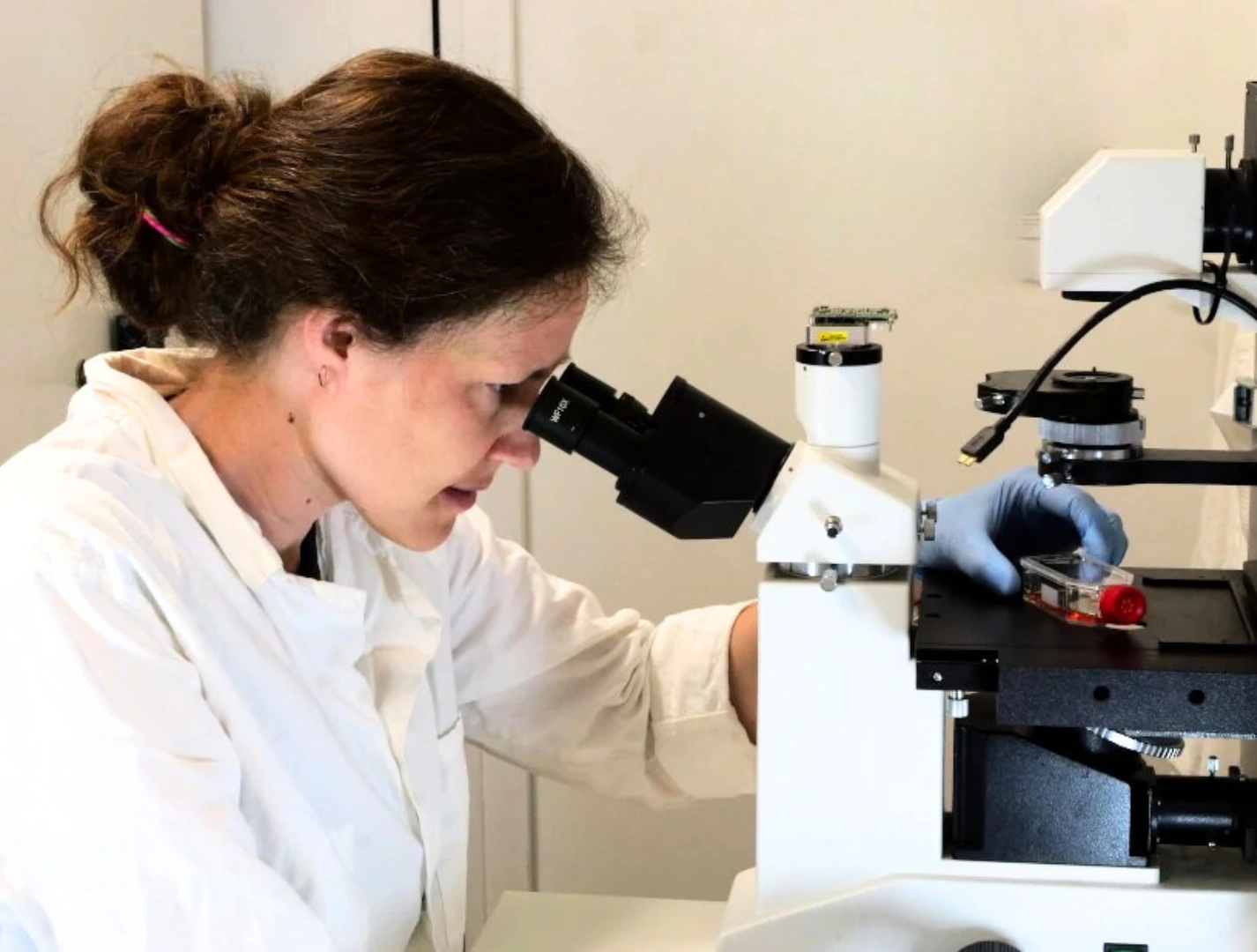
Need a microfluidic SME partner for your Horizon Europe project?
Sequential injection device for multiple drug injection
Microfluidic devices, known for their ability to use very small sample quantities, have gained attention for their precise drug injection capabilities in various applications. Compared to conventional techniques, microfluidics provides benefits like real-time process monitoring and precise control over drug injection rates.
In addition, laminar flow is a key feature of microfluidic devices, allowing for precise control over drug concentration in temporal and spatial dimensions. The predictable fluid behavior at the microscale makes efficient drug injection possible. Injection robots with pipetting arms have been developed for automated and parallelized multi-injection. However, a major concern remains these robots’ large size and lack of adaptation to underflow systems.
To address these challenges while leveraging the aforementioned features, we developed a sequential injection device for multiple drug injection.
It allows for the simultaneous administration of different drugs, with precise control over the timing and concentration of each drug. The device is much smaller and accessible than its alternatives and can be used in underflow systems.
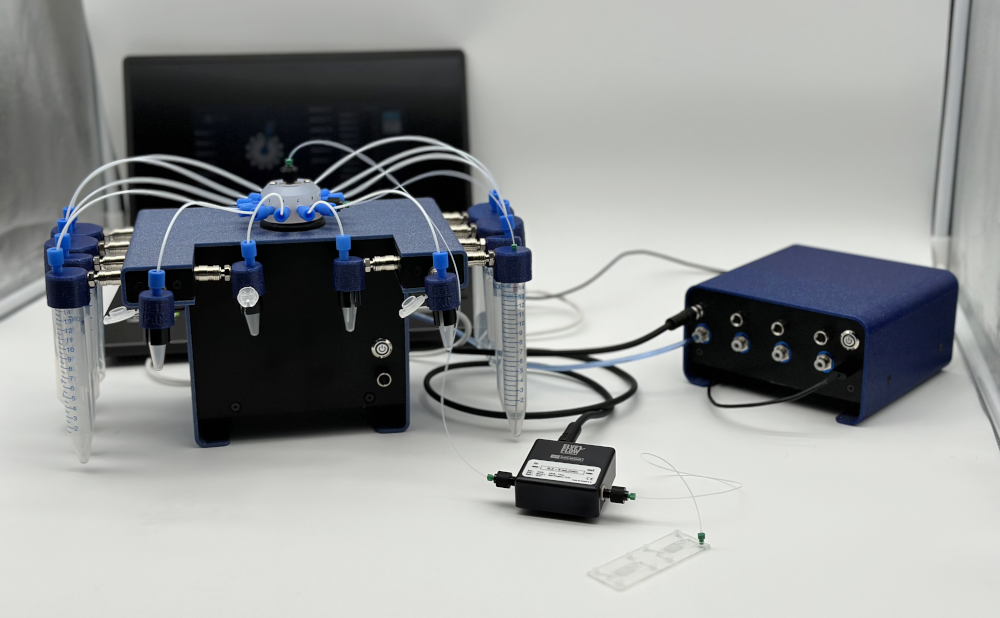
Fast and reproducible drug injection
Our device is user-friendly, with a quick reservoir connection and a simple interface that makes it easy and fast to set up and operate. You can plug 50 ml, 15 ml, and 1,5 ml reservoirs simultaneously on the same device and inject up to 12 different drugs in a sequence. Moreover, several replicates can be done in the same experiment, which decreases the variability and increases the reproducibility of the results.
Compact design
The distribution valve features a compact and space-saving design, making it ideal for laboratories with limited bench space. The modular design also enables researchers to customize the device to suit their experimental needs. Connecting up to 12 reservoirs allows you to eliminate a dozen pneumatic lines and holders, simplifying your experiment and making space on your lab table.
Automated liquid handling
Our sequential injection device uses a distribution valve linked to a pressure regulator to automate sample processing. The automated liquid handling reduces the time and effort required for manual sample handling, eliminating the risk of human errors. Consequently, the device provides consistent results, reducing the need to repeat experiments.
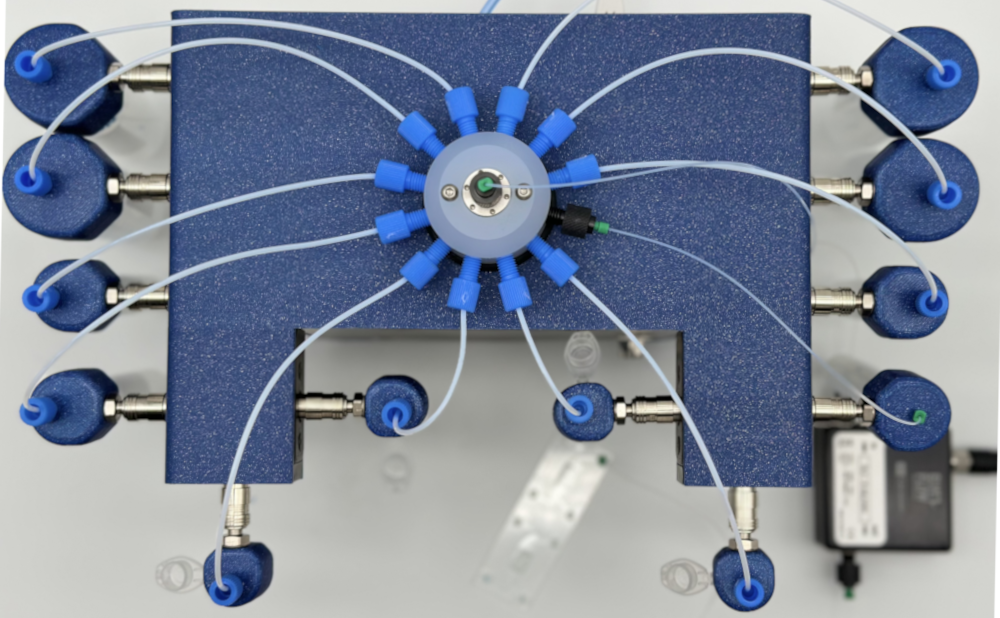
Applications of the sequential injection device for drug injection
Our multiple drug injection device is suitable for the following applications:
Proteins, peptides, and DNA-based drugs: the fast and easy injection of proteins, peptides, and DNA-based drugs, which are at risk of early deactivation when they are subjected to time-consuming, multistep processes.
Targeted Drug Delivery: by designing drugs in nanoparticles, multiple drugs can be delivered directly to specific cells/tissues, enhancing therapeutic outcomes and reducing systemic side effects.
Combination Therapy: the precise delivery of multiple drugs in specific sequences and dosages, for optimized combination therapies with minimal side effects.
Personalized Medicine: customization of patient-specific drug delivery profiles based on individual needs and disease states and monitoring real-time treatment responses.
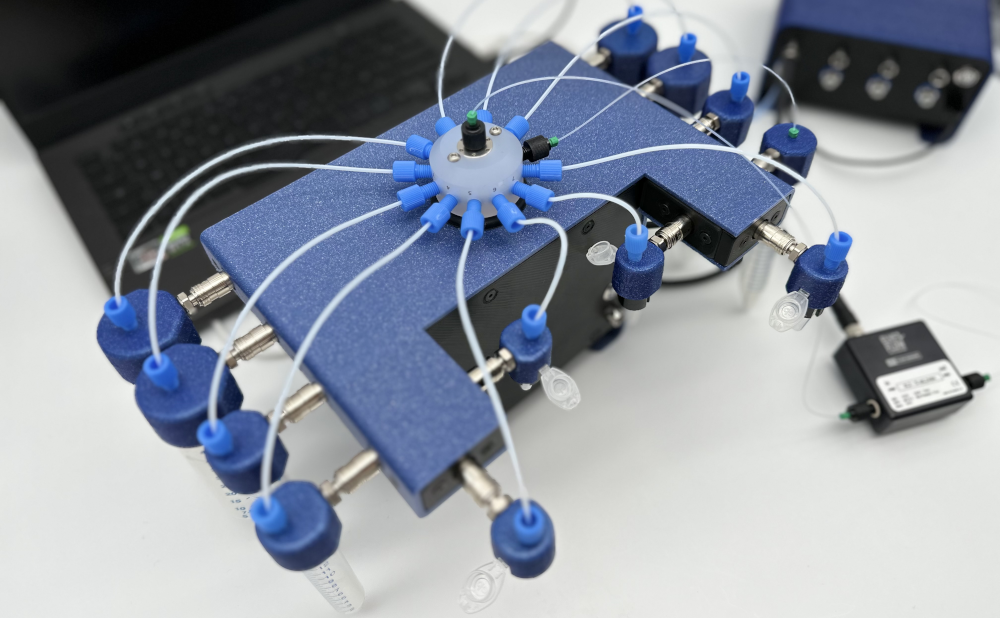
Other applications of the sequential injection device
Our sequential injection device can be used for sampling for various other applications:
Clinical & biomedical: Seq Fish, DNA-paint, Forensic analysis.
Biology: Cell culture analysis, Fermentation monitoring, Microbial analysis, Bioprocess monitoring.
Chemistry: Chemical process control, Biofuel analysis, Petroleum analysis.
Environmental monitoring: Water quality analysis, Soil analysis, Environmental toxicology.
In industries: Food quality control, Pharmaceutical analysis.
Customize your pack
Our instruments can be added to highly customizable setups, so you can take advantage of the extra flexibility to adapt them depending on your specific needs. Our microfluidic specialists will advise you on the best instruments and accessories depending on your needs and will accompany you during the setup of the microfluidic platform.
Our instruments are compatible with standard commercialized chips from different brands.



Funding and Support
The LIFESAVER project, funded by the European Union under H2020-LC-GD-2020-3, grant agreement no. 101036702 (LIFESAVER, project page), helped develop this instrument.
Products & Associated Accessories
FAQ - Multiple Drug Injection
What is the Multiple Drug Injection device and the primary problem it helps to solve?
The Multiple Drug Injection device is a miniature sequential injection device. Two key disadvantages of conventional drug injection methods include the huge size of robotic injection systems, that are incompatible with underflow systems, the flexibility associated with manual, multi-step handling, especially devastating to time-sensitive compounds such as proteins, peptides and DNA-based drugs.
What is the mode of operation of sequential injection in this device?
The important operation features are of:
- The ability to support 50 ml, 15 ml and 1.5 ml reservoir formats on the same device
- Automated sequencing which eliminates manual switching of drug lines
- Laminar flow conditions at the microscopic level to allow total control of both space and time
- 12 reservoirs at once connected to a single distribution valve.
What are the primary advantages compared to traditional injection procedures?
- Minimal footprint: Up to 12 different pneumatic lines and holders can be replaced, releasing enormous bench space.
- Reproducibility: Multiple types of replicas can run within one experiment, reducing inter-experiment variability.
- Speed: Fast reservoir connection and a simple interface will save on setup time.
- Automation: Eliminates the risk of compound degradation during prolonged periods and manual pipetting errors.
- Underflow compatibility: It is designed to operate within flow-based cell culture environments compared to large robotic systems
What kinds of compounds and drug modalities is it appropriate?
The device comes in particularly handy with:
- DNA-based therapies, proteins, and peptides prone to premature deactivation during the multi-phase, tedious, manual procedures.
- Drug delivery based on nanoparticles with the ability to deliver drugs to a specific tissue or cell.
- Combination therapy regimens with dose and sequencing of multiple drugs
- Personalized medicine plans which entail real time monitoring and customization of drug delivery pattern based on patient data.
What are other research purposes that it is useful in besides drug delivery?
The sequential injection capability covers a huge spectrum of areas:
- Clinical and Biological: DNA-PAINT imaging, forensic analysis, spatial transcriptomics by seqFISH.
- Biology: microbiological examination, monitoring of fermentation and bioprocesses, and cell culture examination.
- Chemistry: analysis of petroleum and biofuels, process monitoring, and chemicals.
- Environmental Monitoring: involves environmental toxicology, water quality analysis, and soil analysis.
- Industries: pharmaceutical testing and food inspections.
What is the effect of the apparatus on the reproducibility of experiments?
The system is designed with reproducibility at various levels. The automated liquid handling eradicates operator-related variations in the injection process. The possibility to perform numerous replicates within one experiment using the same apparatus, flow conditions and timing parameters allows the results to be compared directly without the confounding influence of numerous experimental sessions.
Can the equipment be adjusted to specific experimental setups?
Yes. The modular architecture of the device allows researchers to tailor the device to their needs. Our microfluidic specialists provide guidance in the selection of instrumentation, matching of accessories, and integrating of the entire system, and is supported by popular commercial microfluidic chips across multiple brands.
Who supported the invention of this device?
The LIFESAVER project (financed by the European Union in the framework of the H2O2-LC-GD-2020-3 program, grant no. 101036702) provided a boost to development. The main concern was to measure the risks of the drugs in the developing fetus hence directly relating to the use of the device in conducting drug delivery research.