
Microplastic sampling for river-to-sea monitoring: DANUBINA
Author
Celeste Chidiac
Publication Date
Keywords
microplastics
Danube River Basin
Black Sea
environmental monitoring
water sampling
particle recovery
plastic pollution
Your microfluidic SME partner for Horizon Europe
We take care of microfluidic engineering, work on valorization and optimize the proposal with you
Microplastic monitoring in the Danube basin: introduction
How can small plastic particles be collected from flowing water for analysis?
The particles need to be retained, concentrated and recovered as a sample for analysis. This sampling step connects the water being investigated with the material that researchers can examine.
Plastic litter travels along rivers towards the sea, connecting pollution sources across national borders. Within DANUBINA, Microfluidics Innovation Center (MIC) is developing a sampler to collect small plastic particles from water, supporting the project’s monitoring work in the Danube region.
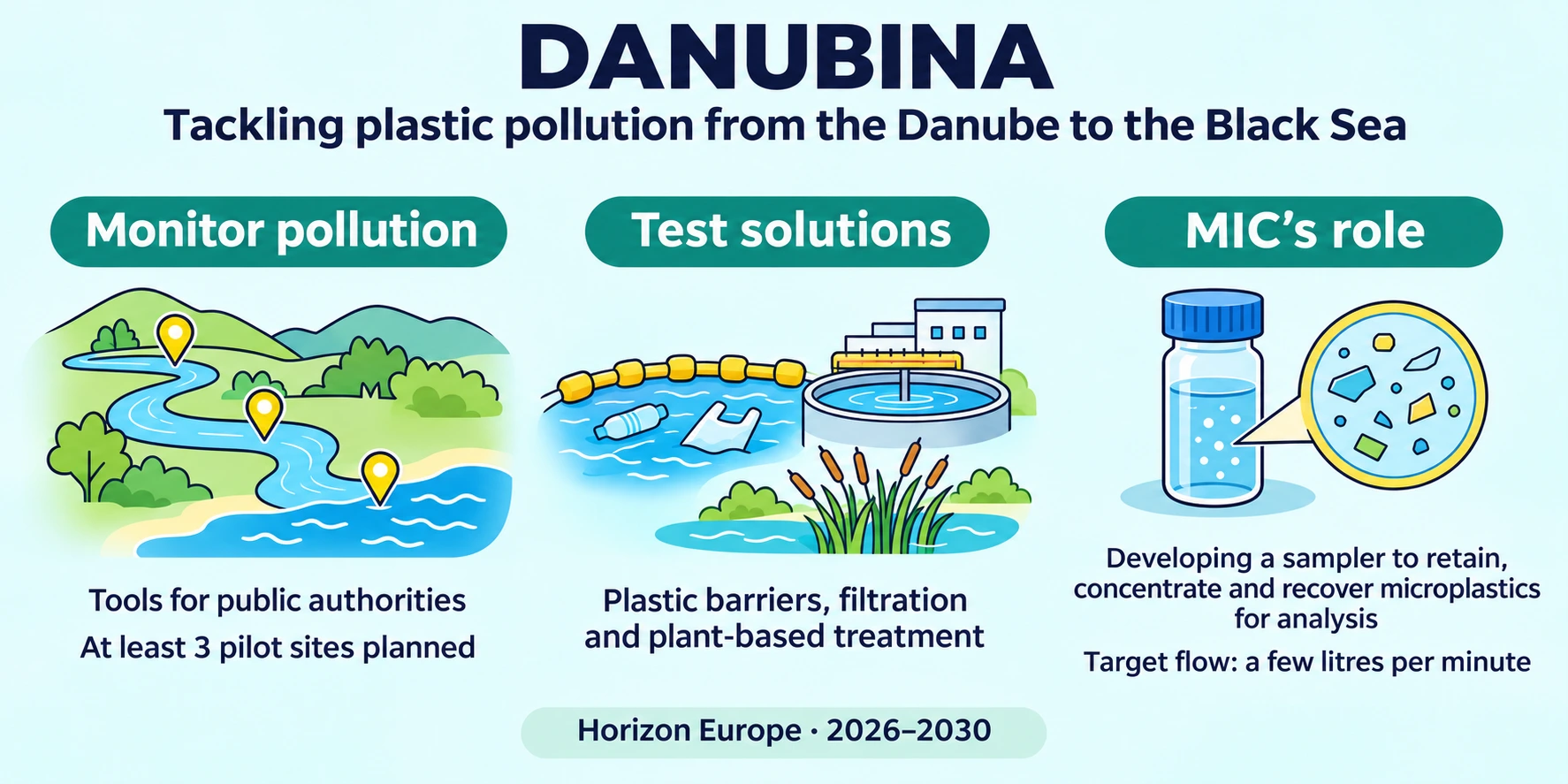
Reducing plastic pollution from river to sea: the DANUBINA project
DANUBINA is a four-year Horizon Europe project coordinated by the University of Novi Sad Faculty of Sciences in Serbia. The consortium is working with public authorities, service providers and other stakeholders on a toolbox for monitoring, preventing and reducing plastic and microplastic pollution across the Danube River Basin and the Black Sea.
At least three demonstration sites in different countries are planned. The project will pilot plastic barriers, adsorption and membrane filtration at wastewater treatment plants, and plant-based treatment of agricultural runoff. The solutions will be assessed for removal efficiency, environmental impact, scalability and cost effectiveness.
Alongside this technical work, DANUBINA will examine legal and institutional gaps, support stakeholder involvement and develop business models for wider uptake. The aim is to help authorities implement solutions that can continue beyond the demonstrations and contribute to EU zero pollution objectives.
Microplastic sampling at high flow rates: our role
Within DANUBINA, MIC is developing a microplastic sampler designed to process water at a flow rate of a few litres per minute. The instrument is intended to retain and concentrate small plastic particles, then recover them for subsequent analysis.
The collected particles will be available for downstream analysis, which is a separate step from sampling. MIC’s contribution to the wider toolbox focuses on engineering the fluid-handling and collection system that supplies material for examination.

Funding and Support
This project has received funding from the European Union’s Horizon Europe research and innovation programme under grant agreement No. 101295872.
Funding topic: HORIZON-MISS-2025-03-OCEAN-02
Action type: Innovation Action
Start date: 1 October 2026
End date: 30 September 2030
About the author
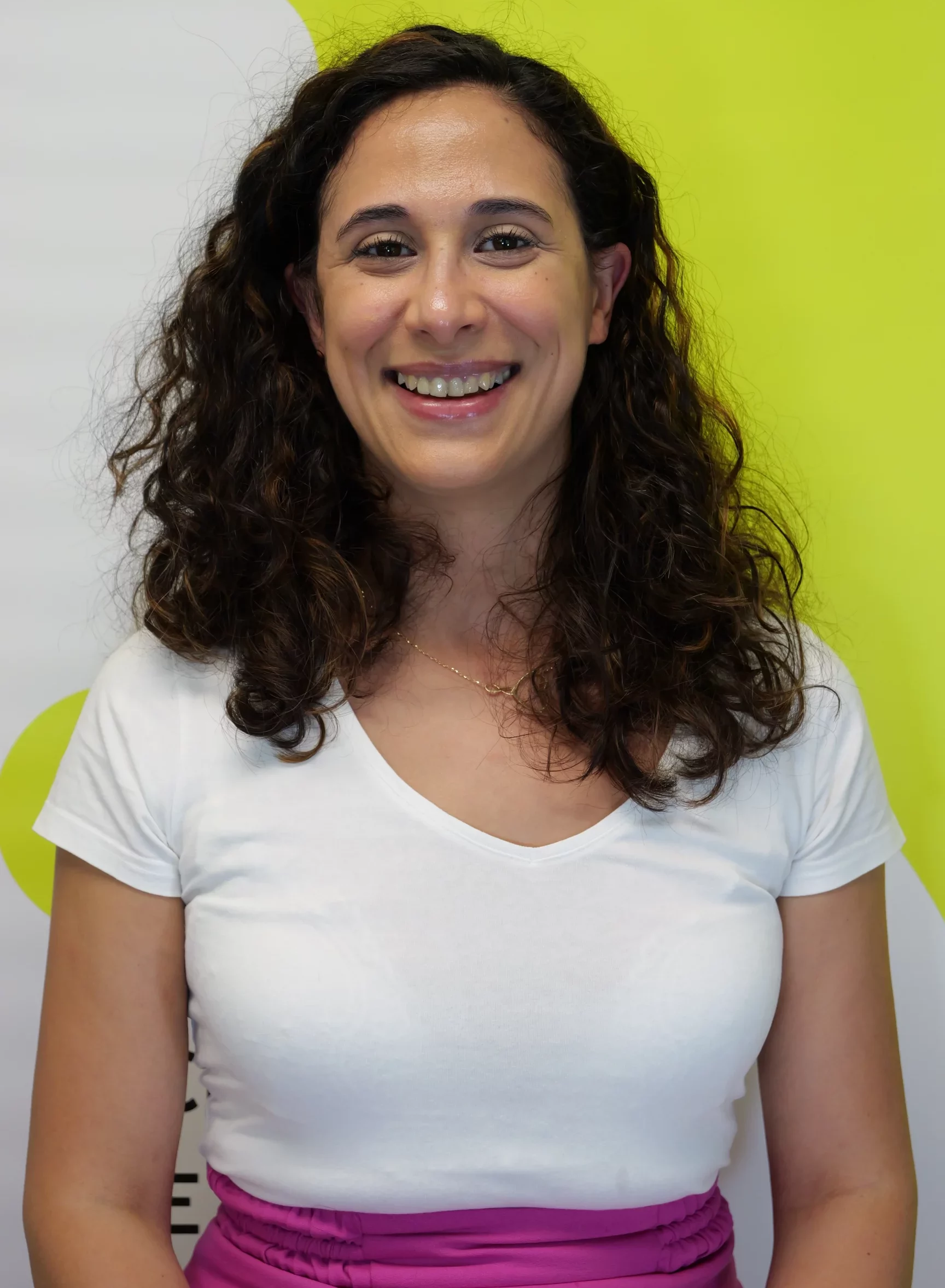
Céleste Chidiac, PhD
Scientific writer and digital marketing specialist
Céleste Chidiac holds a doctorate in neuroscience and molecular biology from the University of Strasbourg. Since joining the Microfluidics Innovation Center in 2023, she has combined scientific writing with website management. Her reviews draw on published research to explain microfluidic technologies, compare experimental approaches and discuss their applications and limitations. She helps researchers understand how these methods work and assess their relevance to their own research.