A continuous perfusion platform for retinal disease models: PANDORA
Author
Celeste Chidiac
Publication Date
Keywords
retinal disease models
blindness
organoids
Age-related macular degeneration
tissue explants
drug delivery
fine-tuned flow control
shear stress
Your microfluidic SME partner for Horizon Europe
We take care of microfluidic engineering, work on valorization and optimize the proposal with you
Microfluidics for retinal models: introduction
Age-related macular degeneration (AMD) is a leading cause of blindness in the elderly, affecting the daily life of around 200 million people worldwide. The complement system, part of innate immune surveillance, has emerged as a major pathogenic driver of the disease. To study these mechanisms and test new therapies, researchers rely on advanced in vitro retinal models such as organoids and tissue explants. Conventional static cultures, however, supply nutrients in excess at fixed timepoints, usually every two days, which is far from physiological. Continuous perfusion of culture media offers much closer-to-native conditions, and this is where microfluidics becomes essential.

Understanding and treating AMD: the PANDORA project
PANDORA is a Horizon Europe MSCA Doctoral Network coordinated by Eberhard Karls Universität Tübingen (Germany), bringing together eight academic, three industrial and two non-profit organisations across Europe for 48 months. The network studies complement-mediated pathomechanisms of AMD and develops new therapeutic approaches. It exploits state-of-the-art model systems and techniques, including ex vivo multicellular, stem cell-derived and murine models, omics, imaging, biochemistry, histology, functional assays and computational modelling, to study the complement functions relevant to AMD and to identify biomarkers for patient stratification and disease monitoring. In parallel, PANDORA develops innovative therapies through gene therapy, compound screening, optimised drug delivery to the retina and a novel multimodality imaging system. Through this work, the network trains the next generation of European translational scientists in vision and medical research.
Continuous perfusion of retinal models: our role
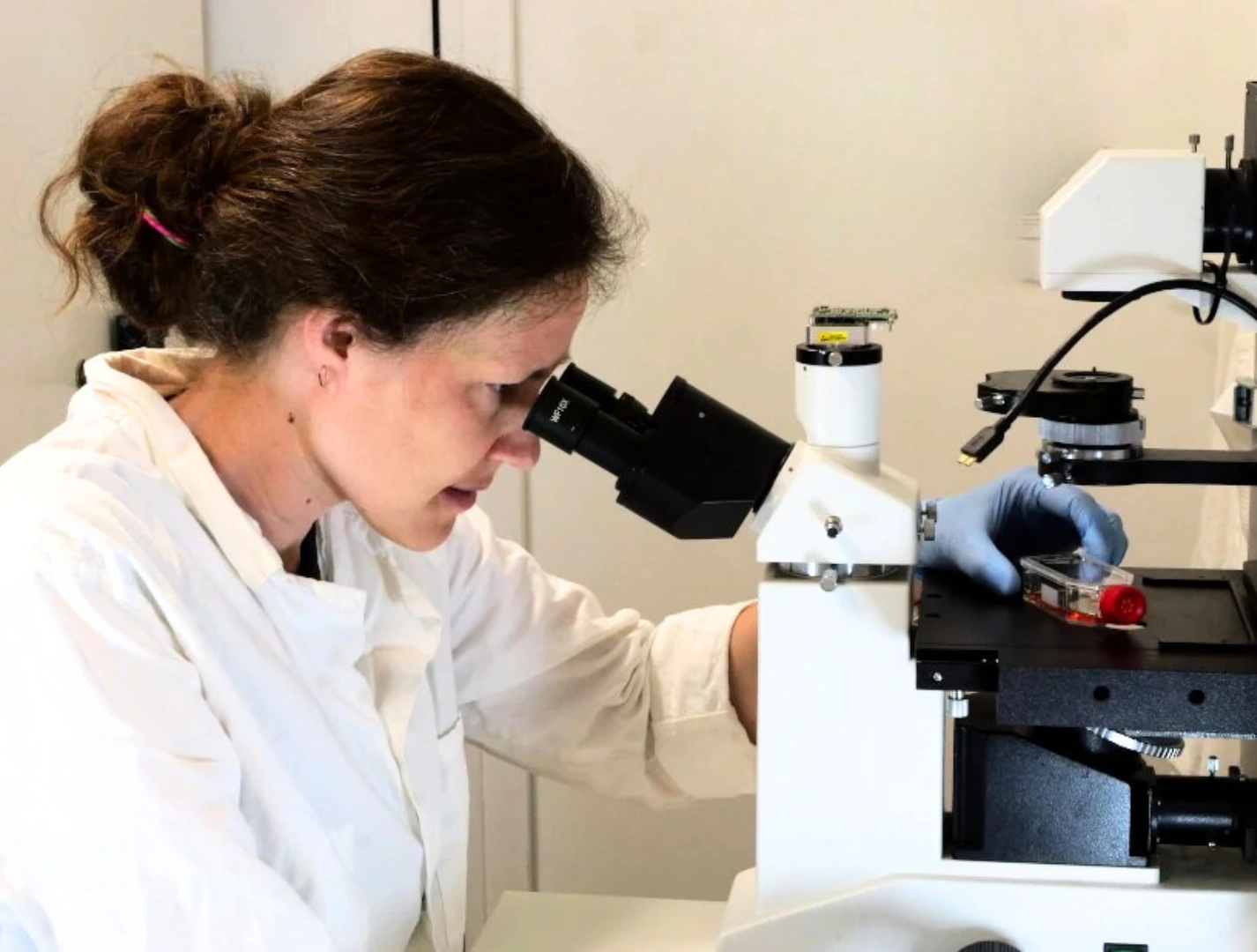
Within PANDORA, MIC hosts Doctoral Candidate 5 (DC5), whose PhD project focuses on the development of a novel instrument for the continuous perfusion of in vitro retinal models. DC5 will design a microfluidic setup for the automated perfusion of retinal organoid and retinal tissue explant cultures. The system will combine fine-tuned flow control to minimise shear stress with a media circulation loop for perfusion over long periods, reducing costs while benefiting complex cell-culture treatments. The project will also explore additional features such as in-line pH and O₂ sensors to monitor and control the cellular microenvironment, a temperature-controlled chamber and bubble traps to prevent air entrapment in the perfusion loop. In parallel, DC5 will study how a dedicated flow and gas controller can reproduce the hypoxic conditions seen in AMD. The perfusion system will be tested and validated with consortium partners on multicellular complex cultures.

Funding and Support
This project has received funding from the Horizon Europe, MSCA Doctoral Networks HORIZON-MSCA-2025-DN-01-01, grant agreement no. 101312030
Start date: 1 October 2026
End date: 30 September 2030