Microfluidic Discovery Kit
Exploring fluid dynamics with the perfusion pump
Simple
Get started with microfluidics
Educational
Learn by following simple and clear instructions
Easy to use
Just plug and play
Comprehensive
The kit contains everything you need to do your first experiment
Need a microfluidic SME partner for your Horizon Europe project?
Microfluidics discovery kit
With this starter pack, you will learn how to manipulate fluids at the microscale and unlock many applications, from biomedical research and chemical analysis to drug discovery and point-of-care diagnostics. With our carefully selected set of devices and resources, you’ll gain a solid foundation in microfluidic principles and techniques.
Inside the microfluidic discovery kit, you’ll find cutting-edge microfluidic devices with an embedded intuitive user interface and a step-by-step guide to help you realize your first microfluidics experiment. Every component has been thoughtfully selected, from the perfusion pump to the microchip and connectors, to ensure a seamless, successful, and pleasant user experience.
Kit content
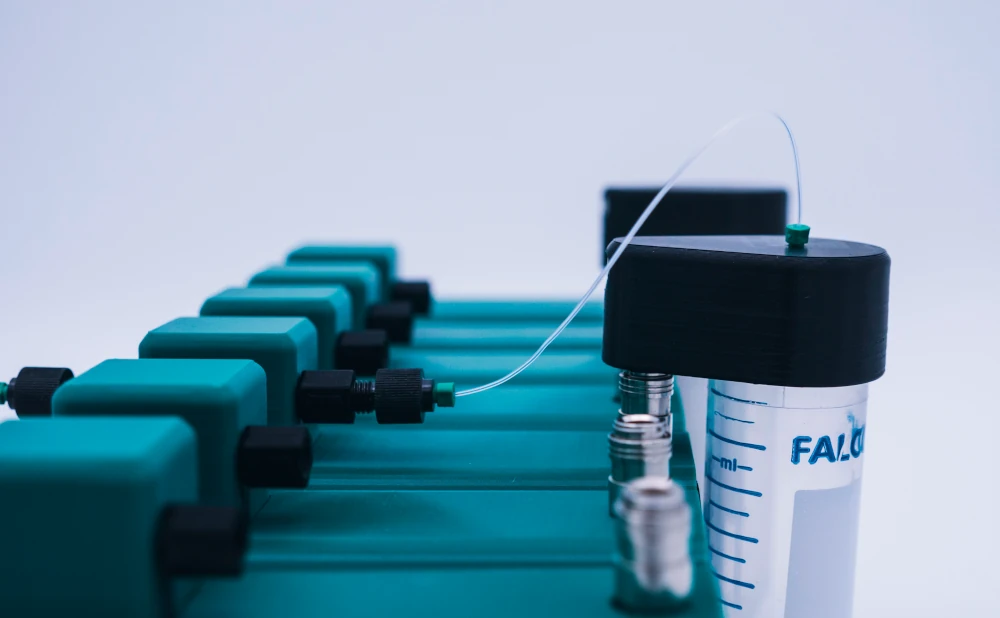
Perfusion pump
✓ Incubator-friendly
✓ You can choose pulsatile or linear flow
✓ No more mechanical stress
Perfusion pump
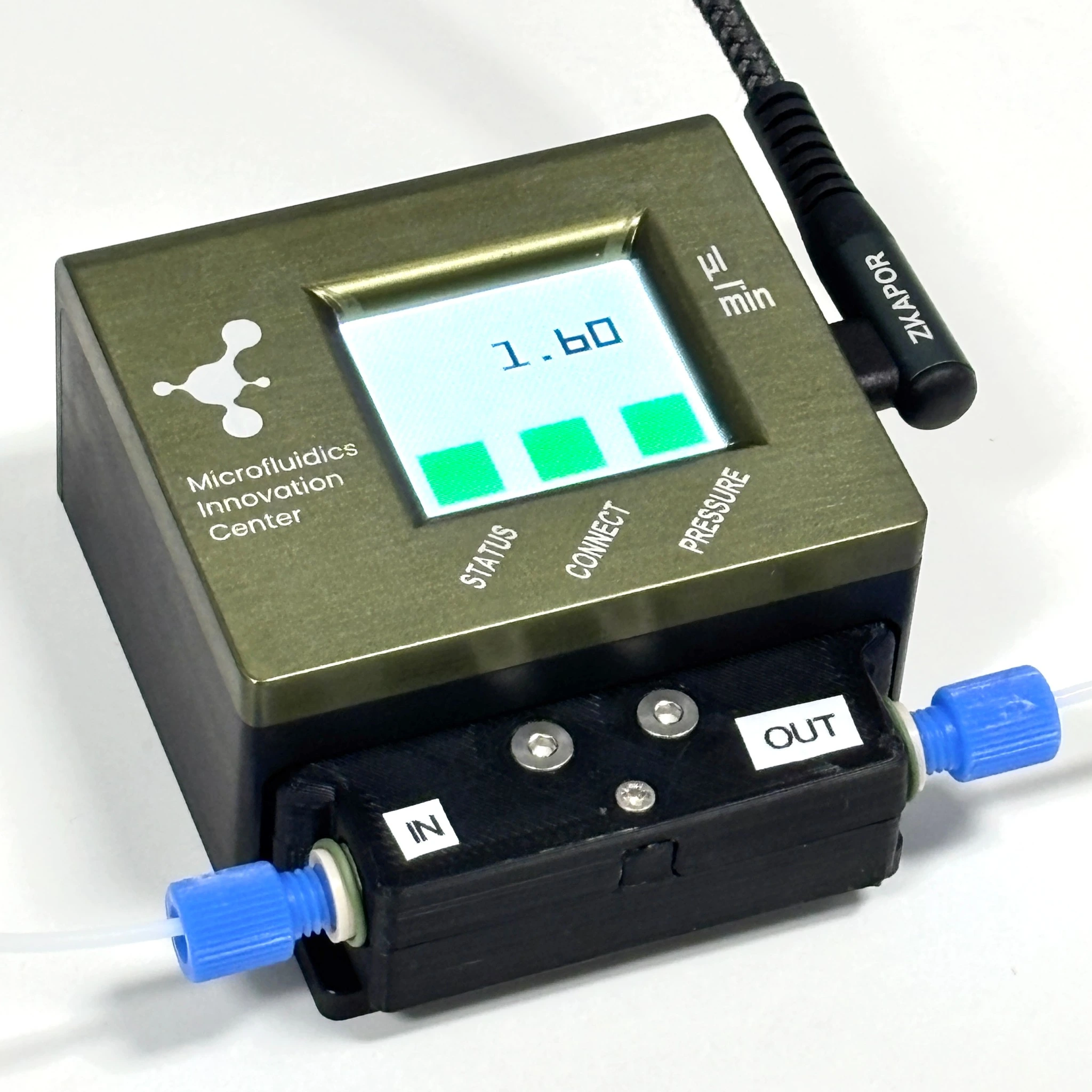
Microfluidic flow rate sensor
Low flow rate microfluidic flow sensor with automatic clogging detection
✓ Low flow rates
✓ Detect clogging inside the sensor
✓ No drift
2 Microfluidic flow sensors (eg. Galileo)
Comprehensive educational manual
Tubing + fluidic resistance + fittings
Microfluidic chips
Reservoir holder + reservoirs
2 Reservoir caps
LCD microscope
Dye + oil
Microfluidics discovery kit applications
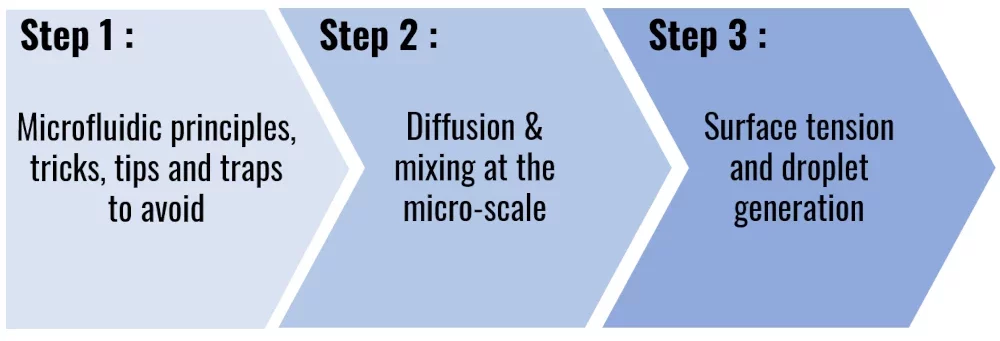
Learn microfluidic principles, tricks, tips, and traps to avoid through a simple fluid circulation:
- Follow the user manual and assemble the experiment.
- Pressurize air to push liquid.
- Monitor the flow rate.
- What is hydrodynamic resistance, and how is it important?
- How do you take advantage of this resistance to optimize your setup?
Learn about diffusion & mixing at the micro-scale with the dedicated microfluidic chips:
- Follow the user manual and assemble an experiment including a microfluidic chip (diffusion or mixing).
- Set the pre-defined parameters.
- Observe and study diffusion or mixing using the included LCD microscope.
- Start playing with the parameters to see their influence on a multi-flow system.
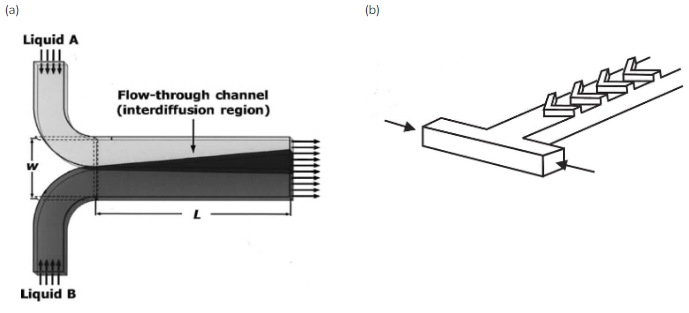
Learn about surface tension through our droplet generation experiment:
- Follow the user manual and assemble the droplet generation experiment with the dedicated microfluidic chip.
- Set the pre-defined parameters.
- Observe and study droplet formation using the included LCD microscope.
- Start playing with the parameters to see their influence on droplet size variation.
The microfluidic discovery kit is the perfect starter pack to introduce yourself to microfluidics.
Reference
1. L. Capretto, W. Cheng, M. Hill, and X. Zhang, Top Curr Chem V. 304, pp. 27–68 (2011).
2. Nguyen N-T, Wu Z. Micromixers—a review. J Micromechanics Microengineering. 2005;15(2):R1.
A free software for all instruments
Robust, modular, and versatile set-up control solution
Software operability: standalone GUI for data visualization and logging; optional Python API
Products & Associated Accessories
FAQ - Microfluidic Discovery Kit
What is the Microfluidic Discovery Kit?
It is an all-in-one, single-pack start-up kit created by the Microfluidics Innovation Center to provide any individual aspiring to have a practical feel of microfluidics. It is aimed at being easy to use, easy to install, and easy to use by students, research scientists, and those in the industry as well, who do not need any previous knowledge to start experimenting.
Who is this kit intended for?
The target audience of this kit includes students in need of an introduction to the field as well as academic researchers new to the field of microfluidics, and industry professionals interested in precise control of fluids to use in biomedical research, drug discovery, chemical analysis, or point-of-care diagnostics.
What does the kit contain?
The kit is a complete system and consists of:
- A perfusion pump friendly to incubators (supports up to 6 chips at a time).
- Two microfluidic flow rate sensors (e.g., Galileo) with automatic clogging detectors.
- Diffusion, mixing, and droplet generation experiments Microfluidic chips using droplet generation, mixing, and diffusion.
- Tubing, fluidic resistances, and fittings.
- Reservoir caps, reservoirs, and reservoir holders.
- A microscope of observation (LCD).
- Stain and stain colorant.
- An inventory of step-by-step teaching guide.
What are some of the things I can do with the kit?
The kit covers three main areas of experiment. First, simple fluid circulation, in which you get to know you can pressurize air to force the liquid to flow, how to check the flow rate, and to learn about hydodynamic resistance. Second, microscale diffusion and mixing, whereby specific dedicated chips are used to monitor the interactions between fluids and the geometry of the channels that influence the mixing efficiency. Third, droplet generation, the investigation of the surface tension and the parameters governing the droplet size.
What is the perfusion pump and why would it be appropriate to use it in the lab?
The perfusion pump is an incubator-compatible pump which can be used to pump fluid through a maximum of six microfluidic chips at once. It accommodates pulsatile and linear flow modes, which do not cause mechanical stress to delicate samples and are, therefore, suitable to biological research where consistency of flow is important.
What is the microfluidic flow sensor?
The Galileo flow sensor is a non-drifting, low-flow-rate, real-time sensor that automatically identifies clogging within the sensor. The kit contains two sensors that allow the user to simultaneously monitor multiple channels and provides feedback to the user on properties directly in real time and quantitative.
What am I going to know about hydrodynamic resistance?
One microfluidic concept is hydrodynamic resistance, which determines the behaviour of fluids in small channels: the equivalent of electrical resistance in an electrical circuit. The manual that comes with the kit leads users to the knowledge of the dependence of resistance on channel geometry and how to use the same to control the distribution of flow throughout a system. This expertise can be directly used in designing and optimization of actual microfluidic setups.
What is the mechanism behind the droplet generation experiment?
Using a specialized microfluidic chip and a mixture of immiscible fluids (the dye and oil contained within it), one can observe droplet behavior at the microscale. By varying flow rate parameters, they can investigate droplet size variation, which is a general concept in applications in diagnostics, emulsion chemistry, and drug encapsulation.
What is the software that is included with the kit?
The instruments are all backed by free and standalone software interface which enables users to view and record data in real time. Users who would like to tie the system into their own workflows or programmatically automate their experiments have an optional Python API that can be used.
Can the kit be expanded after the initial experiments?
Yes. The Discovery Kit is specifically created to be a point of entry into a more generalized ecosystem of microfluidic packs and instruments provided by the Microfluidics Innovation Center. When users have become familiar with the basics, they can progress to more complex applications, including concentration gradients assays, chemotaxis assays, organ-on-chip, flow cytometry, and so forth – all on the same underlying platform and software infrastructure.