
Microfluidics mass spectrometry pack
Miniaturization, compartmentalization, and high-throughput analysis
Label-free high-throughput screening
Direct screening – no dyes, no tags, no fluorophores
Highly monodisperse
Less than 1% coefficient of variance (CV) in diameters
Analyze picoliter aliquots
Encapsulate volumes down to picolitres
High frequency analysis
Tunable droplet frequency from 1-100 Hz
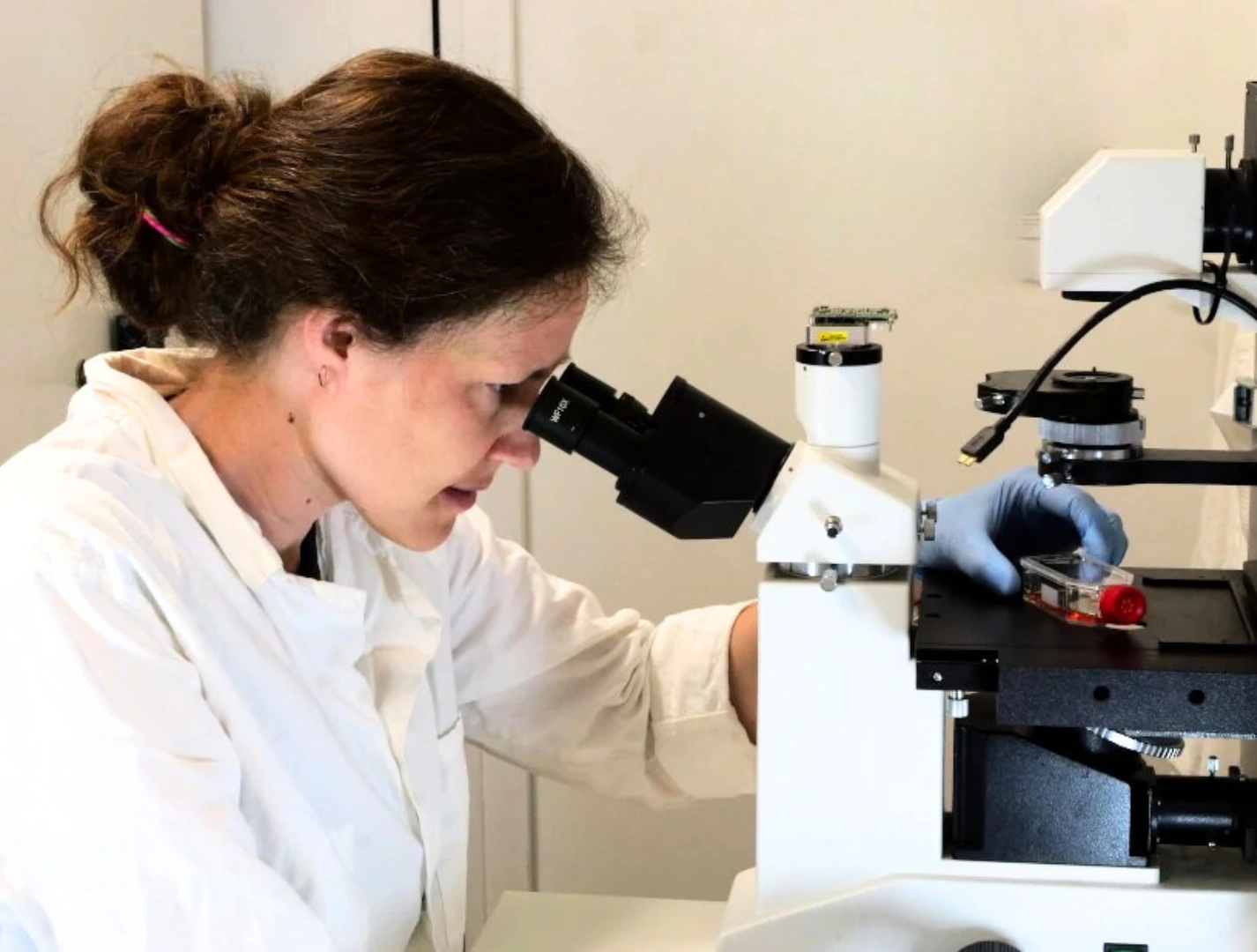
Need a microfluidic SME partner for your Horizon Europe project?
Image credit: Nanographene oxide interacting with bacteria, TEM. Wellcome Collection. Attribution 4.0 International (CC BY 4.0).
Droplet microfluidics Mass spectrometry platform
Coupling droplet microfluidics with Mass Spectrometry (MS) has never been easier with the Microfluidics Mass Spectrometry Pack for applications such as high-throughput drug screening, single-cell metabolomics, or enzyme kinetics! [1,2]
Based on a high-accuracy flow controller and a specialized droplet-interface chip, this all-in-one solution includes everything researchers need to set up their own droplet injection system with stable electrospray ionization (ESI).
If you are a beginner with microfluidic-related techniques, our microfluidic experts will support you through all the steps needed to set up and perform your experiment. The Droplet-MS pack can be used for several applications, including label-free enzyme assays and chemical reaction monitoring.
A standard Droplet-MS all-included pack contains two pumping channels to generate droplets and a dedicated infusion channel to guide them into the MS inlet, enabling rapid chemical analysis of discrete samples without cross-contamination.
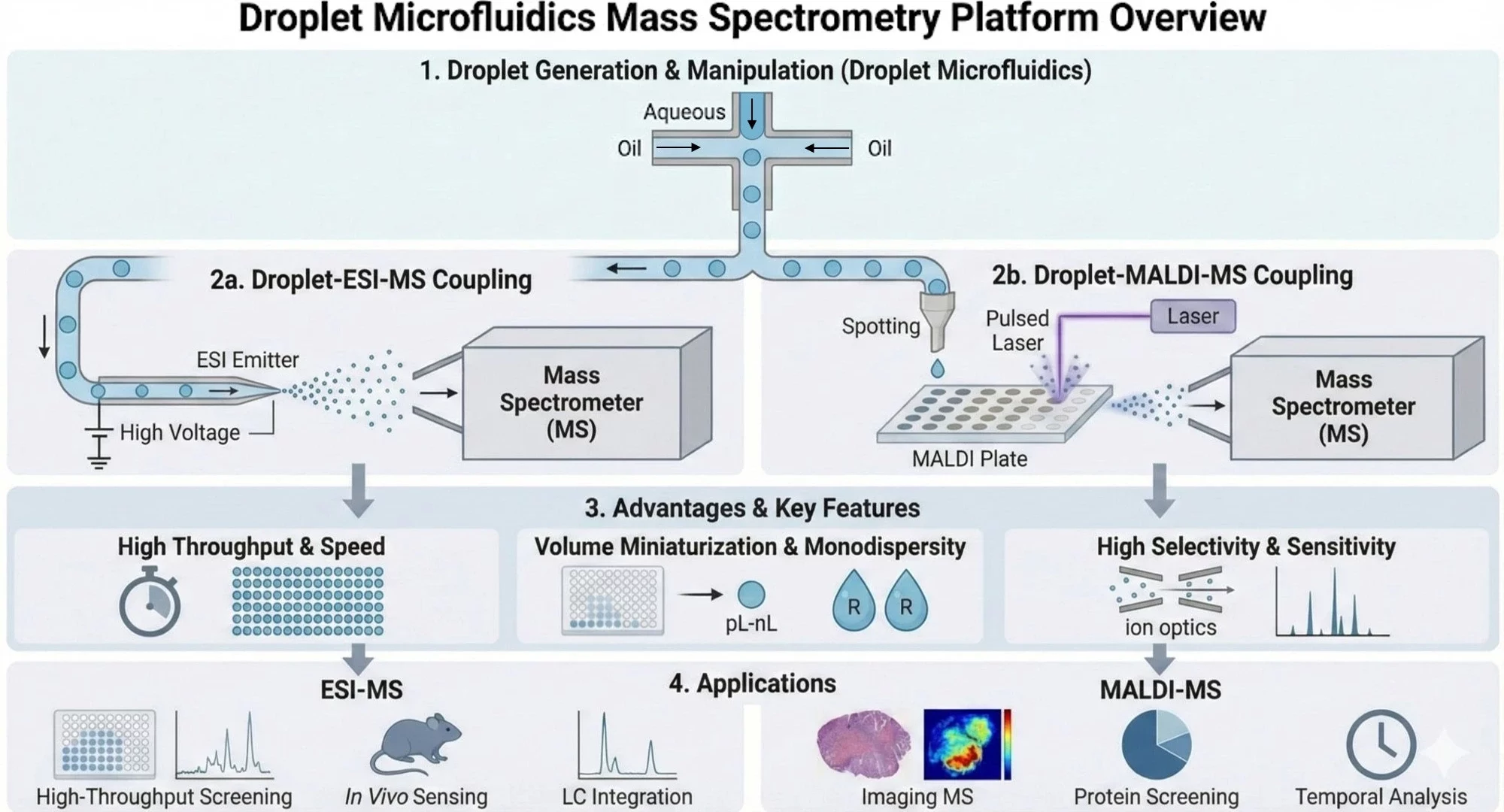
Droplet microfluidics Mass spectrometry setup
A preassembled pack guarantees good compatibility among the different parts, allows you to start your experiment right out of the box, is controlled by a single flexible software, and can be used for different ionization modes. Therefore, a pack is the easiest way to set up droplet-based analysis for beginner and expert users.
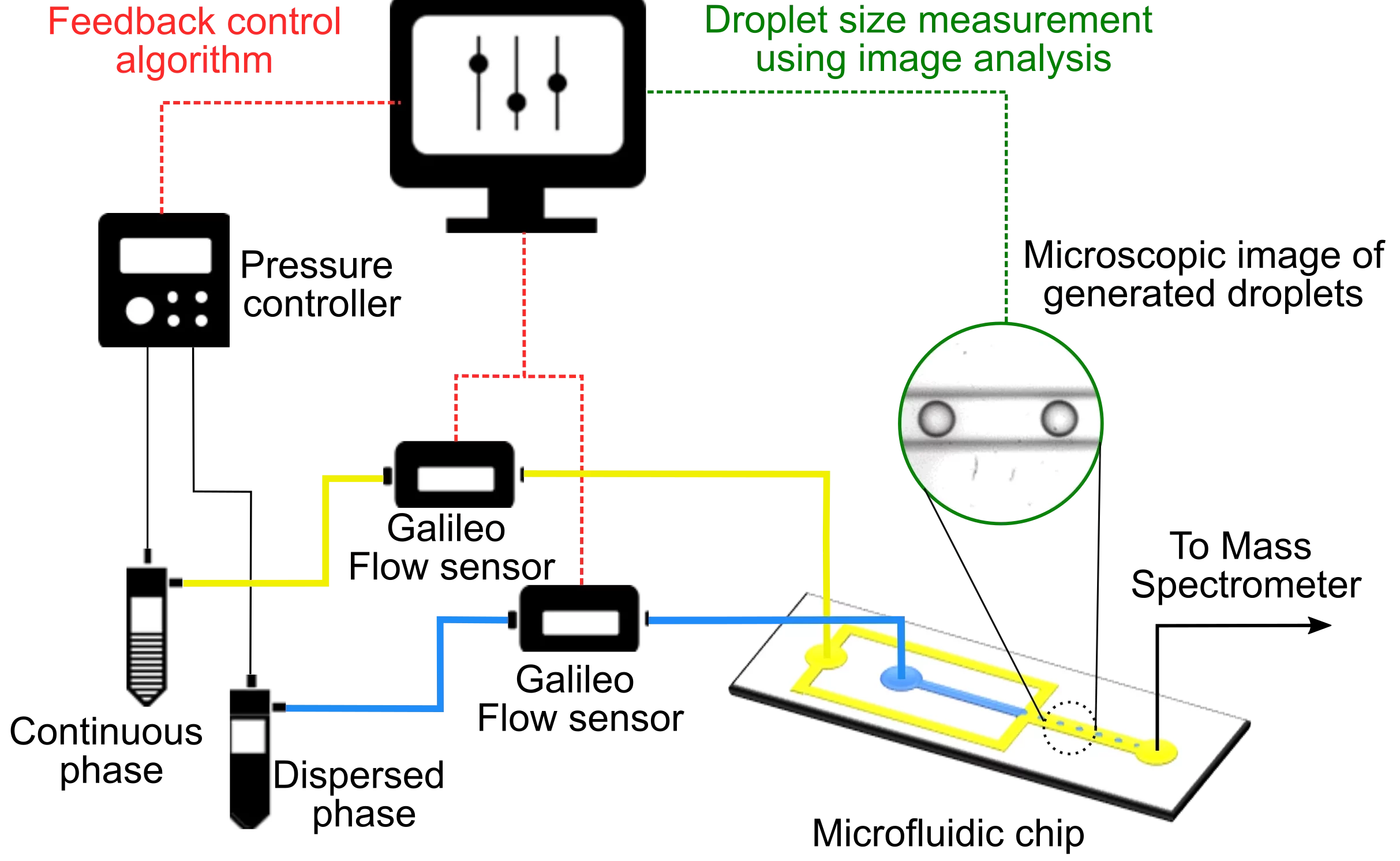
The Droplet-MS pack contains:
- 2 x Galileo flow sensor
- Tubing to Mass spectrometer coupling adapter
- Pressure controller
- 2 x Falcon reservoir caps
- Microfluidic chip from microfluidic ChipShop
- All necessary accessories: tubing, connectors, filters, etc.
- Custom-built python algorithm for command and automation
Microfluidics droplet-MS principle
The Droplet-MS approach compartmentalizes samples into nanoliter-sized aqueous droplets segmented by an oil phase. This design is specially created to maintain the chemical identity of thousands of individual reactions [3]. To analyze these droplets, they are channeled towards a microfluidic emitter where they undergo Electrospray Ionization (ESI).
Usually, the oil phase must be removed or carefully managed to prevent contamination of the MS source. Our pack uses careful oil phase selection for your experiment, droplet frequency tuning, and interface geometry to ensure a stable Taylor Cone and robust ionization of the aqueous contents.
Droplet-MS is significantly more informative than optical detection methods because it is label-free and does not require fluorescent tagging, enabling the discovery of unknown metabolites and reaction byproducts [3,4].
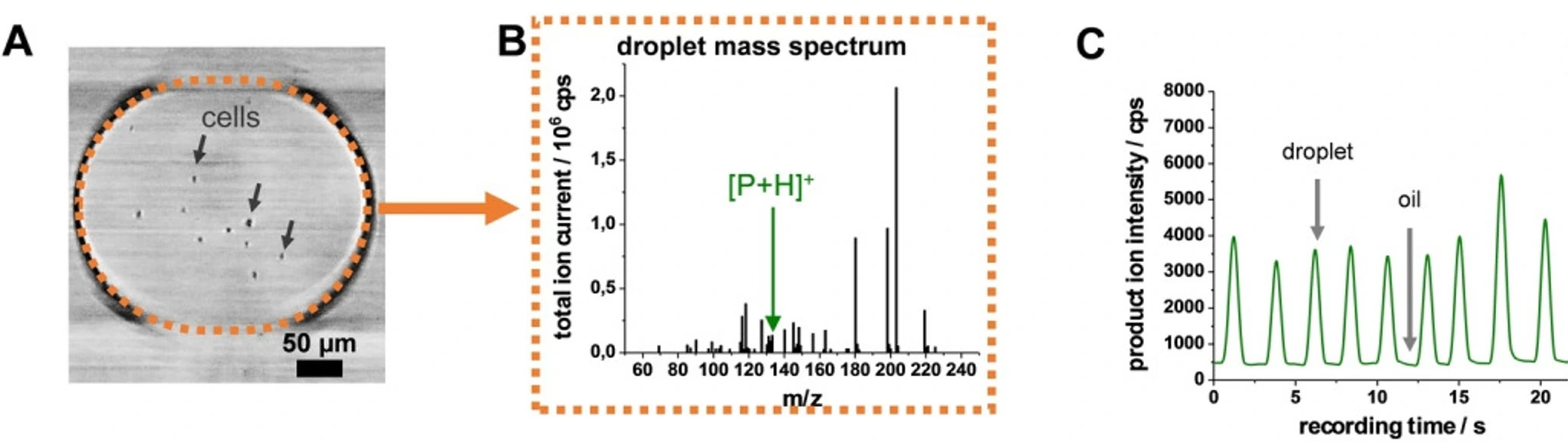
Advantages of microfluidics for MS analysis
Working with microfluidics for Mass Spectrometry is a way to drastically increase the throughput of your chemical analysis.
- Zero Cross-Contamination: Because samples are encapsulated in droplets, there is no dispersion between samples as they travel through the capillary.
- Sample Economy: Analysis requires only pL to nL volumes, conserving expensive enzymes or rare patient samples.
- Temporal Resolution: Fast kinetics can be monitored by generating droplets at different time points of a reaction before they reach the MS detector.
- High Sensitivity: Low flow rates in microfluidics generally improve ionization efficiency and sensitivity in ESI-MS.
To summarize, the Droplet-MS pack allows for flexible, precise, and high-speed chemical information retrieval from segmented flows.
When you order the mother machine pack, you can expect to receive the motherboard with the desired number of units, the reservoirs, flow sensors, the software, and the cable to connect to the computer, as seen below (the laptop is only illustrative).
Customize your pack
The Droplet-MS interface chip provided is available in PMMA, Polycarbonate, or Topas, with localized hydrophilic/hydrophobic surface treatments.
- Channel width: control the size of your droplets
- Nozzle size: 30 µm to 100 µm
- Emitter types: Integrated monolithic tip or inserted capillary
The signal stability depends on the oil, the surfactant, and the electrospray voltage. If you’re unsure which settings are best suited for your mass spectrometer model, get in touch with one of our experts!
- Customisable flow rate range with Galileo flow sensor
- Additional pumping channels for post-column dilution can be added.
- Optical synchronization (via a laser trigger) can be provided to synchronize droplet arrival with MS scans.
Additional pumping channels for the flow control pump and flow rate sensors can be added to the pack.
You can contact our experts to answer any questions about this droplet microfluidics mass spectrometry pack and how it can match your specifications.
Frequently asked questions
Can I use this with any Mass Spectrometer?
Most standard ESI sources can be adapted to fit our emitter. However, a discussion with our experts is needed to determine the specific mounting bracket required for your instrument (Thermo, Agilent, Waters, Sciex, etc.).
How do I handle the oil entering the MS?
Our specialized chips and protocols minimize the amount of oil entering the source. We also provide compatible fluorinated oils that are less prone to suppressing signals or contaminating the quadrupoles.
Can a pack be customized based on my specific application?
Yes! Our experts will determine which instruments are best suited to your application, such as the need for an integrated optical detection step before the MS. Contact us using the “talk to our experts” button above.
Download the MIC Horizon Europe 2026/2027 Calls Calendar:
References
- Pereira F, Niu X, deMello AJ. A nano LC-MALDI mass spectrometry droplet interface for the analysis of complex protein samples. PLoS One. 2013 May 9.
- Wink K, van der Loh M, Hartner N, Polack M, Dusny C, Schmid A, Belder D. Quantification of Biocatalytic Transformations by Single Microbial Cells Enabled by Tailored Integration of Droplet Microfluidics and Mass Spectrometry. Angew Chem Int Ed Engl. 2022 Jul 18.
- Takagi, Yuto, et al. “Femtoliter-droplet mass spectrometry interface utilizing nanofluidics for ultrasmall and high-sensitivity analysis.” Analytical Chemistry 94.28 (2022).
- Fidalgo, Luis M., et al. “Coupling microdroplet microreactors with mass spectrometry: reading the contents of single droplets online.” Angewandte Chemie 121.20 (2009): 3719-3722.



Funding and Support
This project has received funding from the European Union’s Horizon research and innovation program under the Marie Skłodowska-Curie grant agreement no. 101119956 (DarChemDN).
Products & Associated Accessories
FAQ-Microfluidics Mass Spectrometry Pack
What are the scientific issues that it resolves in comparison to traditional LC-MS or syringe-infused ESI?
Traditional LC-MS performs wonders with bulk separations but is a nightmare when tiny volumes are required, when switching between many different separations is required, or when live processes are necessary on a chip. This pack is tuned for:
- Extremely low (nanoliters to low microliters per minute) spray-free flows,
- Accurate, milliseconds level time-alignment of on-chip events and MS acquisition,
- Elicate treatment of rare/precious samples (priceless cells, organ-on-chip effluents, picoliter droplets), smaller band broadening due to sub-microliter dead volumes at the interface.
What instruments can it be compatible with?
Vendor-agnostic by design. We normally interface with ESI or nano-ESI systems using conventional fittings and optional adaptors to APCI/APPI systems. In reality, the pack is applied to prevalent high-resolution (Orbitrap- and Q-TOF-type) platforms as well as to triple-quads in a targeted assay. In case your source can take a fused-silica or metal emitter and standard stages, it can in most cases be built in.
What are its flow rates and sample volumes?
Common continuous flows: 10 nL/min -50 μL/min. Droplet mode: picoliter -nanoliter plugs up to tens of Hz. When using one-shot injections, 50-500 nL is injected without significant distortion of the peak (when reasonable tubing lengths are used). These ranges give what most laboratories operate with on a daily basis; we can do even higher flows with custom emitters.
What is the chip-to-MS transfer architecture that is minimized?
The interface uses a brief, tapered path to a replaceable or built-in nano-ESI emitter. Good internal dead volume should be less than 100 nL (usually 2060 nL in the final segment), and this limits dispersion. The last capillary length is maintained at a couple of centimeters; ferrule-free or low ferrule-compression connections ensure there is no step change in ID.
Is it capable of operating continuous streams as well as droplet microfluidics?
Yes. In continuous mode, you obtain classic time-resolved profiles from organ-on-chip devices, enzymatic reactors, or synthesis lines. In the droplet mode of operation, droplets are merged or de-emulsified upstream in the system (depending on the protocol) without loss of temporal fidelity, allowing each droplet to be treated as a separate event in the mass spectrometer.
What are the materials and solvents supported?
The chips are made either in glass or polymer (with optional Si/glass stacks in high-technology structures). Where necessary, they can be biocompatible (made solvent-resistant with acetonitrile, methanol, isopropanol, DMSO blends). Polymeric chips have pressure ratings of up to approximately 5 bar, but glass can be higher. If you plan to use halogenated or high-pH solvents, we can select suitable tubing and seals.
What is your method of coordinating the activities of a microfluidic with the acquisition of the MS?
Two tiers: physical instigations and high-level coordination. Our controller has TTL/analog I/O for start/stop and event markers, and we also have a basic API for scheduling valve switching, gradient steps, or droplet generation. Extraction can be performed event aligned with the time-stamped scans and external trigger lines taken on the MS side. Switching valve 100 mend to end; pressure spikes are removed to prevent spray hiccups.
Which types of research are the most helpful?
Here:
- Single-cell metabolomics and lipidomics.
- Minute-scale resolution organ-on-chip secretome profiling.
- Flow chemistry reaction monitoring in real-time.
- Droplet screening of an enzyme or a synthetic library.
- Quick change of conditions without lengthy column re-equilibration.
What is your approach with regard to maintenance, cleaning, and sterility?
Every wet area is available; emitters can be changed. The standard rinse protocol includes aqueous/organic washes (e.g., water-acetonitrile) alternating and (where compatible) short rinses with isopropanol or formic acid. In the case of bio-work, it is possible to assemble a microfluidic path in sterile conditions; some chip materials can be used in autoclave conditions.
Is the pack a total replacement of LC columns?
Not necessarily. Think of it as complementary. LC remains bright when a range of complex mixtures requires high peak capacity. In cases where the question lies in the temporal dynamics, scarce samples or micro-reactor outputs, microfluidic-MS route is quicker and more cost-effective in the use of samples. Both are run by many groups depending on the study.
What is your after-sales service?
Applications designed for your chemistry, response-time tuning to your MS, and quick prototyping are needed when the initial chip is found to require adjustments. In collaborative projects (Horizon Europe or national), we will assist with proposal writing and can spin prototypes during the project to de-risk milestones. MIC designs systems to fulfill any field of research in which microfluidic control and stable MS readout are of interest.