Patented technology
Flow Calibrator
The latest technology in high-precision flow sensing
Flow you can trust
Confirm accuracy before every run
High accuracy
Ideal for micro-to-meso scale flow checks
Instant feedback
Catch instability or drift in real time
Need a microfluidic SME partner for your Horizon Europe project?
The calibration standard for flow control systems
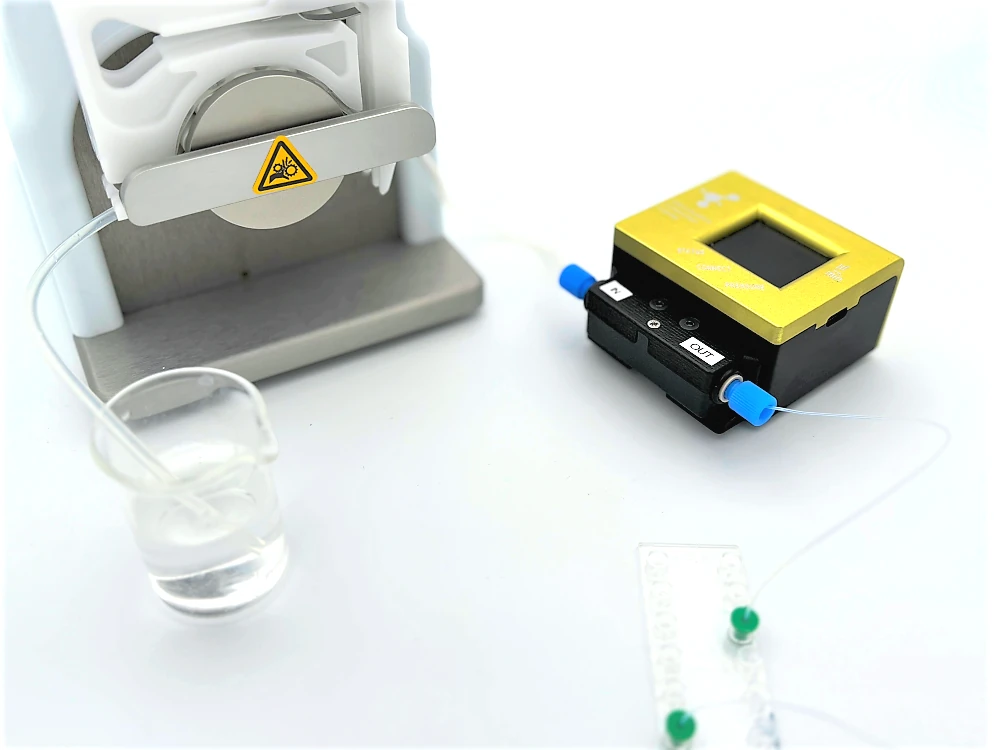
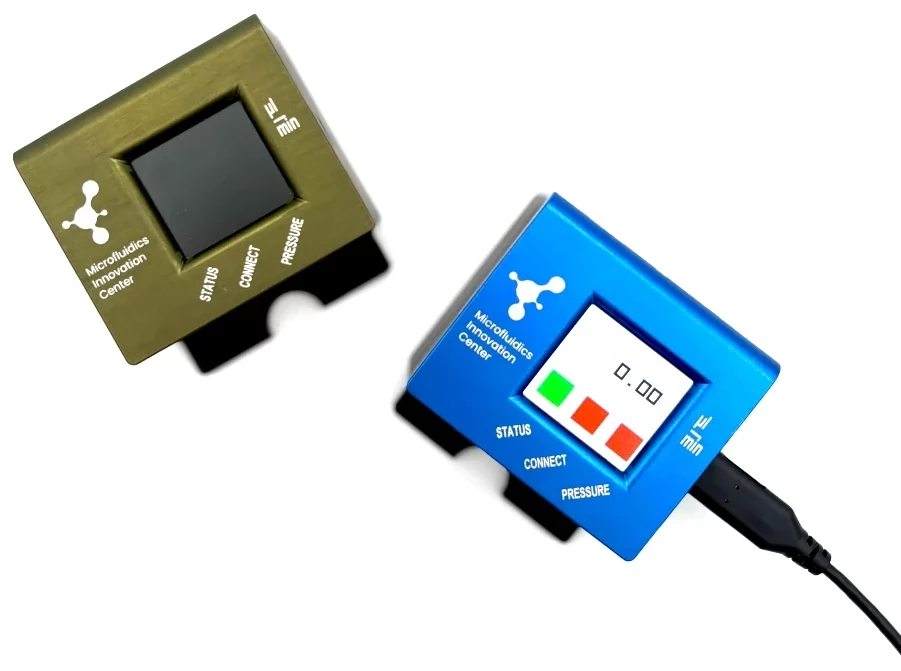
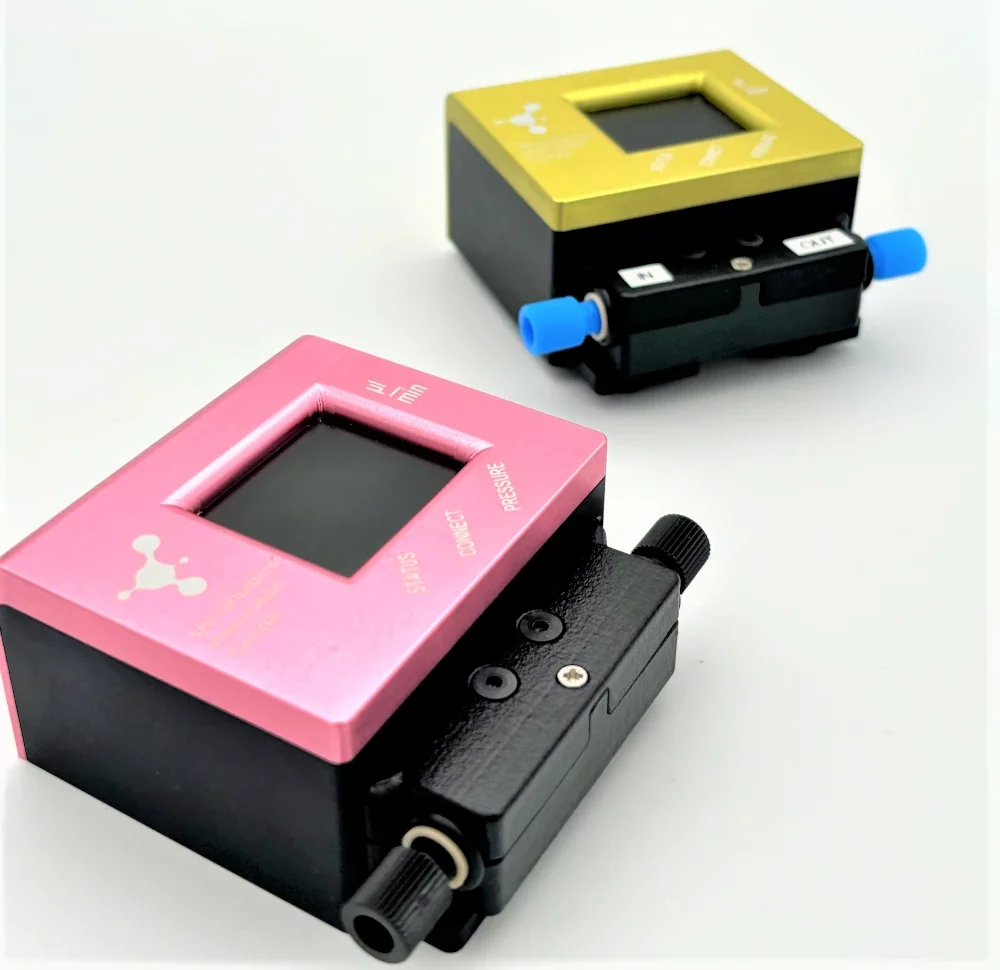
When working with setups using liquid handling, precision is everything, and that starts with knowing your system is working exactly as expected. The Galileo Flow Sensor is more than a measurement device. It’s your go-to reference tool for validating and benchmarking pumps, flow regulators, and pressure systems across a broad range of fluid volumes.
Whether you’re using pressure-driven flow, syringe pumps, or automated liquid handlers, Galileo provides reliable, real-time feedback that tells you whether your system is performing within spec. With accurate readings from 1 to 30 mL/min, it’s perfect for checking flow integrity before you start your run, or diagnosing issues when something feels off.
If you’re developing instrumentation, running quality control, or just want confidence in your fluid setup, Galileo gives you a rock-solid baseline. Use it as a validation device in development labs, QA checkpoints in production workflows, or a troubleshooting tool when the data doesn’t add up.
Permanent real time sensor quality control feature
Clogging detection
Systems using liquid flow are intricate by nature, a tightly connected network of pumps, tubing, chips, valves, and sensors. When something goes wrong, pinpointing the issue can turn into a lengthy troubleshooting marathon. The Galileo Flow sensor simplifies this by detecting clogs within its own fluidic path and issuing a clear alert. And when an issue is detected, it’s easy to fix, just swap the cartridge and get back to work. This quick resolution saves time, rules out the sensor as the source of the problem, and helps you stay focused on what matters.
Drift detection
Over long experiments, sensor drift can become a silent threat to data reliability, often caused by biofouling or buildup of particles along the inner walls of the flow sensor. Through real-world use and continuous R&D, our team observed how subtle shifts in sensor calibration could undermine even the most carefully controlled experiments. That’s why Galileo is equipped with drift detection technology. If internal flow path changes occur, the sensor issues a clear visual alert, letting you know it’s time to replace the cartridge. This ensures confidence in your data, maintains accuracy over time, and makes maintenance intuitive and hassle-free.
Compatibility and applications
Who should use Galileo for calibration?
Instrumentation developers
Validate system performance during prototyping and testing.
Biomedical & biotech labs
Ensure flow stability in organ-on-a-chip, perfusion platforms, and culture systems.
Pharmaceutical QA teams
Check flow accuracy in formulation and synthesis lines.
Automation engineers
Check flow accuracy in formulation and synthesis lines.
Academic researchers
Quickly verify setup integrity between experimental runs.
Flow calibrator technical specifications
| Characteristics | Specifications |
|---|---|
| Flow rate ranges | For example, flow rate ranges with <5% accuracy:
Note that the range can be customized depending on working fluid properties (viscosity, etc.) |
| Calibrated liquids | aqueous media (others are possible upon request) |
| Wetted materials | PEEK, steel, fluorosilicone, perfluoropolyether resin |
| Internal volume | approx. 40 µL (variable depending on the used configuration range) |
| Operation pressure | up to 3 bar gauge pressure |
| Maximum pressure rating | up to 6 bar gauge pressure |
| Software operability | standalone GUI for data visualization and logging; optional Python API |
Please note that this is a beta version of this technology, so exact specifications are subject to change.
Frequently asked questions
Is the calibrator compatible with different types of fluid handling systems?
Absolutely. Our Flow Calibrator works with pressure-driven flows, syringe pumps, and automated liquid handling systems, making it a versatile tool for both R&D and production environments.
Can the cartridges be reused?
Yes, depending on your application. The flow sensor cartridges can be reused if there’s no alert of clogging, or if you face no problems of cross-contamination in your experiments.
Does the Flow Calibrator require calibration before use?
No, each flow sensor is factory-calibrated and ready to use out of the box.


Funding and Support
The development of this microfluidic flow sensor has received funding from the European Union’s Horizon research and innovation program under HORIZON-EIC-2022-TRANSITION-01, grant agreement no. 101113098 (GALILEO).
Products & Associated Accessories
FAQ - Flow Calibrator
What is a flow calibrator and why do we need it in microfluidics?
A flow calibrator is a device that can be employed to measure and confirm the flow rate of microfluidic systems. Even small adjustments in flow rate can cause major variations in experimental results. Pumps, sensors and flow controls require flow calibrators which can supply these requirements. They aid in maintenance of reliability in microfluidic processes in industries, in medical diagnosis and laboratory research, since they give out precise measurements that can be tracked.
What is the benefit of the latest Flow Calibrator technology in enhancing the accuracy of the measurements?
The high sensor technologies in the recently employed flow calibrator technologies have the ability to identify exceptionally small flow variation with high accuracy. Such systems are frequently supplemented with sophisticated sensor electronics, micro-channels of flow and regulated pressure to obtain credible measurements. The new flow calibrators minimize errors of measurements and provide quicker and improved results over the conventional calibration methods. Such greater accuracy is required in areas like analytical chemistry, biotechnology, or drug development.
What are the flow rates that a flow calibrator is able to measure?
Accurate flow calibration is vital to many industries. Flow calibrators are used in pharmaceutical and biotechnology industries to provide an accurate delivery of reagents to microfluidic research and drug development protocols. Medical equipment manufacturers use them to make sure that the flow of diagnostic devices is regulated. Flow calibrators may also be used in research laboratories, chemical analysis facilities, and microfluidics startups to give accuracy in measurements of the complicated fluidic systems.
What are the industries most useful in the use of Flow Calibrator technology?
The frequency of calibration will depend on the use, the regulations and the frequency of usage of the equipment. Research laboratories can also carry out calibration on a periodic basis to make sure that measurements are accurate. The calibration could be more standard in controlled areas such as pharmaceuticals or medical equipment manufacture to conform to quality standards. Trusted flow calibrator provides the technicians with an opportunity to check and rectify the work of the systems, where necessary, and on time.
What is the recommended frequency of calibration of flow sensors and pumps?
In order to ensure the correctness of measurements, it could be periodically calibrated in the research laboratories. Error checks could then be performed more often to provide quality assurance in controlled markets like pharmaceuticals or biotech. A good flow calibrator would assist in making sure that the system is done within a short time by the technicians when the necessity arose.
Why should a dedicated flow calibrator be used, rather than conventional methods?
The conventional calibration techniques tend to make use of indirect calculations or measurements which may lead to errors. Some of the benefits of a special flow calibrator are fewer errors in measurements, faster time, and automatic measurement of data. It also minimizes the possibility of misuse of human factors as it makes calibration of the process easy. Modern flow calibrators are the best variant in case motive microfluids is used as they offer stable and reproducible results with embedded sensors and a sophisticated software.
What are the other places where researchers can learn on advanced flow calibrator systems?
We provide a wide variety of details on the newest devices to the researchers and engineers who are interested in accurate measurements of flow. Our Flow Calibrator was created to accurately and reliably measure flow.