Living labs in Mission Soil
Author
Christa Ivanova, PhD
Publication Date
March 14, 2024
Status
Keywords
Living labs
Soil health
Innovation ecosystems
Sustainable practices
Soil management
biodiversity
Soil restoration
Biodiversity support
Horizon Europe
Your microfluidic SME partner for Horizon Europe
We take care of microfluidic engineering, work on valorization and optimize the proposal with you
Soil health in Horizon Europe
Horizon Europe, the European Union’s main research and innovation program, includes various missions to solve critical societal challenges. One such mission, “A Soil Deal for Europe” (Mission Soil), focuses on restoring and maintaining the long-term health of Europe’s soils. This initiative is essential: healthy soils are crucial for ecosystems, food production, climate regulation, and biodiversity. The calls encourage the establishment of living labs.
What are living labs?
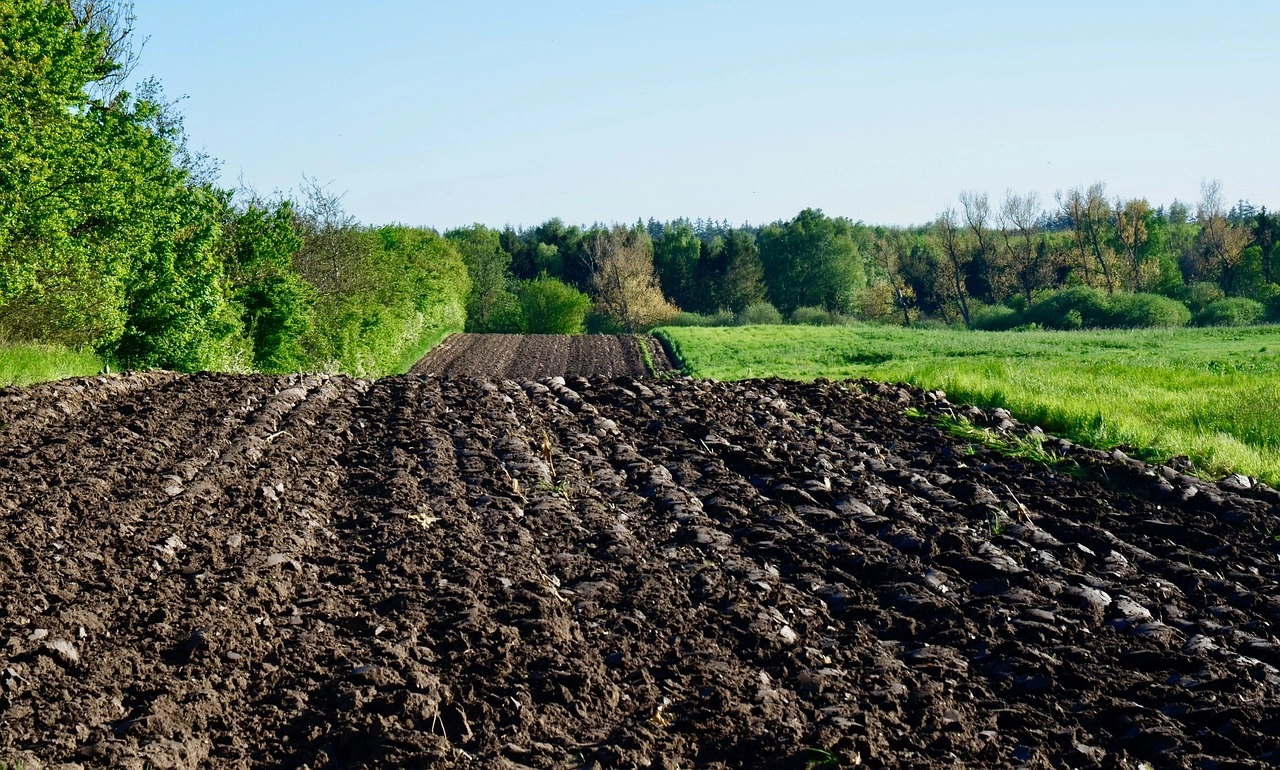
Living Labs are sites where multiple stakeholders such as researchers, farmers, foresters, spatial planners, land managers and citizens are involved in transdisciplinary research and innovation to jointly develop solutions for healthier soils. Living Labs will be established at territorial, landscape, or regional scale. Find out more about our project EDAPHOS, which involves a living lab.
The Mission Soil

The Mission Soil focuses on the vital role of healthy soils in sustaining ecosystems, providing food, clean water, and habitats, and enhancing climate resilience. With 60% of EU soils unhealthy due to unsustainable practices and climate change, the Mission Soil aims to establish 100 living labs and lighthouses by 2030 to promote sustainable soil management.
It emphasizes stakeholder engagement across the agri-food chain and collaboration with international partners. The initiative supports EU policies and global commitments, enhancing soil literacy, promoting innovations, and contributing to climate adaptation, water quality, and biodiversity.
Expected outcomes
Projects should aim to deliver the following outcomes:
- Enhanced knowledge of soil-dependent insects: Improve understanding of the biology, ecology, and population dynamics of insects that spend part of their life cycle in soil, focusing on ground-nesting pollinators.
- Identification of decline causes: Investigate and quantify the significant threats to these insects, including environmental and anthropogenic factors and their synergistic effects.
- Development of mitigation measures: Propose and validate effective strategies to halt and reverse the decline of soil-dependent insects, e.g., in living labs.
Mission Soil and the Microfluidics Innovation Center (MIC): living labs and microfluidics
The Mission Soil includes a variety of different calls. As a project partner, we are open to all your ideas and develop innovative microfluidic setups tailored to your project. We can be very helpful as an SME partner, particularly for these two calls:
- Soil health, pollinators and key ecosystem functions (HORIZON-MISS-2024-SOIL-01-05)
- Harnessing the multifunctional potential of soil biodiversity for healthy cropping systems (HORIZON-MISS-2024-SOIL-01-06)
Find out more about microfluidics for soil-on-chip and fungus identification in our reviews. As an SME partner, we can help you build a setup for automated sample dispensing, sequential injection or droplet-related applications and many more.
We already bring our expertise into more than 50 EU projects and will be glad to work with you! Besides Mission Soil, we are particularly interested in the following calls but remain open to any collaboration!
Objectives of the Mission Soil: living labs are key

The Mission Soil has established several ambitious objectives to be met by 2030.
These objectives are designed to create a comprehensive approach to soil health improvement thanks to living labs and include:
- Stop soil degradation: Implement strategies to prevent further soil degradation and restore degraded soils to functional health.
- Enhance soil literacy: Increase awareness and understanding of soil health among citizens, policymakers, and stakeholders.
- Boost soil biodiversity: Promote practices that enhance soil biodiversity and ecosystem services.
- Improve soil carbon sequestration: Enhance the soil’s capacity to sequester carbon, thus contributing to climate change mitigation.
- Promote sustainable farming practices: Encourage adopting sustainable agricultural practices that preserve soil health and productivity.
Strategic initiatives and implementation: living labs for a healthy planet
To achieve these objectives, the Mission Soil supports a comprehensive array of strategic initiatives:
- Living Labs and Lighthouses: These sites are essential for practical experimentation and demonstration of effective soil management practices. They bring together stakeholders from various sectors to co-create and validate innovative approaches, serving as models for replication.
- Research and Innovation: Substantial funding is allocated to research on soil health monitoring, sustainable farming practices, soil pollution remediation, and public engagement. Advanced tools and techniques are being developed for monitoring soil health indicators, e.g., in living labs.
- Policy Integration: The mission is aligned with broader EU policies, such as the European Green Deal, the Common Agricultural Policy, and the Farm to Fork Strategy, to create a cohesive and supportive policy environment for soil health initiatives.
- Public Engagement and Awareness: Enhancing public understanding and involvement in soil health issues through educational programs, citizen science initiatives, and media outreach is critical for fostering a societal appreciation of soil health’s significance.
In a nutshell: the Mission Soil and its living labs approach

The Mission Soil in Horizon Europe represents a comprehensive initiative to reverse soil degradation and promote sustainable soil management across Europe. By focusing on research, innovation, and stakeholder engagement, the mission aims to create resilient and healthy soils essential for food security, biodiversity, and climate mitigation.
Establishing living labs and lighthouses will be pivotal in demonstrating and scaling effective soil health practices, ensuring a sustainable future for Europe’s soils.
More information on the Mission Soil can be found on the websites of the European Commission:
- https://mission-soil-platform.ec.europa.eu/
- https://eu-cap-network.ec.europa.eu/eu-mission-soil-deal-europe_en
- https://rea.ec.europa.eu/publications/what-eu-mission-soil-deal-europe_en
You need a microfluidic SME partner for your Mission Soil project? We are happy to discuss with you!
Find out more about our previous projects related to soil research and living labs, such as EDAPHOS on soil remediation, Active Matter on soil-on-chip and MAHT-FunSST on high-throughput fungicide screening.
Download the MIC Horizon Europe 2026/2027 Calls Calendar:
The MIC already brings its expertise in microfluidics to Horizon Europe:
H2020-NMBP-TR-IND-2020

Microfluidic platform to study the interaction of cancer cells with lymphatic tissue
H2020-LC-GD-2020-3

Toxicology assessment of pharmaceutical products on a placenta-on-chip model

FAQ - Living labs in Mission Soil
So what is the significance of living laboratories?
The farmers, land managers, and citizens jointly design solutions rather than researchers dictating what to do and measuring the consequences. It is not that research questions depend on what is going on in the real operation, but rather on practical challenges. These are at the territorial level, covering hundreds to thousands of hectares, where management-level decisions have a real economic impact. Mission Soil aims to reach 100 living labs by 2030, since laboratory-elegant solutions that do not survive this test on a real-world scale will never scale, no matter how scientifically meritorious they are.
Why should Mission Soil view soil health as an emergency infrastructure?
Sixty percent of soils in the EU are functionally degraded – compacted, eroded, devoid of organic matter. This is not some fanciful environmentalism; healthy soils manage water, capture carbon, recycle nutrients, nourish crops, filter pollutants, and sustain biodiversity. Poor soils exacerbate floods, demand artificial inputs, unleash previously locked-up carbon, and fail to deliver ecosystem services in the tune of billions of dollars every year. There are pressures of unsustainable agriculture, deforestation, contamination, and climate change. Mission Soil links soil functionality to food security, climatic resilience, water quality, and biodiversity, and, in fact, to each Green Deal goal.
What are the tangible deliverables that living lab proposals have to provide?
-Improved understanding of soil-reliant organisms needs to be done in terms of population dynamics, habitat needs, and management interactions – especially in the case of ground-nesting pollinators.
-Determining the causes of decline involves isolating specific threats: pesticide pathways, mechanical disturbance, resource scarcity, microclimate changes, and, most importantly, synergistic effects in which stressors interact.
-Mitigation measures require interventions with proven reversibility of declines, such as refuge design, altered tillage, pesticide-free buffers, nesting substrate, etc. These require incorporating entomology, soil biology, agronomy, and landscape ecology, but economic viability limits feasibility.
What can microfluidics do to overcome the bottlenecks in the soil research of the living labs?
Microfluidics addresses the analytical constraints that limit the throughput of the living lab. Microbial interaction Soil-on-chip platforms provide controlled microscale ecosystems that simulate soil structure and chemical gradients, facilitating systematized studies of microbial interactions that are unfeasible in the heterogeneous field soils. Droplet encapsulation speeds up high-throughput microbiome screening -beneficial strains are associated with indicators of health. Enzymatic activity or nutrient cycling across spatial and temporal gradients is done by automated dispensing and sequential injection of hundreds of soil extracts. The identification of fungi enables rapid tracking of the pathogen or characterization of mycorrhizal associations. The capabilities span field observation and mechanisms that were previously impractical.
Which types of calls that are relevant at Mission Soil can be verified using microfluidics?
The HORIZON-MISS-2024-SOIL-01-05 on the health of soil, pollinators, and ecosystem functions will need to know how management influences ground-nesting insects. Microfluidic analysis of chemical residues, microbial communities, and their impact on larval nutrition, or environmental DNA detection, is ground-breaking. The soil-on-chip and high-throughput screening enable the type of functional characterization needed by the HORIZON-MISS-2024-SOIL-01-06 on harnessing soil biodiversity to cropping systems: Characterising plant-microbe interactions, especially mycorrhizal networks and rhizosphere bacteria, to promote nutrient uptake or disease resistance. Both are focused on living lab validation, in which fast, cost-effective analytics are used to define a feasible sampling intensity.
Which consortium composition works with living labs?
Four competencies are scarcely found in individual institutions. The disciplinary richness of soil science, ecology, and microbiology, and the methodological rigor, are offered by academic partners. Agricultural organizations can bring operational skills, access to land, and, most importantly, practitioner credibility, which defines the living lab’s feasibility. Technology SMEs create field-deployable analysis tools to convert research specifications into practice in a system. Coordination bodies, such as NGOs, extension services, and regional agencies, assist in coordinating stakeholder work to make sure that co-design is not performative. Five or eight partners are sufficient; beyond that, the overheads tend to increase, making risk coordination more difficult. Clustering by geography is important: virtual teams require physical proximity so members can interact in person rather than just through email.
What is the strategic difference between lighthouse and living labs locations?
Living labs are places for innovation development where practices are experimented with, refined, and adapted through the iterative engagement of stakeholders. Lighthouses serve as demonstration sites for proven practices to be adopted. The difference influences proposal development. Living labs are focused on experimentation, co-design, adaptive management, openness to failure documentation – they are research locations with stakeholder integration. Lighthouses concentrate on communication, training, farmer-to-farmer learning, and dialogue between policy and policy extension services, with research support. Most of the calls finance living laboratories that are projected to cover the role of lighthouses after the practices become stable. Explain your position in this continuum regarding your proposal; how you will record repeatable knowledge.
What to do concerning the tension between rigor and pragmatism?
Such tension is useful when it is not hidden. Science requires rigorous comparisons, replication, and standardization, which are incompatible with the limitations of farmers, aversion to risk, and site optima. Powerful propositions formulate hybrid strategies, reserve sections for systematic experimentation with researcher-controlled protocols to provide publishable mechanistic information, and are devoted to practitioner-led adaptive management, in which interventions are based on discussion and success is measured by readiness rather than statistical significance for adoption. Apply analytical skills to obtain as much information as possible from both; detailed characterization makes up for experimental control. The very process of document negotiation is critical for understanding what prevents optimal practices from being implemented at scale.
Which exploitation channels do living lab outcomes have?
The outcomes of a living lab do not commercialise in the same way as those of traditional research. Exploitation emphasizes the adoption of practices, political impact, and the dissemination of decision support rather than patents. Good channels are shared management instructions with practitioner organizations that guarantee operational reality. Based on the data from the living lab, digital tools such as soil health apps, biodiversity protocols, and optimization models are developed. Training activities that transform tacit knowledge into protocols that can be transferred. Policy briefs that transform the results into regulatory advice or subsidy changes. To technology partners, exploitation means productizing analytical approaches into commercial products or services for the soil health-monitoring market. Credibility is enhanced when there are letters to the cooperatives, authorities, or extension services with adoption intentions.
What are the most consistent sources of mistakes that corrosively affect the competitiveness of living laboratories?
Viewing stakeholders as sources of data rather than co-designers-evaluators reveals the performative participation. Suggesting large magnitudes or stakeholder diversity that the budget cannot support. Scientific plans involving experimental control that cannot be achieved in the working operation. Lacking integration: parallel agricultural and ecological work packages that never have meaningful interactions. Under-allocating analytical needs – soil health monitoring, biodiversity assessment, and economic evaluation at living lab scales, all demand large sampling budgets that have to be reduced to achieve visible activities. Generalized exploitation other than generic dissemination- demonstrate selective adoption processes, involvement in policy, scaling channels. Without an explanation of complementarity, it ignores existing living labs. These are to be dealt with systematically, and you are competitive.