Mother Machine Pack
Vibration-free pump for long term mother machine experiments
Vibration-free
No interference on your microscope focus
Easily used with large volume reservoirs
Use the reservoir of your choice
Incubator-friendly
Keep it inside your microscope incubator chamber
Need a microfluidic SME partner for your Horizon Europe project?
Image credit: Nanographene oxide interacting with bacteria, TEM. Wellcome Collection. Attribution 4.0 International (CC BY 4.0).
Mother machine pack setup
Closely follow the development of your long-term mother machine experiment on top of the microscope stage while constantly refreshing the media. Our mother machine pack consists of a vibration-free compact pump that doesn’t require an air compressor and is already integrated with a flow sensor. The microfluidic device can be homemade or bought from a commercial supplier.
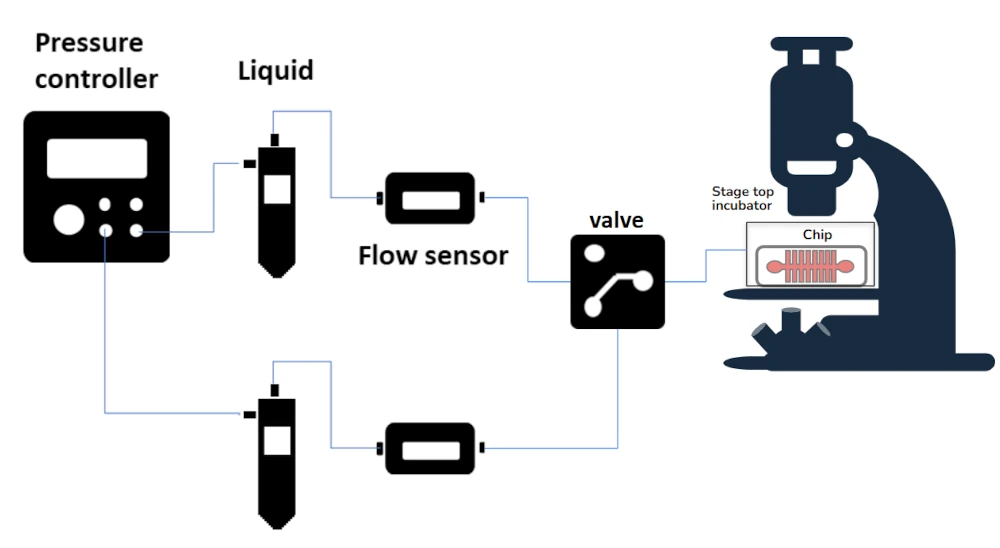
The mother machine pack contains:
Perfusion pump for microscope: the pump comes with a motherbox and a pressure unit with a flow sensor,
but extra units can be added if needed.
Reservoirs: any volume reservoir can be plugged into the system.
Microfluidic chip: use the chip you choose, homemade or commercially available.
Check Valve (optional)
Compatibility
The mother machine pack is not limited by your chip design or manufacturer and can be used with the microfluidic device of your choice.
Chips
Homemade devices, PDMS
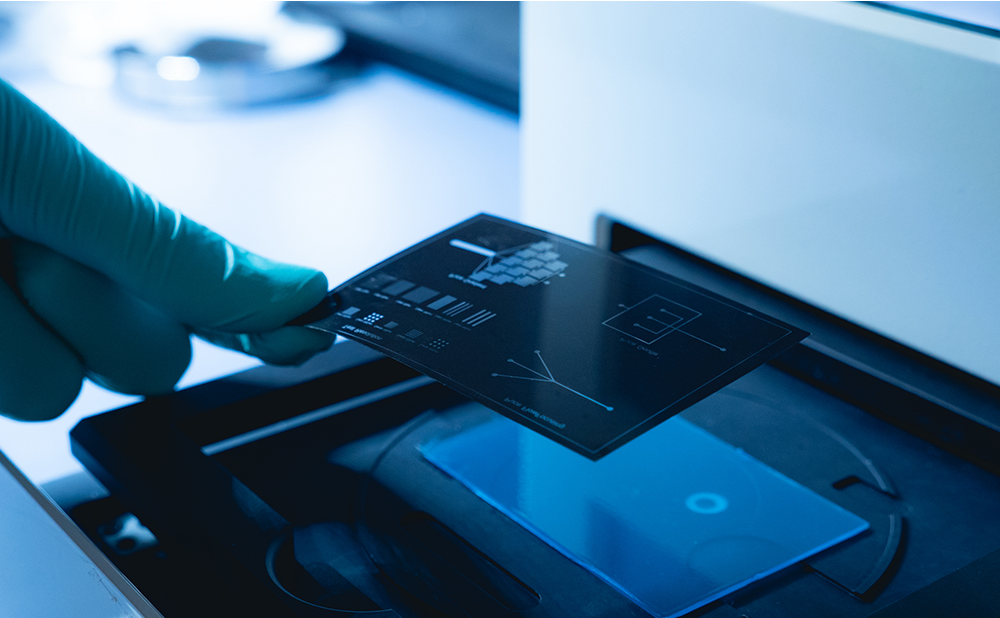
PMMA device station
From mold development to high-resolution PMMA chip fabrication
✓ Fast process
✓ Multiple applications
✓ Simple and innovative setup
PMMA
Synvivo
Microfluidic ChipShop
Ibidi
And many more!
Other equipment
Microscope incubation chambers
Stage top incubators
CO2 incubators
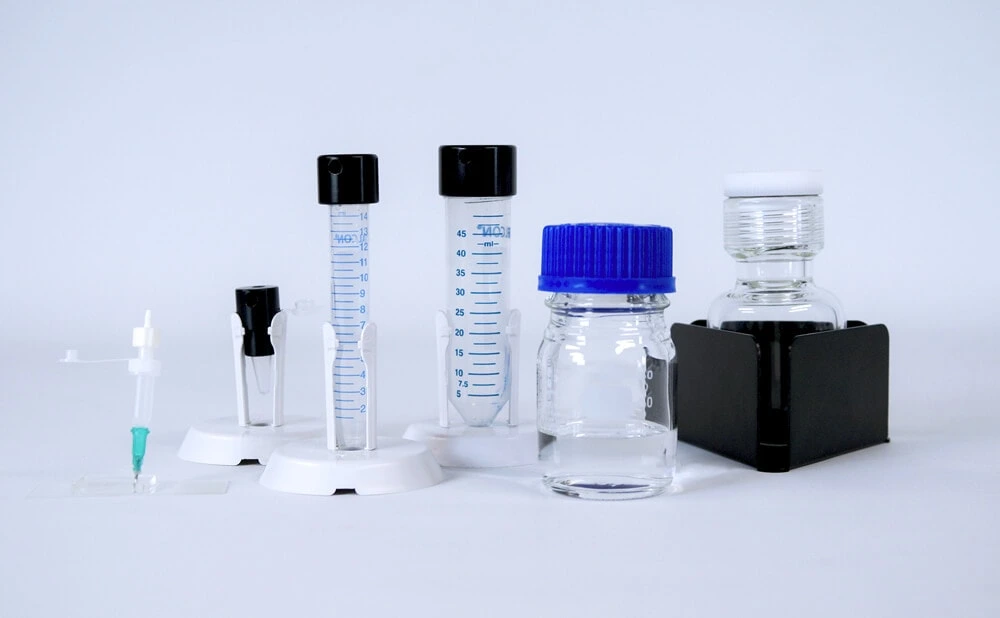
Reservoirs
The perfusion pump can be connected to any reservoir, from Eppendorfs to large bottles, in fully closed or open systems.
Mother machine pack technical specifications
The technical specifications of the perfusion pump can be found below.
| Pressure control | |
|---|---|
| Pressure range | -400 to 600 mbar |
| Pressure stability | 0.2 mbar |
| Air flow rate | 0.1L/min at atmospheric pressure Possibility to work with higher air flow rates by reducing the pressure range |
| Flow control | |
| Flow sensor compatibility | Compatible with the whole MFS range Monitoring and feedback loop flow control available |
| Flow rates | From 0.1 µL/min to 5 mL/min |
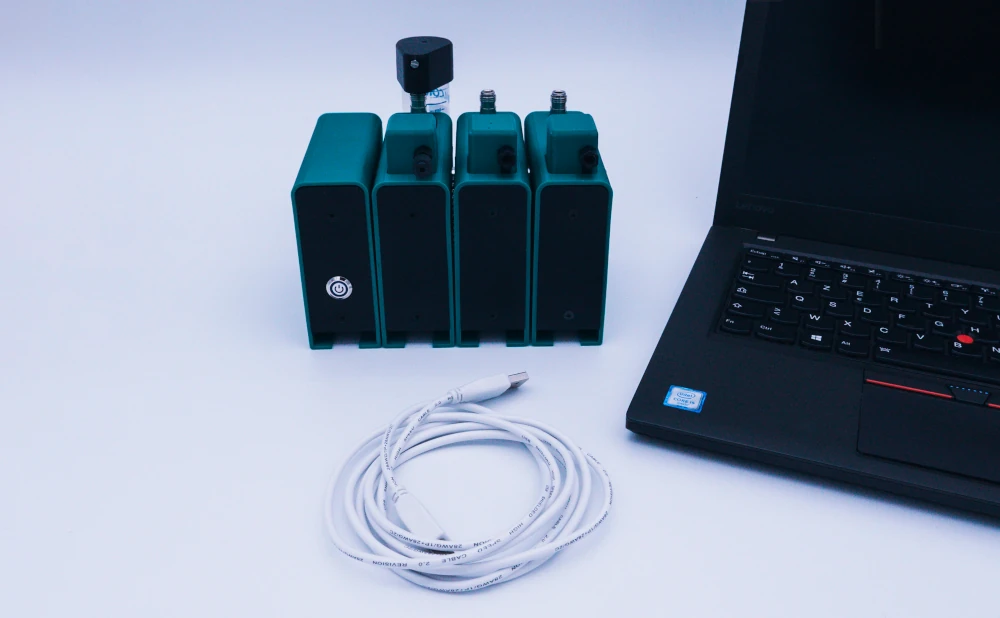
What comes inside the box?
When you order the mother machine pack, you can expect to receive the motherboard with the desired number of units, the reservoirs, flow sensors, the software, and the cable to connect to the computer, as seen below (the laptop is only illustrative).
Customize your pack
Our instruments can be added to different setups depending on your specific needs. In this light, our microfluidic specialists will advise you on the best instruments and accessories depending on your needs and will accompany you during the system’s setup.
Frequently asked questions
Can the mother machine pack be placed inside the microscope incubation chamber?
Yes, the mother machine pack can be used without problems inside the microscope incubation chamber, in the CO2 incubator, and on the bench.
Is the pump in the mother machine pack powered by battery?
No, the pump in the pack, the perfusion pump for microscope, is connected to a computer through a cable, which acts as a power supply.
Do I need a computer to operate the mother machine pack?
Yes, the mother machine pack requires a computer and software to work. Nonetheless, it does not require a compressed air source.
Download the MIC Horizon Europe 2026/2027 Calls Calendar:


Funding and Support
The Tumor-LN-oC project helped develop this instrument. This project is funded by European Union’s H2020-NMBP-TR-IND-2020, grant agreements. No. 953234 (Tumor-LN-oC).
Products & Associated Accessories
FAQ - Mother Machine
So, what is the Mother Machine Pack and what is the problem that it is supposed to address?
It is a small microscope compatible perfusion system that can be used in long term experiments with mother machine that requires constant media renewal and imaging at the microscope stage. It is actually stability-focused: it is designed to be vibration-free, so you are not struggling to keep focus and deal with micro jittering in time-lapse acquisition.
What are the essential technical specifications (pressure and flow), in real numbers?
Based on the given specifications of the perfusion pump that is employed in the pack:
- Pressure range: -400 to 600 mbar
- Pressure stability: 0.2 mbar
- Air flow rate: 0.1 L/min at atmospheric pressure (a higher air flow rate can be achieved by decreasing the range of pressure)
- Flow rates: 0.1 uL/min up to 5 mL/min
- Flow control: flow control with monitoring + feedback-loop is available.
- Flow sensor compatibility: can be used with the entire MFS product line.
What you get in the pack when you order it?
- The motherboard of the preferred quantity.
- Reservoirs
- Flow sensors
- Software
- The cable to be connected with the computer (only a laptop is illustrated as an example).
In short: it is not merely a bare pump body you are getting the control/monitoring components and the software environment that you would have had with long experiments.
Am I free to choose what microfluidic chip to use, or do I have to stick with a particular supplier?
You’re not locked in. The pack is introduced as chip-agnostic: the microfluidic device can be built or bought, and as being compatible with not any chip design or manufacturer. Examples listed are custom-made PDMS systems and commercial vendors like SynVivo, Microfluidic Chipshop and Ibidi (among “several others).
Reservoirs, do I have to have proprietary bottles or special caps?
No proprietary reservoir restriction is suggested. Any reservoir can be linked to the perfusion pump (small tubes (such as Eppendorfs) to large bottles) and perfusion pump may be applied in fully closed or open system. This is important in practice as the mother machine protocols differ widely: some groups wish to use a sterile closed feeding over days, other groups wish to swap the media as fast as possible using simpler configurations.
Does the entire system work when placed in an incubated environment (incubator on top of a stage, CO2 chamber, etc.)?
Yes. It is clearly stated that the pack is incubator-friendly and the frequently asked questions indicate that the pack can be placed in a microscope incubation chamber, a CO2 incubator, and the bench. That feature can come in handy should your biology vary (temperature-only vs full CO2 control) or should you be able to switch between microscopes.
Is it battery powered? Do I need a computer?
It’s not battery-powered. The pump is linked with a computer using a cable, and the computer serves as a power source. Also: yes, to use the system, you do need a computer + software.
An insignificant but still somewhat important implication: in case you are going to be using the microscope without the acquisition workstation, you will wish to put some thought into cable routing and physical location at a very early stage, particularly within incubator enclosures.
What does MIC fit in, in case I am establishing a Horizon Europe consortium based on long-term microfluidic microbiology?
In case your proposal requires a plausible microfluidic engineering (developing reliable perfusion systems, incorporating biosensors, manufacturing or ordering chipsets, developing test systems and de-risking the it works after 72 hours phase), a dedicated SME will execute that task more easily than an all-academic team. MIC is precisely that type of partner: practical microfluidic engineering, design of microfluidics setups to aid with research projects, and prototyping.