How to write a successful HE MSCA postdoctoral fellowship proposal?
Author
Christa Ivanova, PhD
Publication Date
July 14, 2022
Keywords
EU research fellowship
post-doc funding
excellence
proposal tips
SMART objectives
industrial impact
Methodology overview
European competitiveness
Your microfluidic SME partner for Horizon Europe
We take care of microfluidic engineering, work on valorization and optimize the proposal with you
Your Horizon Europe MSCA postdoctoral fellowship proposal – Our tips and tricks in a glance
- Pitch your project in a one-page format.
- Summarize your ideas at the beginning of each paragraph, and give short and sharp conclusions.
- Stick to the template.
- Solve a major problem (technical, societal…) with a practically implementable solution.
- Go beyond the state-of-the-art.
- Be credible.
- Make a huge impact.
- 1+1>2: synergy between you and the host institution.
- Think about your career objectives!

How to convince reviewers to fund your MSCA postdoctoral fellowship proposal?
Despite our IT-driven world, your project will be reviewed by human peers!
Reviewers will receive many MSCA Postdoctoral Fellowship proposals to be reviewed in quite a short time. Make their lives easier! They need to understand your project’s challenges and originality already on the first page of the proposal.
Focus on what is essential; do not give too many details, but stay short and precise. And remember: it is better to repeat three key ideas ten times than three times ten!
Tip #1 – Pitch your MSCA Postdoctoral Fellowship project in a one page format
Your pitch should answer to the following questions:
- What societal challenge is your project addressing? Every good MSCA Postdoctoral Fellowship proposal proposes to solve a significant societal issue. There is no point in developing a complex and cutting-edge technology without application in the real world. It would be best if you started by introducing this problem.
- What are the current limitations? It is essential to present the current state-of-the-art in a very concise but precise way. Highlight the bottlenecks researchers encounter to address the societal challenge you will solve.
- What is the novelty of your project? This is the part where you present YOUR idea. It has to appear like a natural solution to the problem (why didn’t anyone think of this before?). The novelty of your opinion should be evident to the reviewer.
- What are the significant steps to be followed to achieve the project? Present briefly how your idea will be implemented and the general methodology you will follow.
Tip #2 – Summarize your ideas at the beginning of each paragraph, give short and sharp conclusions
Even after the first page, you should continue presenting your ideas in a very structured way. You may want to give as many details as possible to sound more credible… Forget about it! Keep only what can’t be removed. Skip the technical details to focus on the main concepts.
Tip #3 – Stick to the MSCA Postdoctoral Fellowship proposal template
The MSCA Postdoctoral Fellowship proposal template is your guide!
Please read it carefully and note every point you have to address. Ensure you have a 100% fit – even with 90%, your proposal will be rejected. Remember that this grant is very competitive: only perfect proposals will be granted.
Download the MIC Horizon Europe 2026/2027 Calls Calendar:
How to shape a game changing MSCA postdoctoral fellowship proposal?
MSCA Postdoctoral Fellowship grants are highly competitive. To obtain the funding, you must stand out and propose an actual game-changing project!
But what makes a compelling project? Here is a short checklist of essential points to address:
Tip #4 - Solve a major problem (technical, societal…) with a practically implementable solution

Start your proposal by presenting a current challenge in your field that will be addressed in your project. The solution you propose needs to be truly applicable. Forget about complex systems you will spend one week building on your bench to make one experiment: they will never be used in the real world.
Your ultimate target should be developing a product/concept that perfectly meets end-users needs (i.e., =people facing your societal issue).
Tip #5 - Clearly go beyond the state-of-the-art
The reviewer needs to understand in one minute the novelty of your project. Provide a brief but precise overview of the current state-of-the-art in the field and highlight the significant limitations. Explain how you will surpass these limitations with your work.
Tip #6 - Be credible
Would you trust someone who gives you a vague idea of what he wants to do? No? Neither would the reviewers. They need to see that you know exactly what you want to achieve and how. Without giving too precise technical details, present the concepts and the techniques you will use.
For example, if you intend to synthesize a molecule, there is no need to give all the details about the exact protocol you will follow, the reagents, the reaction time, and so on. But you need to mention the type of reaction you will perform, the principal reagents, and the products.
Tip #7 - Make huge impact
If you have followed the previous rules, your project already has a significant impact on society. But don’t forget who is giving the money! Reviewers’ mission is to choose projects that will positively impact the EU: it could be increased competitivity, a pioneer work in a specific field, the first development of a new technology… It needs to be mentioned in your proposal.
Last but not least, reviewers want to understand the impact of this project on YOU and your future career!

How to choose the right host institution for your postdoctoral fellowship?
The EU’s main aim in financing the MSCA Postdoctoral Fellowship proposal is to train highly qualified researchers and offer them the possibility to achieve a great career in Europe. Keep that in mind when choosing the host institution for your Postdoctoral fellowship project!
Tip #8 - 1+1>2 : Synergy between you and the host institution
Learning something NEW from your host institution during your fellowship would be best. You can be introduced to a new scientific field, technique, way of working, or even everything simultaneously! Don’t go to a lab that already perfectly fits your expertise.
And you are not the only one that matters… your host institution needs to learn something from you as well! Your background and expertise should be complementary to those of the host institution.
The EU calls that “2 ways of knowledge transfer“, which is often a point not very well addressed in MSCA Postdoctoral Fellowship proposals. So, remember that solving a vital problem requires the cumulative efforts of at least two pioneers – you and your host institution!
Tip #9 - Think about your career objectives!

The main goal of the EU is a long-term investment in its scientific leadership. Discuss how the collaboration will help you grow as a human being and scientist.
Explain how this fellowship is coherent with your career plan and how it will help you to reach your objectives.
Our microfluidic expertise and MSCA postdoctoral fellowship
We will be glad to participate in your project. Visit our dedicated webpage to learn more about our expertise as H2020 and Horizon Europe partner!
Curious about the calls currently open?
Have a look at our funded postdoctoral fellowship projects (formerly MSCA-IF):

MAHT-FunSST
Microfluidic lab-on-chip for High-throughput fungicide screening
AutoDropProd
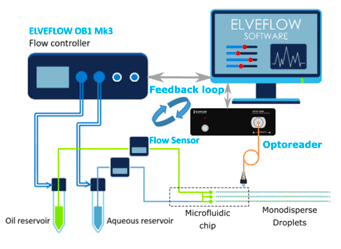
Automated high-throughput production of monodisperse emulsions with microfluidics
MTOAC
Multi-compartmental tumor-on-a-chip device to mimic the tumor microenvironment and drug screening for breast cancer
Check the Horizon Europe tips and tricks
FAQ – How to write a successful HE MSCA postdoctoral fellowship proposal?
What is the actual goal of MSCA Postdoctoral Fellowship?
Not only to finance an excellent experiment. The fellowship is to make you a long-term investment in European research: a researcher addressing a tangible challenge facing society with a tangible project, and emerging more autonomous, more networked, and more employable to various jobs within the EU research and innovation system.
What has to be crystal clear in the first page?
In the first few minutes, you have to persuade a reviewer to believe your proposal. The answer to that first page should already be:
-What is the real-life issue you solve and why it is important to Europe.
-Where existing solutions do not work.
-In a sentence or two, what is the core of what you want to say.
-The most important actions you will be doing to put it into real life.
When a weary panelist is able to repeat your project in 30 seconds after reading page one, you are properly set.
What should I do to present my project in such a way that the reviewers will not lose its direction?
Think “front-loaded clarity”. Each subsection is introduced with a line that summarizes the conclusion of the section (In this section we demonstrate that…). Do not use too long runs of writing and too long digressions. Anything not contributing to your three or four main messages must be eliminated even when it sounds brilliant.
What is it about the MSCA project that is game-changing and not merely technically nice?
Complexity itself is not a source of impressiveness to panels. A convincing MSCA PF project:
-Attacks a large-scale issue that is important beyond your niche (health, climate, digital, security, etc.).
-Offers a technically sound solution and a realistically implementable solution.
-Gives rise to something that others may really need: a protocol, a prototype, a tested model, a workflow.
The test is straightforward: how do we do something differently in five years only when the project works.
How do I demonstrate that I am really over the state of the art?
Begin with a brief, candid map of the state of the art: key strategies, their strengths, their weaknesses to your particular problem. Then make a very clear contrast: “Current methodology are doing A and B but fails when X; my project presents C, which involves the removal of X in a direct way by… One sentence should be highlighted by the reviewers that comprehend your novelty.
Detailed or not detailed methodology?
Go to idealism not to the laboratory. Name your systems, techniques and models; clarify the logic of your work plan and critical risks: demonstrate that you have the idea of what can go wrong, and how you would respond. You need not identify all the buffer compositions, but you must demonstrate that a plausible technical strategy supports each objective.
The importance of the host institution and secondments choice?
Crucial. MSCA concerns bi- directional knowledge transfer. You must show:
-What you will learn at the host that you cannot readily learn elsewhere(new field, techniques, sector, network).
-What knowledge do you get that only makes the host stronger?
-Secondments (particularly in industry or some other sector) assist in establishing that your project is not isolated but is a part of a larger ecosystem.
What is the definition of impact in an MSCA PF, as more than a buzzword?
-Impact has two equally significant aspects:
-Impact on society/Europe: the role of your findings in EU priorities (e.g., better health, green transitions, digital resilience, strategic autonomy).
-Influence on your career: in what way the fellowship will bring you a definite realistic opportunity (independent PI, lead in R&D, deep-tech entrepreneur, etc.).
They both need particulars rather than generalities. “I will be a better scientist”.
How can Microfluidics Innovation Center (MIC) be incorporated in my MSCA PF?
In the case of your idea microfluidics, lab-on-chip, organ-on-chip, advanced flow chemistry or high-throughput screening, MIC can either be host or an academic secondment partner. You gain access to engineers who design actual instruments, not merely chips, as well as a team accustomed to turning ideas on paper into prototypes in European projects. Such a mix is likely to appease feasibility and long-term effects panels.
Got any last, extremely useful advice before I get down to writing?
Yes:
-Adhere to the official template to the letter; all the bullets in the instructions must be answered somewhere distinctly.
-Adhere to page limits; additional pages are neglected.
-Write to some expert in a related discipline, and not to the three individuals on the planet who are familiar with your method, just as much as you are.
-Have at least one person not in your niche read your opening page and tell you in their own language what your project is all about and why. In case of difficulty, make corrections to the text and keep on adding details.