Horizon Europe draft work programmes
Author
Christa Ivanova, PhD
Publication Date
December 05, 2020
Keywords
Pillar I, Pillar II, Pillar III
European Research Council
European Innovation Ecosystems
WIDERA
INFRA
European Innovation Council
EU Missions
pathfinder
Your microfluidic SME partner for Horizon Europe
We take care of microfluidic engineering, work on valorization and optimize the proposal with you
We assembled the relevant information for you, including links to the different call texts and an updated call calendar.
Read the latest news here while waiting for the official information to be published in April 2021.
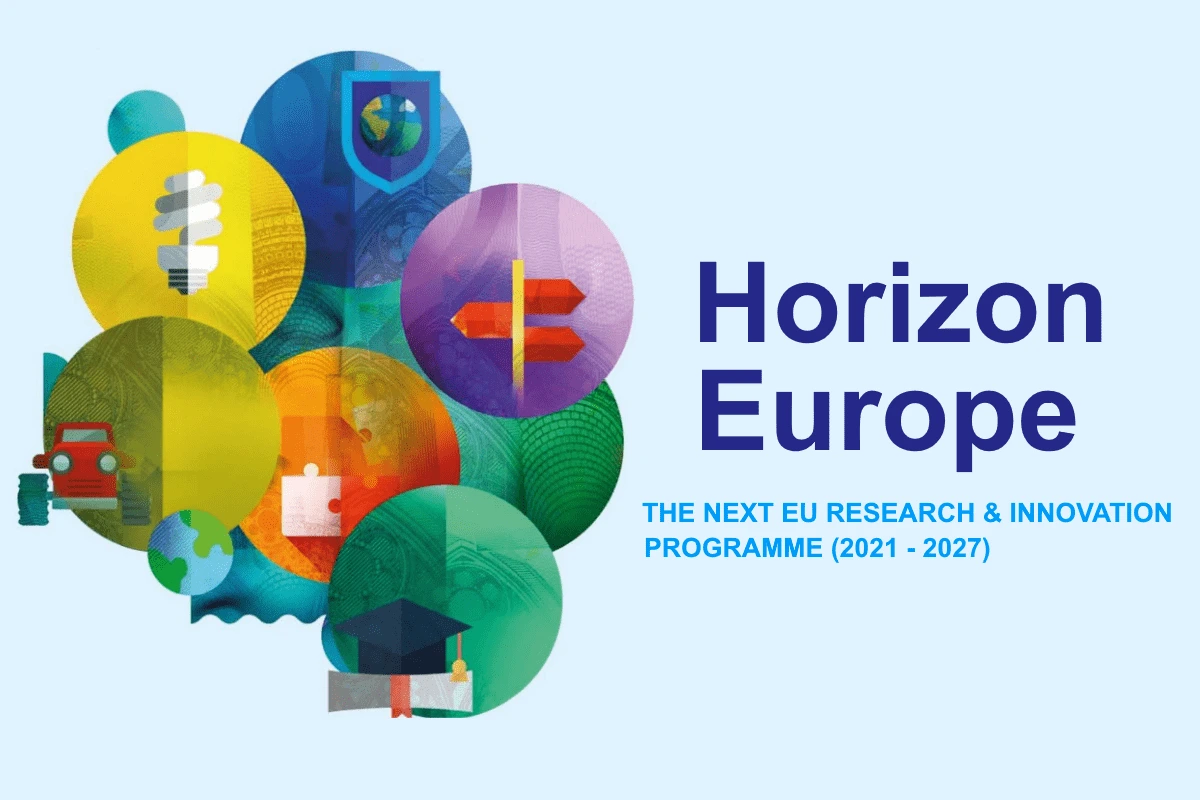
Horizon Europe structure and the first calls
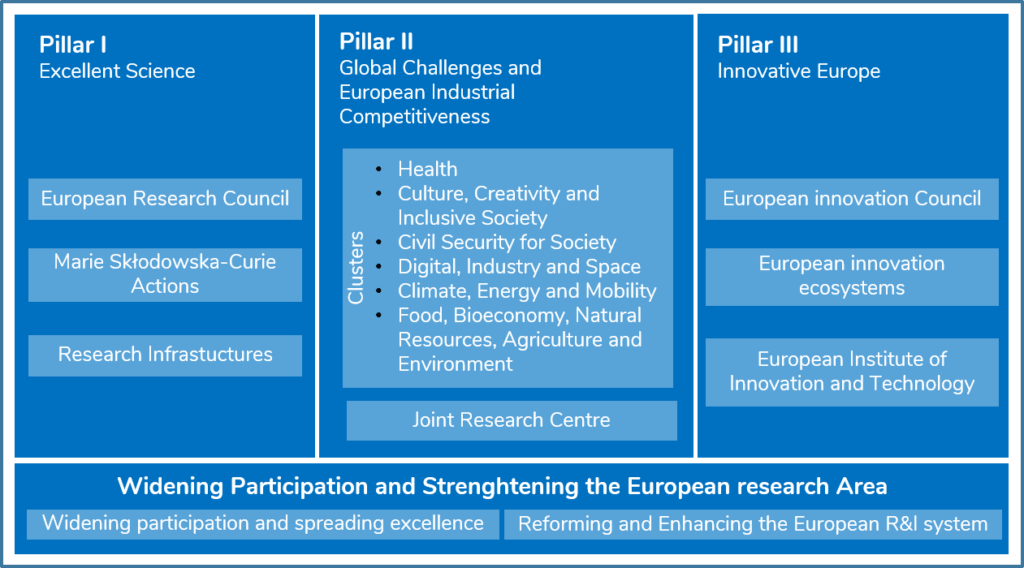
Below, you can find helpful links to the draft work programs (in PDF) that are currently available:
UPDATE: The Horizon Work Programme has been officially published for 2023-2024. Find the complete information here.
Pillar 1
The European Research Council (ERC)
Pillar 2
Health Cluster
Culture, creativity, and inclusive society
Civil security for society
Digital, industry, and space cluster
Climate, energy, and mobility
Food, Bioeconomy Natural Resources, Agriculture and Environment
Pillar 3
The European Innovation Council (includes Pathfinder, Transition and Accelerator)
Cross-cutting
Widening participation
The MIC and Horizon Europe
We will be glad to participate in your project. Visit our dedicated webpage to learn more about our expertise as H2020 and Horizon Europe partner!
Curious about the calls currently open?
We are particularly interested in the following calls but remain open to any collaboration!
- EIC WORK PROGRAMME that supports all stages from R&D to industry for game-changing innovations
- HORIZON EUROPE RIA CALLS, specifically focusing on health and food, bioeconomy, natural resources, agriculture, and environment
Download the MIC Horizon Europe 2026/2027 Calls Calendar:
Some of our funded projects
ACDC
Artificial cells with distributed cores to decipher protein function

FIDA
Complex and automated fluid handling in a disruptive antibody analytical platform
Active Matter
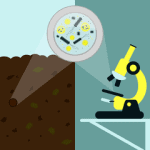
Microfluidic soil-on-chip devices in the study of microbial communities
Want more? Visit our page summarizing the novelties in Horizon Europe implementation (grant management, proposal writing and evaluation, dissemination strategy…).
Are you interested in MSCA (ITN, IF, RISE…)? Check out the differences between H2020 and Horizon Europe!
FAQ - Horizon Europe draft work programmes
In simple terms: what is a “draft work programme” and why does it matter?
It’s pretty much what the Commission plans to fund over the next year or two: subjects, goals, tech-readiness levels, cash per subject, and rough timelines. These drafts don’t lock anyone in by law, yet they’re solid hints that can guide your team setup, test designs, and early commitment notes. Think of it like a strong prediction, only not guaranteed – sure looks good, though there might still be changes.
Do early versions hold up against the finished plan?
Most subjects get through with small tweaks – phrasing adjustments, funding moving up or down 5 to 15%, maybe a due date pushed a bit. Now and then, one blends into a similar idea or gets bumped to the next phase. Every once in a while, stuff just vanishes. Bottom line: go ahead and build your case firmly, yet set up shared duties, task blocks, plus compliance templates so they handle slight shifts in focus or cash without falling apart.
Start with the opening chapter. Then check the conclusion next. After that, flip to the key sections that show the main ideas. Look at transitions between parts carefully. Finally, skim the intro paragraphs of each segment.
What are the first pages I should read in a draft?
The Expected Outcomes: What you hope to see after tackling your focus area – that’s how they’ll judge it behind the scenes.
The “Type of Action” along with its TRL level – like RIA sitting at TRL 3-5, whereas IA lands at TRL 6-7.
One big issue trips up good applications – lump-sum budgets, open research rules, or strict standards. Not handling these quietly critical bits? That’s what sinks strong ideas. Think “do no real damage” policies, blending humanities insights, shared data formats – they’re low-key essential. Skip them, even by accident, and the whole thing wobbles.
Is “lump-sum” something that shows up in drafts? Do I need to worry about it?
Yep, happens way more each year. Don’t stress – get ready instead. With a lump sum, you get cash when a work chunk’s done, not after billing. Break tasks into tiny bits you can track; link clear checks to each one – like a demo seen by users, raw data out with labels, or labs comparing results once. Works better for crews that actually ship tools and numbers on schedule.
How do I convert a draft topic into a believable impact story?
Break down what you aim to achieve by focusing on tools and people. For every goal, name a thing like software or a device, pick who’ll use it, while swapping out “and” for words like “while”, “with”, or “alongside”. Mention how it spreads – try a test run, help shape rules, share via license, or go open-source. Include hard details: release two handpicked data sets; prove one model works nonstop for 200 hours; compare results across three labs; submit input to one official standards group. Judges prefer clear facts instead of flashy terms.
The draft shows money plans – what does that mean?
A two-part setup: one covers the overall budget, another sets limits per grant. When a call says “projects get around EUR 3-4 million” with a pool of EUR 24 million, that’s likely six to eight full-scale grants approved. Aim for amounts near the center – only go higher or lower if strong reasons back it up. Research actions typically cover every euro spent directly, plus an extra quarter for overhead. Innovation actions pay firms about 70%, though nonprofits might pull in all of their spending on actual activities.
How early should I start consortium building based on a draft?
Right away – then play it safe. Secure main team members early for fixed jobs like method X, site Y, or data set Z. Where roles haven’t been set yet, bring others in as Linked Partners first, then shift them to full Beneficiaries once budgets and plans are locked. Aim to send interest letters about six to eight weeks before the draft due date – that’s solid timing. Tweak those letters again once deadlines become official.
Got any tricks to catch sneaky needs in a rough version?
Look out for action words. “Test it where people actually use it” means real trials with end users tracking clear goals – skip the lab show-off. Getting involved in setting rules? That’s joining official teams, helping draft docs. Open research today isn’t just talk – it’s publishing free right away, using set data plans that follow FAIR rules, listing storage spots, tagging formats properly, defining who can see what – none of that vague promise stuff.
We’re working on microfluidics – which bits matter most to lock in ahead of time?
-Math-driven building design.
-Chip designs plus methods – like droplet makers that guide flow, tools measuring cell resistance, or comparing glass-silicon setups to flexible polymer ones made through soft molding.
-Output speed plus accuracy – hitting 1 to 5 kHz drop creation, variation under 5%.
-Validation setups – like calibration guides, lab comparison checks, or quick tests an engineer can run by lunchtime.
-Open-source parts like CAD or GDS bits, layout files, and handpicked data sets tagged with details.
-Once the last version shows up, you tweak it instead of starting from scratch.
What’s the main danger in using drafts? Also, how can you reduce those issues?
Three risks: if the deadline shifts, the budget gets smaller, or project limits tighten.
Fixes:
-Set up a dual-pace timeline – keep key tasks fixed no matter what, while extra ones can fade out smoothly when needed.
-Hold back some work – about 10 to 15 percent – so you’ve got room to shift things if needed. That way, the main plan stays intact even when changes pop up.
-Build separate impact pieces: every result works on its own with a clear output, person involved, plus measurable target – removing one won’t break the rest.
How can a specialised SME like the Microfluidics Innovation Center help before the final WP is out?
Turning ideas into real working plans. MIC builds full test systems – like chips, fluid controls, sensors, and auto parts – then makes custom microfluidic tools, delivering first versions that back solid funding requests. Instead of just joining in, we team up on impact summaries, create shared lab tests across groups, and bring researchers in for temporary stays. Across EU projects, having us on board usually doubles the chances of approval compared to average win rates for similar grants, since everything feels launch-ready from minute one.
Got a fresh version dropped your way? Need a quick hit-list for that first look-through – just one page’s worth?
Yep – grab a copy, check it quick
-Topic ID stored; Expected Results pasted exactly.
-Type of action plus TRL captured; grant-level scale mentioned.
-Key needs pointed out – like fixed pricing, shared research methods, common rules, plus moral guidelines.
-Key group tied to results; weak spots highlighted.
-One-paragraph relevance pitch drafted; one-slide visual.
-Acceptance checks set by WP; meanwhile, a few KPIs are jotted down in rough form.
-Drafts of intent letters were made – one version for beneficiaries, another for partners.
-Data plus reproducibility framework outline built – includes storage spots, info tags, and who can view.
You can tweak the wording afterward – right now, choices like this boost results fast.