
Horizon Europe Cluster 1 - Health
Work Programme 2025
EIC Work Programme reference
HORIZON-HLTH-2025-01
Deadline
September 16th, 2025
Keywords
Mental health
Data-driven tools
Environmental health
Healthcare systems
Digital solutions
Healthy society
social cohesion
sustainability
biomedical research
Your microfluidic SME partner for Horizon Europe
We take care of microfluidic engineering, work on valorization and optimize the proposal with you
At a glance
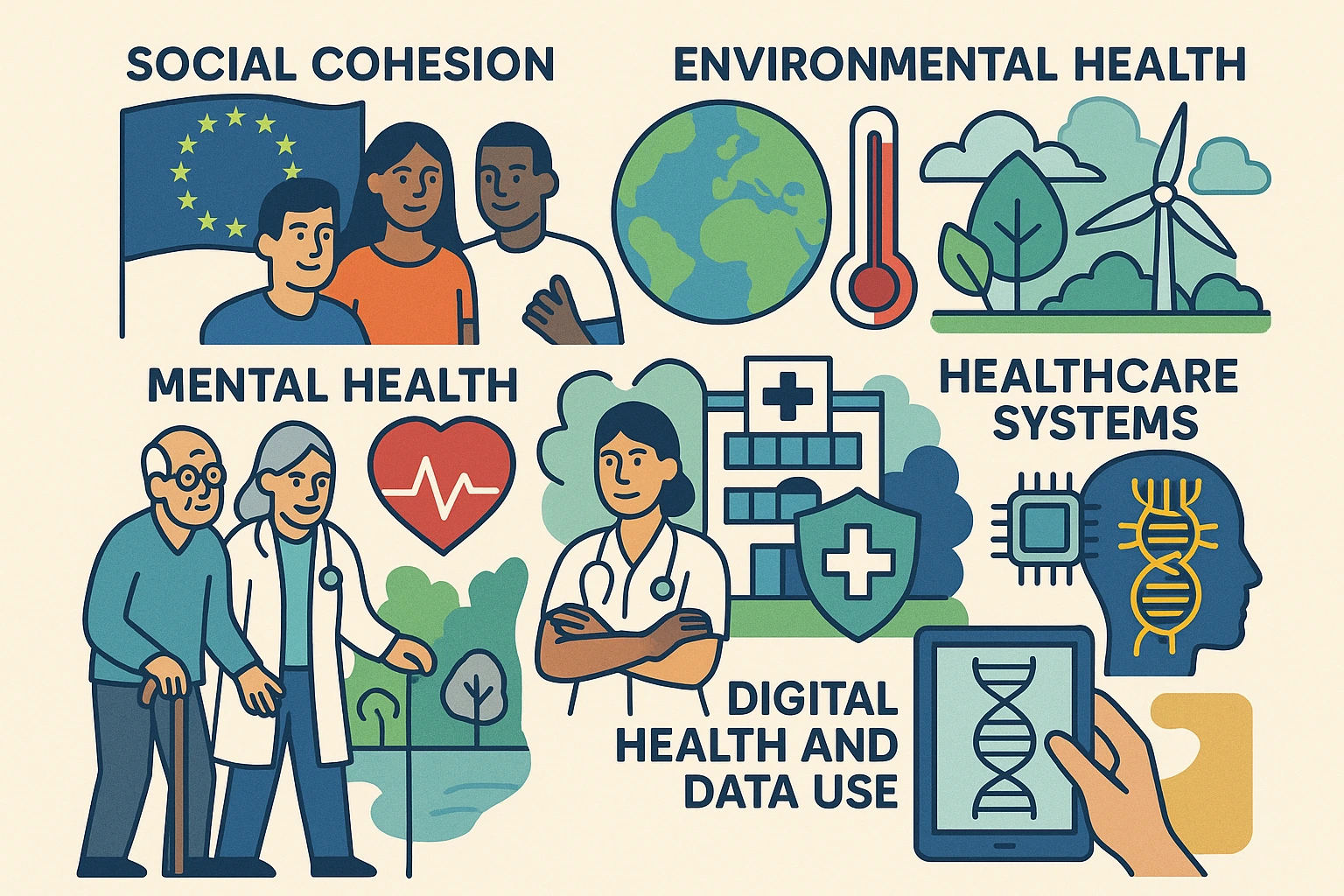
What are the focus areas of Cluster 1 – Health?
- Promoting social cohesion, health, and well-being of Europeans
- Managing environmental and climate-related health risks
- Addressing mental health, aging, and non-communicable diseases
- Strengthening healthcare resilience and sustainability across the EU
- Advancing digital health & generative AI in biomedical research
What can the MIC offer as your partner?
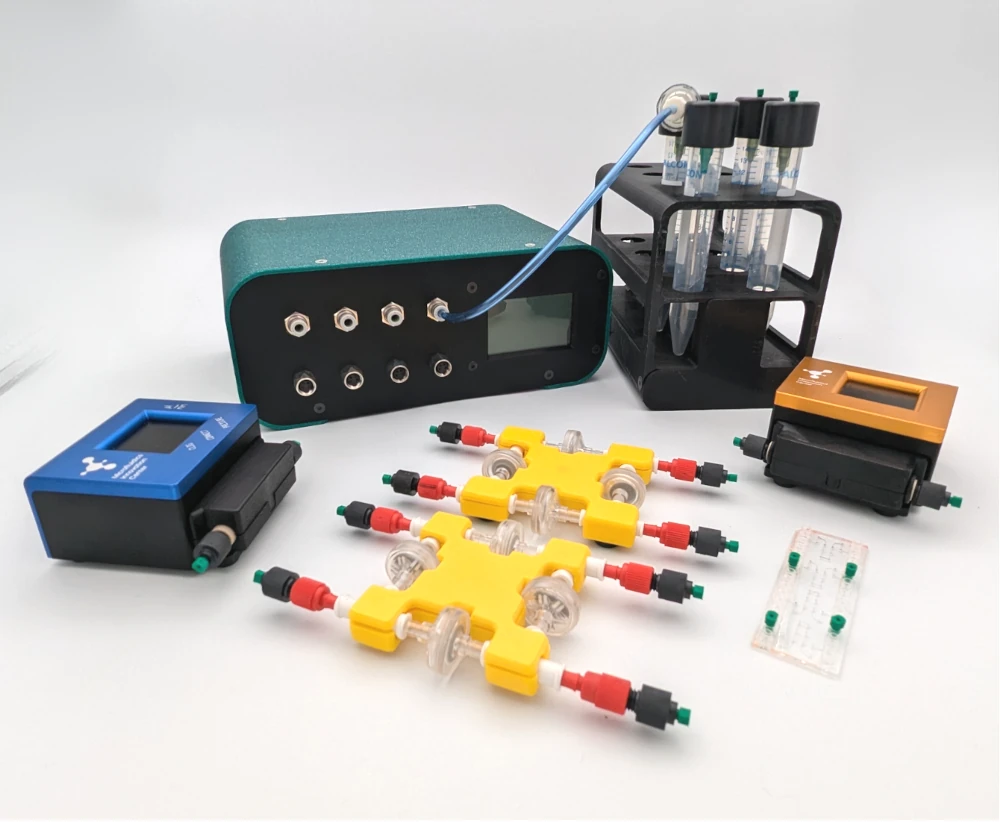
- Organ-on-chip models to study tissue responses and disease mechanisms
- Controlled exposure systems for simulating long-term environmental impacts
- Barrier tissue modeling for testing substance absorption and toxicity
- Rapid diagnostic for pathogen detection and personalized treatment support
- Precision cell culture control for enhancing therapeutic molecule production
- Technical contribution to proposals
- Integration of microfluidic systems into your project
- Access to prototyping and validation platforms
- Experience with EU-funded consortia
Discover more!
Introduction to Horizon Europe Cluster 1 - Health 2025
This month, the European Commission officially launched the Horizon Europe Work Programme 2025. It builds on insights from a comprehensive review of the programme’s first phase (2021–2024), identifying funding gaps, emerging research priorities, and evolving societal challenges. On this page, we will give an overview of the core topics of Cluster 1 – Health.
It aligns closely with the European Commission’s political guidelines for 2024–2029, with a focus on strengthening healthcare resilience, harnessing biotechnology and artificial intelligence (AI), and addressing urgent public health needs.
Horizon Europe’s Cluster Health is committed to driving research and innovation that improve public health outcomes, enhance healthcare systems, and foster more resilient, inclusive, and equitable societies across Europe.
Its overarching goal is to elevate the quality of life by supporting cutting-edge solutions that span the full spectrum of healthcare, from disease prevention and health promotion to diagnostics, treatment, and care delivery.
To achieve this, the Cluster promotes collaboration among researchers, healthcare professionals, patients, industry experts, as well as citizen engagement and international cooperation, ensuring that research outcomes are relevant, impactful, and widely adopted.
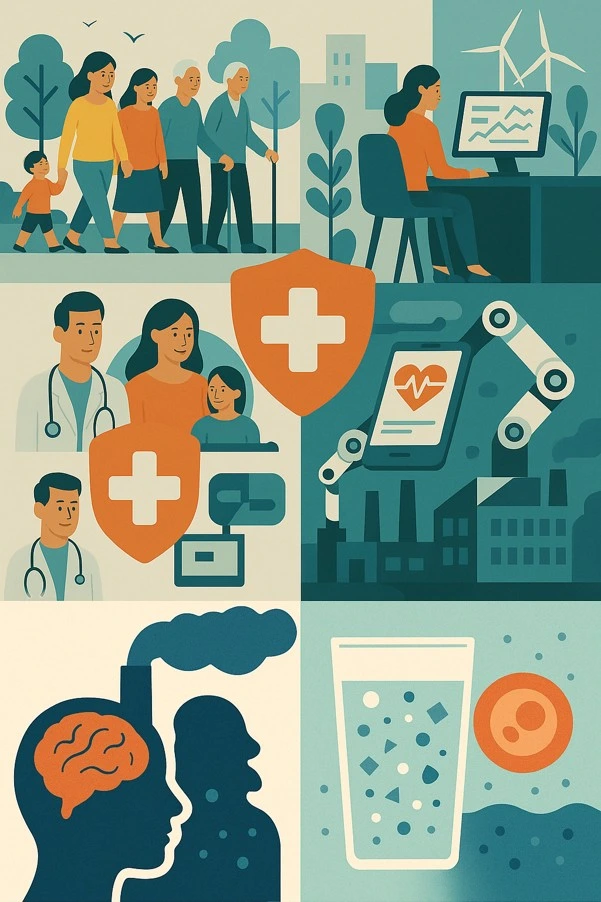
The 2025 calls for proposals will emphasize the growing interconnection between environmental and human health. The Cluster supports projects investigating how factors such as pollution and climate change contribute to health risks, including the impact of micro- and nanoplastics on brain health.
At the same time, digital technologies and AI will be central to modernizing healthcare, focusing on disease prediction, prevention, and personalized care through data-driven tools.
The programme encourages collaboration with other EU initiatives, such as EU4Health, the Digital Europe Programme, and the European Regional Development Fund (ERDF), to ensure the effective translation of research into practice. It also stresses the importance of FAIR (Findable, Accessible, Interoperable, and Reusable) data principles and compliance with the EU Clinical Trials Regulation to uphold data integrity, safety, and scientific standards.
The program also supports Horizon Europe’s three Key Strategic Orientations: “The Green Transition”, “The Digital Transition”, and “A More Resilient, Competitive, Inclusive, and Democratic Europe”.
How can the MIC contribute to Cluster Health?
- Simulation of the blood-brain barrier (BBB) and brain tissues to study how pollutants affect neurological development and disease progression.
- Precise modeling of long-term exposure in controlled environments, mimicking realistic exposure conditions over time.
- Simulating human epithelial barriers (gut, lung, skin) to test micro/ nanoplastics uptake and toxicity through inhalation, ingestion, or dermal contact.
- Rapid diagnostics for identifying bacterial strains and matching effective phages in personalized treatments.
- Precise control and monitoring of cell cultures to optimize secretome production.
Microfluidics can be particularly useful in the following calls of HORIZON-HLTH-2025:
| Call | 03-ENVHLTH-01-two-stage | 03-ENVHLTH-02-two-stage | 01-DISEASE-01 | 01-TOOL-02 | 01-IND-01 |
|---|---|---|---|---|---|
| Destination | Living and working in a health-promoting environment Deadline Stage 1: 16th Sept. 2025 Stage 2: 16th Apr. 2026 | Tackling diseases and reducing disease burden Deadline: 16th Sept. 2025 | New tools, technologies, and digital solutions for a healthy society Deadline: 16th Sept. 2025 | Innovative, sustainable, competitive EU health industry Deadline: 16th Sept. 2025 | |
| Call Title | The impact of pollution on the development and progression of brain diseases and disorders | Advancing knowledge on the impacts of micro- and nanoplastics on human health | Testing safety and efficacy of phage therapy for the treatment of antibiotic-resistant bacterial infections | Advancing cell secretome-based therapies | Optimising the manufacturing of Advanced Therapy Medicinal Products (ATMPs) |
| Action Type | RIA* | IA** | |||
| Budget | €40M | €45M | €40M | ||
| Budget/ project | €6-8M | ~€15M | €9-13M | €6-8M | |
| Number of Projects | 5-7 | 3 | 5 | ||
| Objective | Understand environmental pollution’s effect on brain health | Advance knowledge on MNPs and support mitigation strategies | Combat AMR with phage therapy | Develop and translate secretome therapies | Improve scalability and cost-effectiveness of ATMP production |
| Scope | Environments, vulnerable groups, exposome, disease mechanisms, long-term effects | Analytical methods, toxicity, long-term effects, real samples, exposure routes, standardization | Clinical trials, antibiotic-resistant bacteria, safety and efficacy studies | Secretome characterization, delivery, preclinical/clinical trials, biomarker development | Process optimization, digitization, automation, standardization, quality, regulation |
| Key Features | Two-stage; SSH, FAIR data, cluster coordination, lump sum | Two-stage; SSH, FAIR data, realistic samples, reference materials | Single-stage; emphasis on clinical trials, regulatory alignment, real-world impact | Single-stage; focus on scaling production, safety, and early clinical validation | Single-stage; industrial focus, digital integration, regulatory compliance |
*Research and Innovation Actions with 100% funding
**Innovation Actions with 70% funding
Destinations of Horizon Europe Cluster Health
Cluster 1 – Health is organized around six “Destinations,” representing the research’s expected impacts.
- Staying healthy in a rapidly changing society:
Promotes healthier lifestyles, environments, and behaviors to help people of all ages remain healthy and independent of societal changes. - Living and working in a health-promoting environment:
Focuses on creating sustainable, health-supportive environments by understanding environmental, social, and economic determinants of health. - Tackling diseases and reducing disease burden:
Aims to improve disease prevention, diagnosis, treatment, and management to reduce the burden on patients and healthcare systems. - Ensuring equal access to innovative, sustainable, and high-quality healthcare:
Seeks to make healthcare systems more equitable and resilient through people-centred, cost-effective innovations and policies. - Developing and using new tools, technologies, and digital solutions for a healthy society:
Supports the safe, ethical, and effective integration of digital tools and technologies into healthcare systems and policies. - Maintaining an innovative, sustainable, and competitive EU health industry:
Strengthens the EU health industry’s global competitiveness by promoting innovation and reducing reliance on imported health technologies.
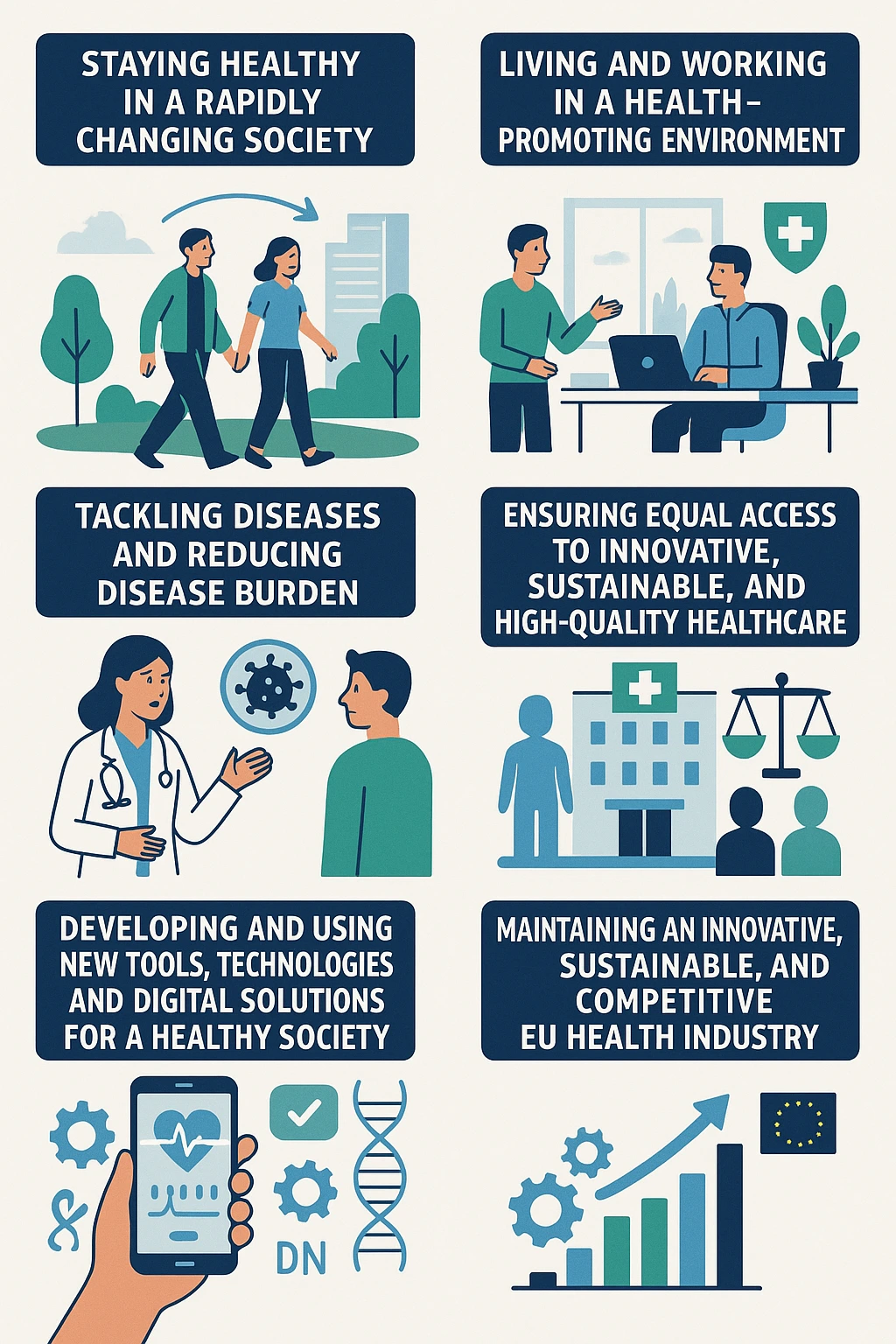
Focus areas of Cluster Health
- Social cohesion and modernisation:
The program prioritizes social cohesion, inclusion, health, and well-being of Europeans, supporting the European Pillar of Social Rights. It aims to modernize healthcare systems and support an innovative, sustainable, and competitive health industry. - Environmental health:
The program addresses the health impacts of climate change, pollution, and biodiversity loss, aligning with the European Green Deal and the EU Climate Adaptation Strategy. - Mental health and aging:
It highlights the need for investments in mental health and addressing the challenges of an aging population and non-communicable diseases. - Healthcare systems:
The program aims to strengthen healthcare resilience, promote sustainability, reduce health inequities, and advance medical device manufacturing in line with EU industrial and single market goals.
- Digital health and data use:
It will advance healthcare by promoting biotechnology and AI, focusing on cellular and cell-free therapies, generative AI in biomedical research, and facilitating the transition from pre-clinical to clinical applications.
Download the MIC Horizon Europe 2026/2027 Calls Calendar:
The MIC already brings its expertise in microfluidics to Horizon Europe:
H2020-NMBP-TR-IND-2020

Microfluidic platform to study the interaction of cancer cells with lymphatic tissue
H2020-LC-GD-2020-3

Toxicology assessment of pharmaceutical products on a placenta-on-chip model

FAQ - Horizon Europe 2025 Cluster 1 - Health
What is the Health Cluster of 2025 about?
The 2025 programme focuses on using data across borders, patient-centric technologies, next-generation medical devices and diagnostics, antimicrobial resistance, cancer interception, neurodegeneration, and resilient health systems. Suggestions that integrate enabling technology (microfluidics, AI, advanced materials, bioprocessing) with clinically significant outcomes are generally interesting.
What are the types of action and the rates of funds?
There exist three key instruments that are used in the areas:
-Research and Innovation Actions (RIA): 100 percent of all direct expenses and 25 percent flat-rate indirects.
-Innovation Actions (IA): the majority of beneficiaries (70%), non-profits (100%), and indirects (25%).
-Coordination and Support Actions (CSA): 100% and 25% indirects.
It is also typical to find RIAs at TRL 3-5, and IAs progressing to TRL 5-7 by the end of the projects, according to the wording of the topic.
What are the common project sizes and project durations?
RIA budgets would fall within 4-8M Impact in 36-48 months. The IAs tend to be larger, 6-12 million EUR in 36-48 months, typically, when there are clinical validation, multicentre, or regulatory activities. CSAs are less fat (1-3 million EUR, 24-36 months). Like usual, refer to the topic section of the anticipated EU contribution and explain exceptions.
So many partners to have, and which?
The legal minimum number of independent entities is three, out of three different Member States/Associated Countries, although the competitive Health consortia typically include 7-15 beneficiaries. The combination that denotes credibility is: clinical and patient cohort clinical partners, robust methods lab, SME hardware/automation or software, data governance specialists, health-economics/LCA, and (when devices are to be used) manufacturing or regulatory expertise. Maintain the staff lean and lean; big and unoriented consortia lose points during Implementation.
What are the evaluation criteria, and what is actually used to determine the score?
The standard triad:
-Excellence: above state-of-the-art and falsifiable hypotheses; good clinical/technical methodology; good statistics.
-Impact: definite channels of adoption, determined health results, and persuasive exploitation/regulatory approaches.
-Implementation: quality and efficiency. The logic of work plans, risk management, partner fit, and resources to match tasks.
The issue of data sharing, reproducibility, and patient involvement are not window dressing in the case of 2025 Health topics, but rather points of inspection.
What TRL improvement should we guarantee (and achieve)?
For diagnostic devices or lab platforms, begin at TRL 3-4 (proof of concept) and reach TRL 5-6 (validated prototype in the relevant environment) in the years 36-42. In the case of software-only decision support, anticipate the needs of a clinical-grade validation, cybersecurity, and interoperability in the real world. For therapeutics or complex biologics, the focus is typically on robust preclinical packages with defined regulatory next steps rather than on phase-2 studies.
What KPIs are fast-acting Health reviewers?
Have quantifiable, clinically/ operationally significant goals. Examples:
-Diagnostic: sensitivity/specificity ≥90/95 on independent cohorts; LoD in clinically relevant range; turnaround less than 30 minutes of point-of-care; usability scores ≥30 operators.
-Device/process: intra-assay variability CV <10% between sites; throughput ≥100 samples/day; uptime ≥95% cost/test reduction ≥30% vs. comparator.
-Clinical/health-system: time-to-result decreased by ≥50%; events decreased by≥20%; quality-adjusted life-years (QALY) increased with a believable cost-effectiveness ratio.
-Data: Compliance with FAIR, external validation within at least one independent dataset, calibration/drift monitoring of the model within ≥6 months.
What are the areas of value added with microfluidics and lab-on-chip?
Three levers are least used by consortia:
-Miniaturization of discovery and assays. High-throughput: costs of reagents are reduced 10-100 times, and discoveries can be made in days rather than months.
-Intensification and integration of processes: on-chip sample preparation, multiplexed detection, and constant-flow control, which enhance sensitivity and reduce time-to-answer.
-Translational prototyping cartridge-based prototypes that combine lab chemistry and clinical workflows.
What do you think are the pitfalls to evade in 2025 Health?
Several repeat offenders:
-Unclear claims of AI to health, where there is a weak external validation and no monitoring of the post-deployment.
-Projects of devices whose manufacturing or sterilization path is not credible.
-Clinical outcomes that were not consistent with payer logic or standard of care.
-Exceeding expectations on multicentre recruitment without site feasibility information.
-The promises of data sharing that cannot pass muster under GDPR.
-Risk registers that show or list hazards but do not include triggers, owners, or mitigation budgets.