Engineering Tiny Machines to treat cerebrovascular pathologies: Project CMT-DN
Author
Dr Christa Ivanova
Publication Date
Keywords
tiny machines
brain organoids
drug delivery
cerebrovascular pathologies
brain-on-chip devices
Your microfluidic SME partner for Horizon Europe
We take care of microfluidic engineering, work on valorization and optimize the proposal with you
Tiny Machines to analyse treatment options with brain organoids
Tiny machines (TMs) enable highly targeted drug delivery, improving bioavailability while minimizing damage to healthy tissue. TMs used for drug delivery are microscale or nanoscale engineered systems designed to transport, protect, and release therapeutic agents precisely where and when they are needed in the body. They can release drugs in a sustained, triggered, or on-demand fashion, and are made from non-toxic, often biodegradable materials (e.g., lipid nanoparticles). Deploying them within the brain’s intricate environment demands novel and sophisticated design strategies.
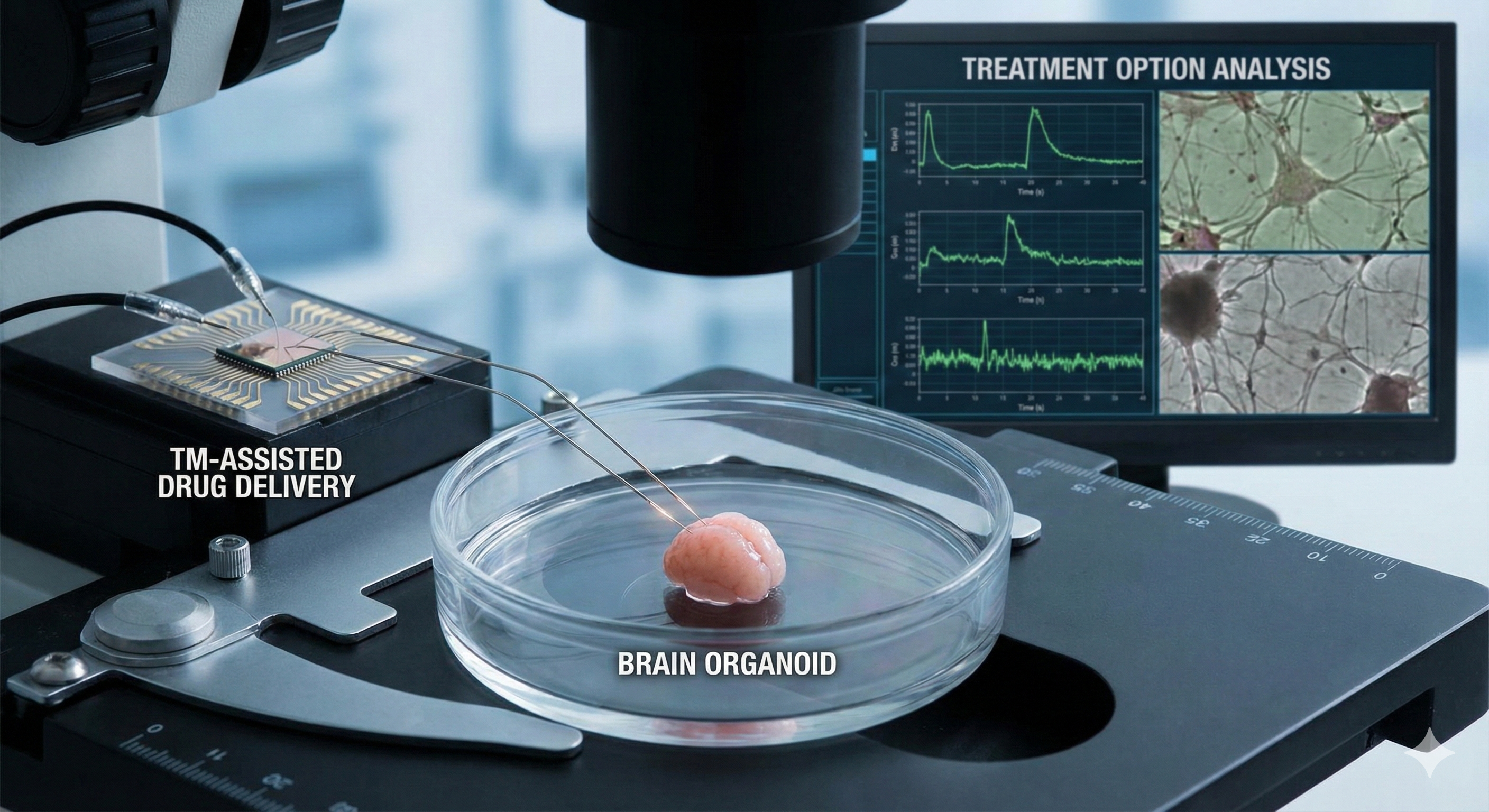
Funded by the Marie Skłodowska-Curie Actions programme (MSCA-DN), the CMT-DN project aims to advance next-generation drug delivery systems by training researchers at the PhD level. These emerging specialists will concentrate on engineering TMs and creating brain-on-chip platforms to enhance therapies for cerebrovascular diseases.
The project will subsequently evaluate the engineered TMs using 3D microphysiological, non-animal models that incorporate vascularised brain organoids in both healthy and diseased states. Together, these innovative approaches have the potential to reduce the time and cost associated with preclinical animal studies while accelerating the development of new treatments.
Key objectives of CMT-DN project
The CerebroMachinesTrain Doctoral Network (CMT-DN) aims to push beyond the current state of the art in drug delivery by advancing the development of Tiny Machines (TMs) engineered as stable and functional delivery platforms. These TMs are designed to: (i) transport precise doses of therapeutic agents to targeted sites; (ii) maintain their intended functionality under fluctuating physiological conditions; (iii) enhance drug bioavailability; and (iv) preserve healthy cells, tissues, and organs with minimal or no adverse effects. Achieving these objectives requires innovative engineering solutions that operate effectively within the highly complex brain environment, which serves as a primary testing ground for these technologies.
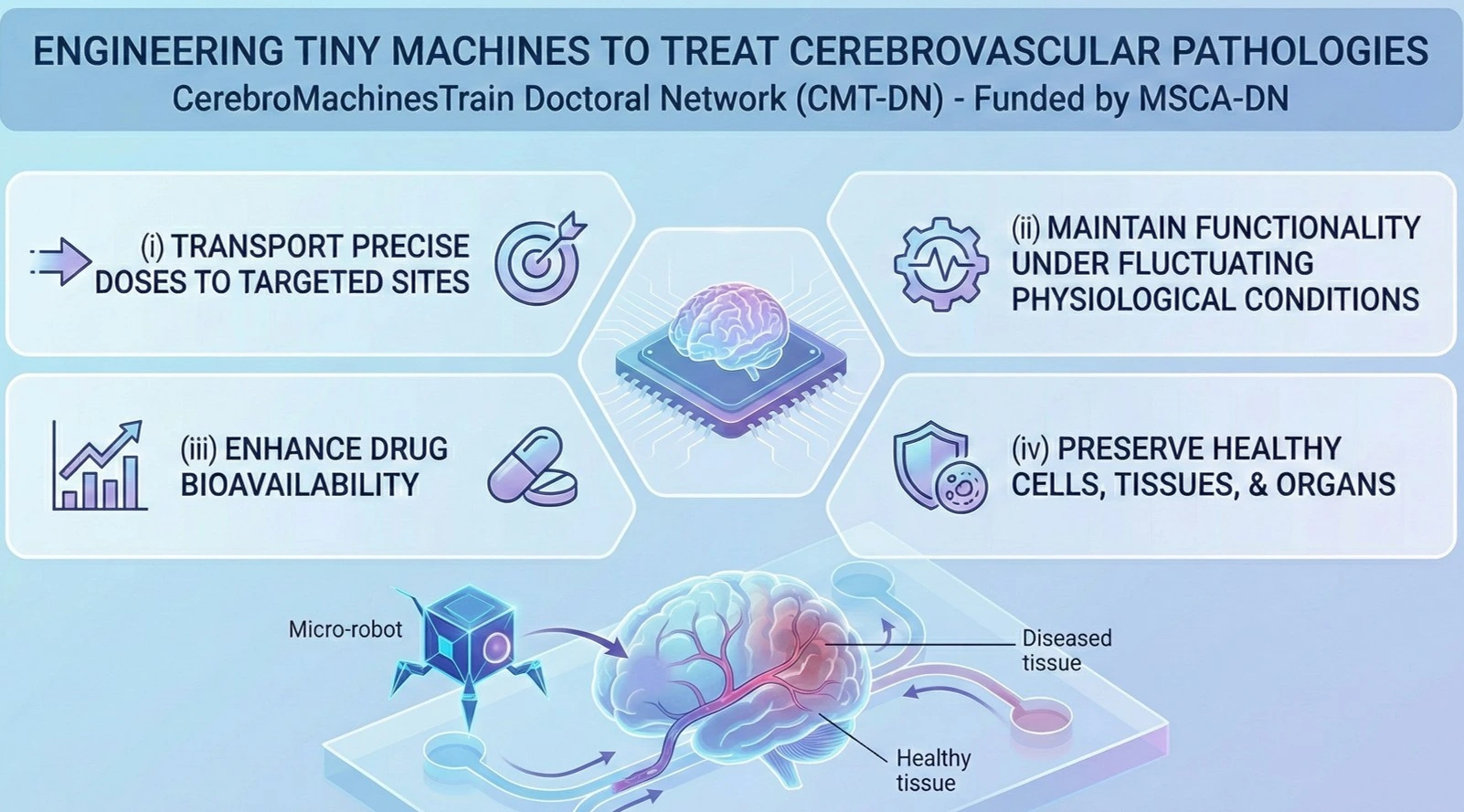
CMT-DN will train a cohort of 14 talented early-stage researchers to PhD level, equipping them as future leaders in the engineering of TMs and advanced vascularized brain-on-chip devices (VRAINORG). These platforms will be used to investigate disease mechanisms and improve therapeutic strategies for cerebrovascular disorders. The engineered TMs will be specifically designed for integration with VRAINORG systems, 3D, non-animal microphysiological platforms incorporating vascularised brain organoids in both healthy and disease models.
This interdisciplinary and innovative training programme brings together leading academic and industrial expertise in biomimetic therapeutic systems and brain microphysiological technologies, involving five academic and four industrial beneficiaries, supported by three academic and two industry-associated partners across nine countries, including an Associated Partner in the United States. By leveraging cutting-edge non-animal technologies such as vascularised brain-on-chip models, the project aims to accelerate clinical translation while substantially reducing the time, cost, and reliance on preclinical animal studies.
The MIC in CMT-DN project
The development of vascularized brain-on-chip platforms requires fine-tuned media supplementation, control of temperature, pH, shear stress, and oxygen content, and the ability to monitor organoid development in real time. The PhD candidate at the MIC will design and construct the microfluidic platform and, after initial testing and validation, will install it at the University of Galway during their secondment to use it and learn about TM protein-polymer assembly and function.
Conclusion
Project CMT-DN will connect 14 project partners from academia and industry, working together to develop and establish TMs for the treatment of brain disorders. The MIC will develop a vascularized 3D brain-on-chip platform to study the actions of TMs in the brain environment. This will ultimately lead to new treatment options for brain disorders, with higher efficiency and lower side effects than currently possible.

Funding and Support
This project has received funding from Marie Skłodowska-Curie Actions under HORIZON-MSCA-2024-DN-01-01, grant agreement no. 101227628 (CMT-DN project).
Start date: 1 January 2026
End date: 31 December 2029
Overall budget: € 4 220 731,80
Coordinator: University of Galway