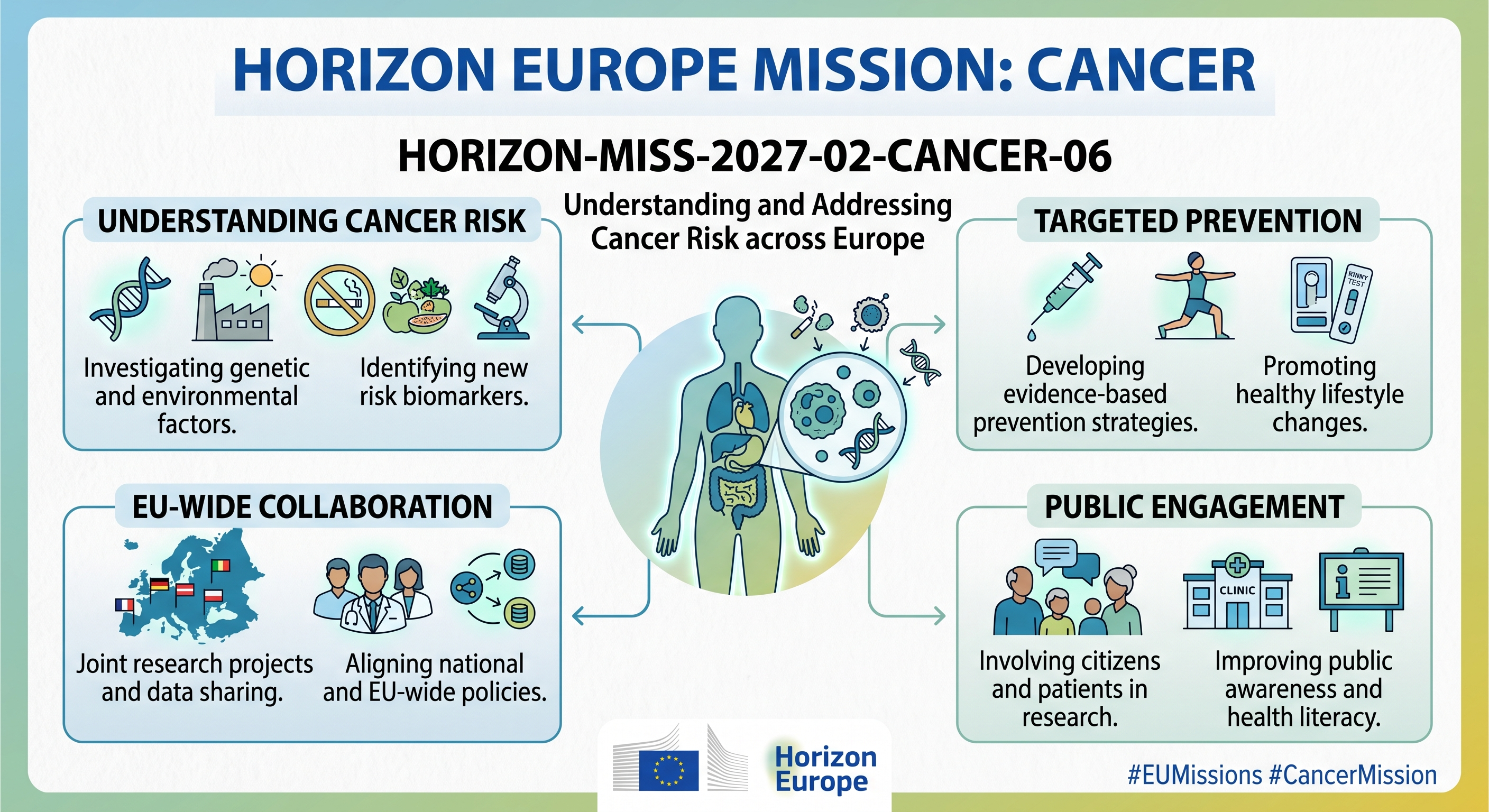
Tips & Tricks for a successful HORIZON-MISS-2027-02-CANCER-06 proposal
Opening
10 February 2027
Deadline
Keywords
Cancer Mission
Organ-on-chip
Cancer charities
Young cancer survivors
CSA
healthy lifestyle
Quality of Life
Transnational calls
prevention strategy
Your microfluidic SME partner for Horizon Europe
We take care of microfluidic engineering, work on valorization and optimize the proposal with you
HORIZON-MISS-2027-02-CANCER-06: Support a Young Cancer Survivor Quality of Life (QoL) research programme by cancer charities and funding agencies
The Commission wants a coordinated network of cancer charities and funding agencies to put their own money behind quality-of-life research for young cancer survivors. This action builds the machinery for joint transnational calls. It does not fund the science directly. Europe now counts more than 12 million cancer survivors, and the young ones carry long shadows from treatment.
Download the MIC Horizon Europe 2026/2027 Calls Calendar:
Discover more!
Administrative facts: what do we know about the HORIZON-MISS-2027-02-CANCER-06 call?
Which call is it, and when is the opening and the deadline?
- Call name: Supporting the implementation of the Cancer Mission
- Identifier: HORIZON-MISS-2027-02
- Destination: EU Cancer Mission
- Topic: HORIZON-MISS-2027-02-CANCER-06
- Opening date: 10 February 2027
- Deadline: 21 September 2027, 17.00 Brussels time
- Type of action: CSA (Coordination and Support Action)
What about the budget and estimated size of the project?
- Overall call budget: EUR 115.32 million across the six 2027 Cancer topics
- Topic budget: EUR 3.00 million
- Projects funded: 1
- Budget per project: around EUR 3.00 million
- Funding form: lump sum
What are the key eligibility and evaluation conditions?
- Thresholds are 4 for Excellence, 4 for Impact, 4 for Implementation, cumulative 12
- The EU money does not co-fund the research projects. Charities and agencies fund those from their own resources.
- Standard eligibility applies, plus the MIIT-linked Chinese universities restriction.
- Winners join the Quality of Life cluster of the Cancer Mission and budget for it.
Scientific range: what does the Commission expect from the HORIZON-MISS-2027-02-CANCER-06 grant?
What outcomes are expected?
A working network of registered charities and funding agencies, pooling their own budgets to back research on young survivors across three age bands. Publication series are not what the Commission is after. It wants at least two transnational calls launched, real projects funded, and data made reusable through the coming UNCAN.eu platform.
What is within scope?
- Two or more transnational calls for proposals, with grants to third parties covering children (0-14), adolescents (15-19) and young adults (20-39), all three groups funded
- Networking between charities, funded projects, patients and survivor organisations
- Outreach at local, regional and national level about the funded research
- Liaison with the National Cancer Mission Hubs coming out of the ECHoS project
The coordinating grant does not pay for the science itself. That boundary is explicit.
What are the specifically proposed research directions?
The downstream projects, funded by the charities, are pointed at these directions.
- Holistic tools and interventions, digital ones included, to improve treatment and follow-up regimens for young survivors
- Late effects that wreck quality of life, from mental health and chronic pain to fatigue, heart problems and infertility
- Interventions adapted to how care is actually delivered in each country
- Datasets tagged for the European Health Data Space, models routed through European research infrastructures and open science
Scientific strategy: how can you enhance your chances of being funded through HORIZON-MISS-2027-02-CANCER-06?
What scientific choices matter most?
- Lead with the funders. The coordinator is not a research lab. It is a consortium of charities and funding agencies willing to commit real money.
- Show the money is real. The Commission wants proof partners will fund third parties from their own resources, not vague intentions.
- Cover all three age bands. Reviewers check that children, adolescents and young adults each get funded, not only the easy cohorts.
- Bring patients in from day one. Direct involvement of survivors, survivor organisations and caregivers is required, plus genuine SSH expertise.
- Use living labs. Participative, oncology-centred models are named in the text.
- Connect to what exists. EU-CAYAS-NET, OACCUs, EUonQoL, e-Quol.
Consortium & proposal-writing plan: what works best with this type of call?
- For a CSA like this, keep it lean. Somewhere between six and ten partners, a couple more if country coverage needs it.
- Partner mix is unusual here. Your core is cancer charities and national or regional funding agencies, not universities. That is the whole point.
- Add patient and survivor organisations as full partners, not advisory extras.
- Bring SSH institutions for the quality-of-life and social innovation work.
- If you want the network to deliver reusable data, slip in a small innovative SME to handle the data and digital plumbing. It pays off later.
- Writing tip. This is a coordination action, so the Implementation section carries real weight. Show governance, call mechanics, and how grants get awarded fairly.
- Spread partners across Member States and Associated Countries. Geographic balance is not decoration here.
How would microfluidics contribute to this topic?
Let’s be honest about the fit. This topic funds a coordination network, and the coordinating consortium is charities and funders. MIC would not sit at that table. But the projects the network funds are another story, and that is where a chip earns its place.
- Take late effects. Say you want to know why a childhood chemo drug quietly damages the heart years later. A heart-on-chip lets a funded team watch that damage build in human cells, before a patient shows symptoms.
- Fertility worries young survivors a lot. Ovarian or testicular tissue on a chip can test whether a protective compound actually shields the tissue during treatment. Same drug, different tissue, different answer.
- Digital and data tools sit at the centre of this call. Microfluidic assays feed clean, consistent readouts into those datasets. You get the same answer twice, which matters when the data has to be reusable.
- A funded team could screen follow-up regimens on patient-derived tumour cells before the clinic.
So microfluidics won’t win you this coordination grant. But if your consortium helps shape the transnational calls the network runs, pushing organ-on-chip into the young-survivor research gives those projects cleaner cause and effect than animal work usually delivers. That is the honest angle.
The MIC already brings its expertise in microfluidics to Horizon Europe:
H2020-NMBP-TR-IND-2020

Microfluidic platform to study the interaction of cancer cells with lymphatic tissue
H2020-LC-GD-2020-3
Toxicology assessment of pharmaceutical products on a placenta-on-chip model

About the author
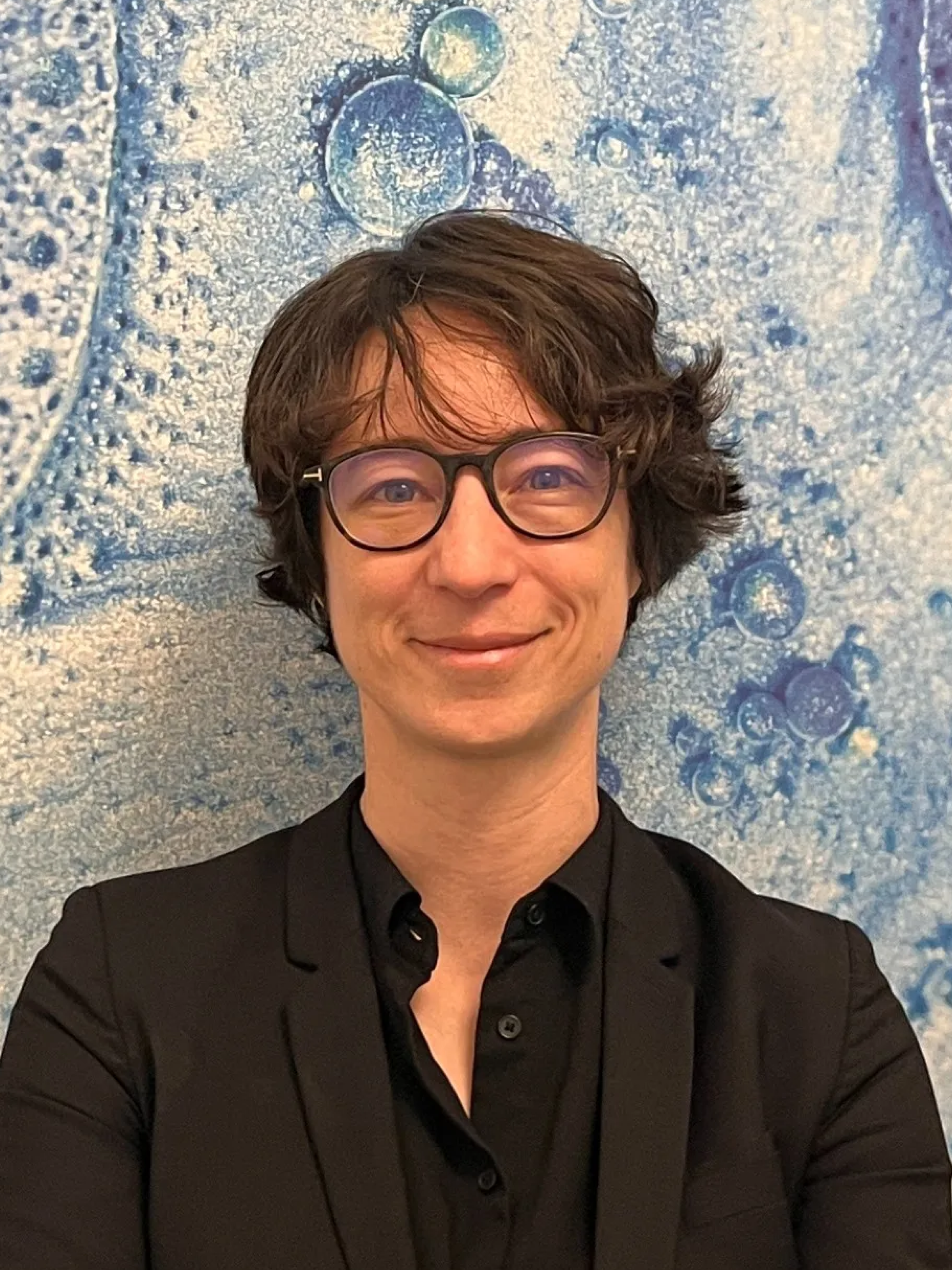
Julia Sepulveda Diaz, PhD
Chief Executive Officer, Microfluidics Innovation Center
Julia holds a PhD in glycobiology and neurobiology from Université Paris-Est Créteil. Before moving into microfluidics, she spent several years as a postdoctoral researcher at the Paris Brain Institute, on Parkinson’s disease, neuroinflammation, and the role of heparan sulfate in protein aggregation. Today she leads the Microfluidics Innovation Center as CEO, steering its researchers and engineers and its collaborative research and innovation projects.
FAQ – HORIZON-MISS-2027-02-CANCER-06
What is this HORIZON-MISS-2027-02-CANCER-06 call really about?
It funds a Coordination and Support Action. A network of cancer charities and funding agencies commits their own budgets to research on the quality of life of young cancer survivors. The EU contribution pays for the coordination, not the science.
Who should apply, and how much money is on the table?
Applicants are registered charities and national or regional funding agencies across EU Member States and Associated Countries. One project will be funded, with an EU contribution of around EUR 3.00 million as a lump sum. Opening is 10 February 2027, deadline 21 September 2027.
Does the EU grant pay for the research projects?
No. The EU money facilitates coordination and networking between the charities and funders. The actual research grants to third parties come from the partners’ own financial resources, awarded through transnational calls.
Check the Funding and Tenders Portal for more information.
Which age groups must the funded research cover?
All three. Children aged 0 to 14, adolescents 15 to 19, and young adults 20 to 39, taken at age of first diagnosis. Grants must be awarded so that every age group is covered, not only the top of the ranking.
What are young cancer survivors actually dealing with?
Long-term effects of treatment. Mental health issues such as depression and anxiety, chronic pain, fatigue, cardiovascular complications, organ and skin changes, and infertility. Europe counts more than 12 million survivors, including around 500,000 childhood cancer survivors.
How many transnational calls does the network have to run?
At least two. The network must organise, fund and implement a minimum of two transnational calls for proposals, plus networking and outreach at local, regional and national level.
What role do patients and SSH experts play?
A central one. Direct involvement of patients, survivors, survivor organisations and caregivers is required. Effective contribution of Social Sciences and Humanities disciplines and experts is also mandatory, along with participative models like oncology-centred living labs.
What kind of consortium fits a CSA like this?
Lean and unusual. Somewhere between six and ten partners, built around charities and funders rather than universities. Add patient organisations as full partners, SSH institutions, and a small innovative SME for the data and digital side.
Where does microfluidics realistically fit?
Not in the coordinating consortium. Microfluidics belongs in the research projects the network funds, for example heart-on-chip models of late cardiotoxicity or tissue-on-chip fertility studies. If you help shape the calls, you can steer these tools in.
What common mistakes sink this kind of proposal?
Underfunding the third-party grants, ignoring one age group, treating patients as advisors instead of partners, and thin governance. For a coordination action, weak call mechanics and unclear grant-award rules cost you on Implementation.