How to find an industrial partner for your Horizon Europe project?
Author
Christa Ivanova, PhD
Publication Date
September 13, 2021
Keywords
SME
industrial partner
Consortium building
patent
Research‑industry collaboration
industry matchmaking
networking
Technology transfer
industrialization
Your microfluidic SME partner for Horizon Europe
We take care of microfluidic engineering, work on valorization and optimize the proposal with you
Tips for finding an industrial partner
It can be challenging for academic researchers to find and convince the right industrial partner as they build a Horizon Europe project. This can be due to many things:
- Most SMEs and large companies deal with different professional networks than academic researchers. Finding the right contact point can be challenging.
- Companies are not academic labs! Industrial companies mainly focus on business opportunities rather than offering new scientific discoveries to humanity. Our job is to innovate, which is different from making scientific discoveries.
- Most companies do not understand the Horizon Europe grant application process compared to academics. Often, they even get stuck in the Horizon Europe administrative labyrinth.
- Many companies may assume that working with academics isn’t efficient. Some key aspects, such as publication-oriented goals, can be seen as incompatible with a patent-oriented strategy.
Should we renounce to build a strong and successful European consortium? Not!
Today, the EU generally requires you to integrate one or several industrial partners into your Horizon Europe consortium. This is an additional opportunity to boost the project’s proposal score and improve your chances of getting the grant.
This page aims to give you everything you need to quickly identify and integrate industrial partners into your consortium. Based on our experience over the past decade, we learned how to be ideal partners… before starting a project!
Why the European Union wants you to integrate industrial partners and SMEs into your Horizon Europe project
It is essential to understand why the EU requires the integration of industrial partners.
Industrial partners can add value, but only when they are correctly integrated into your project! You will not get the grant if you give your industrial partner an inadequate role.
The European Union wants you to integrate companies into your Horizon Europe grant proposal for the following reasons:
SMEs can bring an entrepreneurial mindset to your Horizon Europe project consortium
When you integrate an SME into your Horizon Europe consortium, there is a good chance that the entrepreneur will alert you whenever something that can be valorized comes up. Industrial partners are not there for the basic science – their job is to innovate, which means exploiting an idea and making it come to life.
Our missions perfectly match the goals of the European Union: as academics, you produce the gold, and as SMEs, we dig to find how to exploit it until we understand how to make jewels.
Industrial partners will always refocus the project towards profitable market outcomes
Did you know that a significant conclusion of the H2020 framework program was double-edged?
While the success of scientific outputs could easily be measured by publications and a much stronger worldwide competitiveness, the EU Commission also observed that few of these outputs had been pushed into society. This is why, in the Horizon Europe program, Innovative Europe is one of the three pillars, and many new funding schemes are put in place to encourage the actual transfer of the research outcomes into society.
Everybody wins when your research is turned into a product and, why not, has chances to save lives! From the EU citizens through the economic and societal impact of the project to the partners’ (both universities and companies) return on investment, including the research team’s notoriety.
The industrial partner can be the valorization partner of your Horizon Europe project
Usually, the SME or bigger company in your consortium will be an excellent candidate to take care of the valorization aspects of any exploitable consortium results. This is an essential feature for the EU to ensure that the money invested into Horizon Europe turns into economic activity and that a correct Intellectual Property strategy will be applied (e.g., patenting before publishing).
Industrial partners are good at engineering
First, industrial partners are not well fitted to essential research work.
We can provide a long list of reasons, the main one being that since companies need profits, we have a different timeline and pursue short-term deadlines to achieve our long-term strategies.
However, private sector methods can work wonders in engineering to provide functioning, industrialized systems.

Companies are well fitted to take care of industrialization
“Industrialization”. Here is a crucial aspect of a company’s role inside a consortium.
As companies think about how they could valorize a technology, they must ensure that early prototyping will be scalable. Regarding industrialization quality procedures, companies are generally the right partners.
Where can you find an industrial partner for your Horizon Europe consortium?
There are several methods to find industrial partners for your Horizon Europe consortium; some of them are very fast, and some are more exhaustive. Notably, some are more selective and enable you to target the proper skills or mindset you need for your project.
Specialized Horizon Europe websites for SMEs and industrial partner search
Large companies and SMEs putting up their profile on Horizon Europe partner search websites are generally more open to Horizon Europe collaboration. This is a good start.
In addition to the European Commission’s official portal, you will find below a list of beneficial websites to find the ideal partner profile for your specific consortium. Don’t forget to add your profile so other partners can contact you! Then, take the necessary time to browse the profiles of industrials in these databases and contact them directly.
A list of useful links to find European partners for your consortium
NMP TeAm: https://www.nmp-partnersearch.eu/index.php?index=60
Crowdhelix: https://www.crowdhelix.com/
Up2Europe: https://www.up2europe.eu/
Fir for Health: https://mm.fitforhealth.eu/
PNO Innovation Place: https://www.innovationplace.eu/
Senet Hub: https://www.senet-hub.eu/call-power-partnering/
Marie Curie Alumni Association: https://www.mariecuriealumni.eu/newsletter/10-websites-you-need-know-if-you%E2%80%99re-looking-research-partners

Tips and tricks: how to find your ideal partner?
Write a concise email (3-4 lines) to any company that may fit your project.
Write at least a dozen companies, not just 1-2! Please put them in competition and select those with the mindset, the goals, the tempo, and the skills that fit you the most.
Remember you will then work with them as partners within your research consortium. You don’t want to put a fox in the henhouse, do you? Eventually, we also want to enjoy working together!

Imagine all the keywords the company may write down to describe themselves.
This preliminary work is essential. As for a bibliography search, you don’t want to miss a query because of a bad boolean request with inappropriate keywords!
Use keywords referring to technical skills and applications/markets… and find as many synonyms as possible.

Contact industrials who have already worked on an H2020 or Horizon Europe project.
You can use your network or check European grant databases to find an industrial partner who already worked in your field and participated in European projects, like Cordis or Horizon Dashboard.
Use a search engine to find companies with the skills you need and LinkedIn to find the accurate contact point.
First, identify all the SMEs or big companies that fit your needs on a search engine. Second, go to Linkedin to identify individual researchers in their R&D team. LinkedIn is widely used in the industry, and getting contacted is common. Third, invite all of them to your LinkedIn account with a three-line email explaining that you are considering including them as partners for your next Horizon Europe consortium.
Use Google Scholar to find companies that publish in your field.
Directly contact the industrial researcher, who was a co-author in the published papers. You will have a greater chance to be in contact with someone more open to research with academic laboratories. Again, save time by using Linkedin!
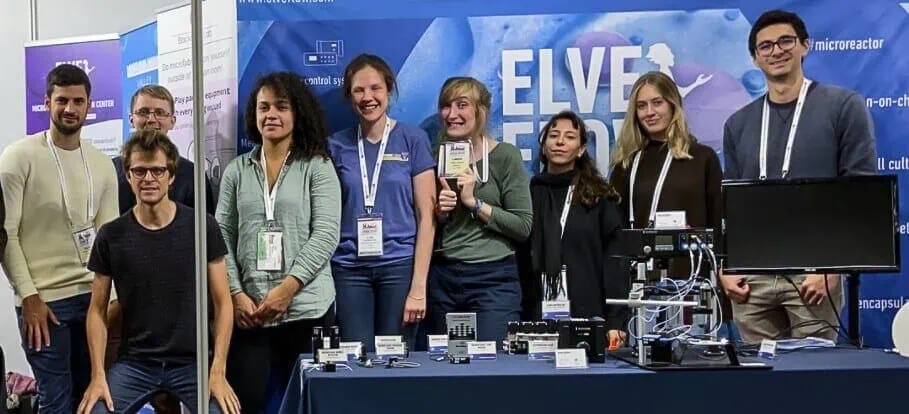
Target industrial exhibitors at scientific conferences.
Scientific instrumentation companies, especially SMEs, are generally more open to Horizon Europe grants since they understand the world of research and do much research themselves.
How to contact SMEs and large companies?
Company website contact form: a big difference between SMEs and large companies
Researchers and CTOs don’t usually put up their email on the internet.
For SMEs, a short message through the company website’s contact page should be quickly and correctly routed and fruitful. For more prominent companies, however, there is a 99% chance that your message on the contact form will be lost before reaching the right person.
Linkedin: Highway to the right people
Use your network.
The easiest way to contact researchers from private R&D teams is through LinkedIn.
As we said before, you can identify companies with a search engine, then search for researchers working in the appropriate scientific department by combining keywords such as “company name + scientific keyword”).
Then, shoot an invitation to some of them with a straightforward message (“Hi Mr T, I am looking for partners with your expertise to submit a Horizon Europe proposal”). Be broad and be bold! And follow up with answers you find positive, proactive, quick…

Do you know former academic researchers who decided to join an industrial company? Then, contact them; they will better understand your needs and share your mindset. They can become the best contact point to forward your request inside the company.
How to understand, reassure and motivate industrial partners to join your Horizon Europe consortium?
When you are in contact with an industrial partner, the difficulty is understanding their mindset and making them understand why joining your Horizon Europe consortium is a good thing.
As we said, companies may be suspicious regarding academic consortia. They are business-oriented, and as you would not deviate from your scientific objective, they would not lose their strategic focus. They also hold concerns about confidentiality and the risk of losing control over their results.
However, there are answers to give. Answers to let them understand they have a lot to win from this!

What company can benefit from by joining your Horizon Europe project consortium
- They may be the best partner to valorize and exploit the results. This is good for business.
- They can get prime access to great discoveries (yours) before they become public. This is how deep tech arises.
- They get EU funding for their R&D, so the financial risk is minimal. This argument is powerful for SMEs.
- If you can show them that the project’s outcome can give them a competitive advantage in their market… you’ve won!
- They can strengthen their networks, both with academics and other industrial partners. This is hard for industrials, too!
- Even if there is no business outcome, people in private companies are also keen on working on something great for humanity. This is good for their external communication.
How to reassure your future industrial partner
- Focus and delays – Companies fear that academics may not deliver on time and may take different directions from their focus. Ideally, most of the technical work done by the industrial team in the Horizon Europe project should benefit its business, independent of the results of the other consortium members.
- Confidentiality – Inform them that the EU for Horizon Europe project proposal grant agreement template already includes very restrictive confidentiality clauses.
- Patents and intellectual property – Remind them that the EU grant agreement template for Horizon Europe proposals already includes an IP clause where any results from a partner belong to this partner and that shared results will become shared patents.
How to reassure a private company?
Remember: the person in front of you doesn’t necessarily have the power to make a decision. Look up the company’s structure. Who decides? Anticipate delays in getting approval and signatures (particularly with large companies).
Small companies (SMEs) are much faster at deciding to join your consortium than big entities. Small companies can make decisions within days and weeks, big ones within months and sometimes years.
Based on our experience, the best way to build a winning consortium would be to include both an SME and a big group in the grant proposal. Why? Mainly because SMEs can bring a fast rhythm, quickly handle challenging engineering tasks, and are interested in small-sided product valorization.
Big companies will gain a deep strategic market vision, can valorize projects in bigger/regulated markets, and handle even more sophisticated projects.
The MIC and Horizon Europe
We will be glad to participate in your project. Visit our dedicated webpage to learn more about our expertise as Horizon Europe partner!
Curious about the calls currently open?
Download the MIC Horizon Europe 2026/2027 Calls Calendar:
We are particularly interested in the following calls but remain open to any collaboration!
- EIC Work Programme that supports all stages from R&D to industry for game-changing innovations
- Horizon Europe RIA Calls specifically focusing on health and food, bio-economy, natural resources, agriculture, and environment
Check the Horizon Europe tips and tricks
FAQ - How to find an industrial partner for your Horizon Europe project?
What truly sets a strong industrial partner apart in Horizon Europe?
One key thing is shared goals – the business actually deals with your issue, better if it’s on their radar already. Another piece? Real resources from partners – like tools, data, rules expertise, or customer channels, nothing vague. Then there’s tech readiness – labs handle early science stuff, companies take it further into real-world testing and use. When these match up, everything else falls into place naturally.
Who actually gets the help?
That’s the beneficiary. Someone lending support without leading – that role fits an associated partner. A third party stands apart entirely, neither involved nor directly impacted.
A beneficiary puts pen to paper on the Grant Agreement, then gets EU cash – they handle duties and hit targets. While one steps in without funding, that’s an associated partner – their strength lies in opening doors like sites, user groups, pilot runs, plus trust. Others chip in now and then – these third parties give resources or help, guided by someone already in. Need hands-on tech work tied to spending? Go for a beneficiary. Want real-world labs, data piles, or medical spots instead? A linked ally might fit just right – with less hassle getting them started.
Where do powerful industry contacts actually come from?
Warm contacts work better than cold messages. Try this: look at the thank-you sections of your recent joint papers – suppliers pop up there sometimes. Check out active standards groups in your field – they’re full of connected folks. Peek into old Horizon 2020 or Horizon Europe project teams; those people talk. Also, reach out to gear makers who’ve helped your lab before – their reps remember you. Instead of blasting vague emails, send a tight two-page note with clear points. It goes way farther.
What should your initial message include?
A single page, split into five bits: (1) spell out the issue fast; (2) toss in a real-world example that affects cash flow or plans; (3) keep it light – just need half an hour on Zoom or a quick letter by Friday; (4) here’s what I’ve got ready – tools, checklists, data files, reference points; (5) timing matters – the grant closes next week, funds could hit $50K, odds look decent.
What’s the quickest way to check if a company is legit – without making them nervous?
Hit up a 60-min chat using a checklist – spot the key person making calls, check if they’ve done EU work before, get clear on who owns what IP, see how many engineers are free and when they can start, confirm test locations or users, note any legal hurdles, watch for warning signs like big claims with no proof, unnamed team members, or dodgy answers about ownership. After that, send a short role summary and push for a written yes within three days.
Who owns what – ideas, secrets, past work, new stuff – how do you keep it fair?
First, swap basic NDAs between both sides. When drafting the plan, spell out past inventions clearly – include names, who owns them, and how they’re accessed. Decide new project rights using standard rules, only change if really necessary. Focus on the outcomes required to make it work: which person needs what info, when, under what setup. Limit extra notes; the sample funding contract covers most common concerns anyway.
What’s the real role of an industrial partner in the project tasks?
Doing well means both acting and choosing – like guiding interns or tech staff, taking in visiting researchers, sharing actual tools or info. Try shaping models or testing early versions instead. Run small trials with clear goals – say, users signed up, time used, precision scores. Share ownership on follow-up plans, whether it’s patents, shared designs, or setting norms. Hand out checkpoints that feel worth reaching, something solid to show off.
When’s the best time to finalize a Letter of Intent (LoI), also known as LoI? What key points should go into it instead?
Aim to finish 6-8 weeks ahead of the due date. A solid letter includes: the call ID or name, whether the firm is a main participant or a supporting partner, the exact work they’ll do, how many months people will spend, the locations they’ll use, plus someone you can reach out to and their job role. You don’t need complex legal terms; clear details matter way more. When the business is directly involved, match the letter to Part A’s funding plan and give them a task or work package – keeps everything making sense.
What role do pricing setups plus financial backing play in driving industry interest?
Most research projects receive full coverage of actual costs, plus a flat 25% overhead. When it comes to innovation efforts, businesses usually take home 70%, while nonprofits may claim everything. With lump sums, cash flows follow delivered results – like a working model, shared data, or trial findings – not billable hours. Smaller steps make risky tech tasks easier to manage and fund.
What are the red flags that suggest a partner will under-deliver?
No specific team members introduced – just someone from business development appears at meetings. Won’t hand over basic info, not even rough outlines. Talks about entering markets but won’t line up test runs or real users. Hard to reach when shaping the pitch. Résumés missing the job’s real duties. When you spot a couple, just move on.
Our focus is on microfluidic systems – so what grabs industry experts’ attention?
Numbers tell what’s actually working. Chip designs like droplet makers using flow focus, systems that sort by inertia, and tools that measure cell signals through resistance – this shapes how things run. Build layers matter too: glass on silicon, SU-8 with PDMS, or basic thermoplastic sheets. Aim for 1 to 5 thousand drops per second. Keep variation under 5%. Know the lowest signal you can catch. Set clear steps to calibrate every time. Match trial setups to real gear – like pressure boxes from known brands, fast video rigs, impedance readers. Tests should pass or fail within a few hours, something a single tech can handle.
How long does it take to go from first call to a credible partnership package?
A solid two-page intro plus a test WP means you’ll likely take 2-4 weeks to pick candidates and lock in letters. Then add another 4-6 weeks to tweak job details, funding numbers, or ownership terms. Got less than four weeks overall? Focus the request – like seeking a pilot ally right away instead of full involvement – and keep standards high.
What does the Microfluidics Innovation Center concretely bring as an industrial SME?
Execution plus trust. MIC builds full lab systems – like chips, fluid controls, sensors, automated tools – not just ideas on paper. Devices are made to order, with working prototypes delivered quickly, turning plans into tangible results rather than vague goals. Team-up writing for impact and use cases happens together. Shared testing across labs gets organized, and colleagues can visit for training stays. In EU project groups, having us onboard often doubles chances of getting funded versus average hit rates – for similar grants – since assessors spot actual hardware, practical timelines, clear paths to real-world application.
Got a quick way we could find partners? Maybe something simple that’s worked before?
Week 1: sketch out a short role summary across two pages while tossing together a single slide that shows what’s in it for them.
Week 2: reach out to ten solid leads – set up five deep-dive chats.
Week 3: pick 2 or 3 options instead; hand out role summaries along with NDAs; collect existing IP details at the same time.
Week 4-5: secure letters of intent first, then link up tasks with spending plans – next, sketch out trial approval checks.
Set limits: no more than two results promised to any partner in each work package. Back up every statement with a clear number or measure. Only assign secondments when there’s a specific tool involved, mention the data source, plus state the goal in just one sentence.