Microfluidics fighting against Leukemia: MEDLEM
Author
Christa Ivanova, PhD
Publication Date
January 16, 2016
Status
Keywords
leukemia treatment
Lab-on-a-chip
cytostatic drugs
drug administration
hybrid microfabrication
chemotherapy optimisation
pharmacokinetics modelling
Your microfluidic SME partner for Horizon Europe
We take care of microfluidic engineering, work on valorization and optimize the proposal with you
Five European organizations from Serbia, Germany, and France and three others from New Zealand, Australia, and Thailand will contribute to the MEDLEM Project to make significant breakthroughs in research against leukemia.
Leukemia treatment: introduction
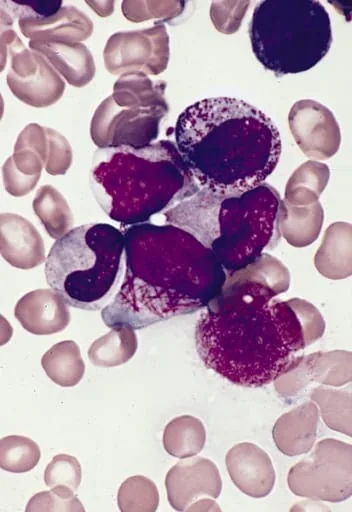
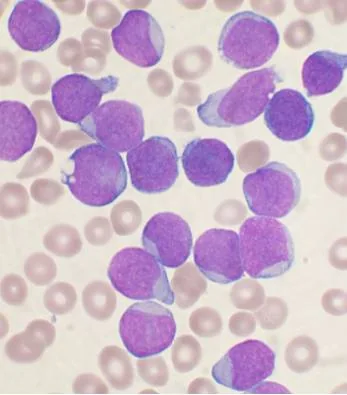
Leukemia is a group of cancers that starts in blood-forming tissue and causes large numbers of abnormal blood cells to be produced and enter the bloodstream.
Worldwide, over 250,000 people are diagnosed with leukemia each year, accounting for 2.5% of all cancers. An estimated 75,000 new patients of leukemia will be diagnosed in Europe each year (around 40,000 in the USA).
All age groups can be affected; leukemia is the most common pediatric tumor (35% of cancers in children aged 0–14 years).
The breakthroughs in diagnostics, therapy, and improvements to therapy protocols have all led to long-term curing, with an overall five-year survival rate of almost 80% in children with Acute Lymphoblastic Leukemia (ALL).
There is an utmost need for new treatments and new high-tech devices that can help in customized therapy for leukemia. The MEDLEM Project addresses this challenge.
Cost-effective microfluidic electronic devices for optimal drug administration: project description
Implementing the MEDLEM Project will help detect high-risk patients, especially children, and improve the human condition during invasive treatment, which is chemotherapy. Its overall goal is to increase five and ten-year survival rates of patients with leukemia in Europe and globally.
The MEDLEM Project involves three research areas (Biomechanics, Medicine/Pharmacy, and Electronics) in a unique knowledge fusion to improve leukemia treatments.
Microfluidic devices will be designed and optimized, reaching breakthroughs in modeling, drug administration, and improvements in therapy protocols.
Furthermore, microfluidic devices that will manage drug delivery will be low-cost, lightweight, and shock-resistant. Long-term, high-quality research providing improvement and important progress in leukemia treatments will be built up.
Intensive scientific exchanges will be performed, which will enable the establishment of a new, standard, worldwide research area.
Scientific cooperation between Europe and developing countries should contribute to global approaches and solutions to this societal challenge.
Knowledge reached in the field will increase awareness of innovative solutions for leukemia treatment, providing significant benefits for European and worldwide society.
Edited by Lauren Durieux
This project has received funding from the European Union’s Horizon 2020 research and innovation programme under the Marie Sklodowska-Curie grant agreement No 690876 (MEDLEM project).


Check our Projects
FAQ – Microfluidics fighting against Leukemia: MEDLEM
Sum up the MEDLEM project in a single sentence.
MEDLEM, an international research project, is developing cost-effective microfluidic electronic devices to enhance leukemia treatment. Much attention is paid to the identification of high-risk patients and their treatment, in particular, children, and the optimization of the delivery of chemotherapy drugs.
What is so special about leukemia as a target of such technology?
Leukemia accounts for approximately 2.5% of all cancers in the world, and more than 250,000 new cases and approximately 75,000 new cases every year across the world and Europe (approximately 40,000 in the USA). It occurs in all ages, although there is a marked prevalence of leukemia in children, the most frequent childhood tumor, which causes an estimated 35% of cancers in children between the ages of 0 and 14 years. Nevertheless, even with the significant progress (survival rates in children with acute lymphoblastic leukemia are now approaching 80% over a period of five years), more meaningful tools for risk stratification and tailoring of therapy are urgently needed.
What is the precise way that microfluidics can be used to treat leukemia?
Microfluidic systems enable investigators and medical practitioners to:
- Recreate pertinent biomechanical and biochemical microenvironments of leukemia cells.
- Combine and dose test drugs in a very controlled and small volume format.
- Design instruments with fine spatial and temporal control of drug delivery.
It is the vision of MEDLEM that, someday, these microfluidic electronic devices will be inexpensive, lightweight, and shock-resistant, and therefore could be installed in high-end labs as well as in regular clinical settings.
What are the principal scientific disciplines of MEDLEM?
The project specifically combines three areas of research:
- Biomechanics, to appreciate the influence of physical forces and flows on the cells of leukemia and drug transportation.
- Medicine and Pharmacy to match the device’s design to actual clinical procedures and pharmacological limitations.
- Electronics, to incorporate directly into microfluidic devices, sensing, actuation, and control.
The main focus of this knowledge fusion is the following: The devices are not passive chips but microfluidic electronic systems intended to impact the functioning of leukemia therapy.
What is the clinical ambition, what will the patients be differing in the long run?
MEDLEM-type technologies should be implemented at scale to be of assistance:
- Earlier identification of high-risk leukemia patients (particularly children who may respond to lower-intensity treatment), and/or more adaptable treatment intensity.
- Enhance the experience of the patients undergoing invasive chemotherapy, such as by rounding off infusion profiles or minimizing unnecessary exposure.
- Triumph in five- and ten-year survival rates in Europe and globally through the facilitation of more personalized and sophisticated care.
What is the membership and geographical area of the MEDLEM consortium?
The project is a combination of five European organizations based in Serbia, Germany, and France, and three other partners based in New Zealand, Australia, and Thailand. This combination of European and non-European institutions is not by chance: leukemia is a global problem, and MEDLEM is designed to facilitate intensive scientific interactions and to create, as the partners quite clearly define, a new, conventional global research field in leukemia microfluidics.
MEDLEM European funding source?
The European Union has funded MEDLEM as part of the Marie Sklodowska-Curie grant programme under the Horizon 2020 research and innovation programme, with grant No. 690876. This model aims to foster high-quality international interactions and the mobility of researchers, and MEDLEM is a common form: it integrates advanced microfluidic engineering with clinically relevant issues in leukemia.
What are the particular benefits of microfluidic engineering over traditional bench-top assays?
Conventional assays used in leukemia studies often employ bulk cultures, static wells, and large volumes of reagents. Microfluidic devices, on the other hand, can provide:
- The control of flow and shear is very important for reproducing conditions in bone marrow and blood flow.
- Less use of samples and drugs, which is significant in pediatric specimens or when using costly therapeutic agents.
- The lack of robust connectivity for online sensing and electronic feedback, enabling dynamic protocols in place of fixed-time incubations.
In the case of MEDLEM, this would take the form of platforms that can more realistically model drug responses and resistance, enabling optimized therapy.
What other companies does MIC (Microfluidics Innovation Center) partner with in initiatives such as MEDLEM?
MIC is a microfluidics industrial and R&D collaborator that can convert conceptual ideas into robust platforms, including chip designs, flow management plans, electronic integration, and automation. In addition to MEDLEM per se, MIC has been a regular contributor to European consortia (Horizon 2020, Horizon Europe, MSCA), where its efforts in microfabrication, flow engineering, and scientific automation are instrumental in closing the gap between academic and commercial prototypes. An internal statistical analysis demonstrates a general doubling of the probability of proposal success in consortia containing MIC relative to official Horizon baseline rates, attributed to improved methodology, risk management, and valorisation.
In what way does MEDLEM actually relate Europe and the developing countries?
The consortium, by design, combines European institutions with partners in other countries, such as Thailand, where treatment challenges for leukemia and resource limitations vary. The project focuses on quality, high-level research exchange based on long-term collaboration, which aims to:
- Increase global awareness of the use of new microfluidics in treating leukemia.
- Cost-effective and strong device concepts, not only technically impressive, share protocols.
- Provide support for international policies and solutions to this social problem, not keep the effects confined to a few high-income hubs.
What can a new Horizon Europe consortium take as MEDLEM legacy?
Future consortia can also use MEDLEM to:
- Applications of microfluidic platforms to other hematological malignancies or minimal residual disease monitoring.
- Integrate microfluidic leukemia with high-end analytics (single-cell omics, AI-based risk stratification).
- Towards clinical integration and regulatory validation.
The inclusion of an SME in such projects is strategic: MIC has the capacity to design and manufacture microfluidic electronic devices, automate a system, and deliver prototypes, as well as play a significant role in the writing of proposals and plans of exploitation, which are two items that evaluators assess in scoring Horizon Europe projects.