Genome analyses helped by bioinformatics: MetaBLE
Author
Christa Ivanova, PhD
Publication Date
December 02, 2014
Status
Keywords
Genome analysis
Biocatalysts discovery
Bioinformatics
Bioremediation
Enzyme stability
Genome sequencing
extremophile-based enzymes
Your microfluidic SME partner for Horizon Europe
We take care of microfluidic engineering, work on valorization and optimize the proposal with you
A dozen of organisations from all over the world will unite around an innovative project: MetaBLE.
The main idea behind this project is to promote advanced bioinformatics in genome analyses research to discover new biocatalysts and, thus improve industrial bioprocesses.
Bioinformatics helping genome analysis: introduction
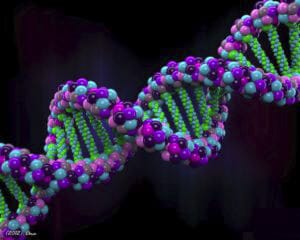
Once a genome is entirely known, we can find a vast amount of information in practically any area of biological research. This is why more than 4000 organisms have seen their genome analyzed during the past decade.
For instance, analysis of the human genome can help to understand diseases and then help to develop new medicines.
Moreover, the analysis of microbial genomes can also influence the research on evolution. Bioinformatics in this field is crucial to speed up the analysis of genomic data.
Bioinformatics helping genome analysis: project description
The main goal of the MetaBLE project is to identify the general mechanisms of environmental adaptation and to discover new biocatalysts to be exploited for industrial processes.
The first objective is to improve the services and tools available for genome sequence analysis.
Then, the discovery and optimization of new enzymes and new metabolic pathways will rely on the study of extremophiles, a source of enzymes with enormous stability under conditions regarded as incompatible with biological materials.
Download the MIC Horizon Europe 2026/2027 Calls Calendar:

Funding and Support
This project has received funding from the European Union’s Horizon 2020 research and innovation program under the Marie Sklodowska-Curie grant agreement No. 645693 (MetaBLE).
Check our Projects
FAQ – Genome analyses helped by bioinformatics: MetaBLE
What exactly was MetaBLE?
MetaBLE was an R&D initiative in Europe that applied state-of-the-art bioinformatics to the analysis of genomes and metagenomes, particularly those of organisms inhabiting extreme conditions, to identify the makeup of robust enzymes and to understand how microorganisms survive in high-stress environments. Shortly: sequence – annotate – mine – industry viable candidates.
What was the scientific gap that MetaBLE attempted to fill?
Many enzymes do not perform well under laboratory conditions. To find enzymes capable of remaining active at high temperature, salinity, pH, or pressure, under which normal biocatalysts freeze, the MetaBLE systematically screened extremophiles. It was believed that extremity-shaped genomes encode rougher biochemistry.
What was the type of data and methods?
The common inputs were whole-genome and metagenomic reads (long and short), assemblies, gene prediction and functional annotation (e.g., enzyme classes, pathways), orthology mapping, and comparative genomics. In a bottom-up approach, the group selected candidate biocatalysts through motif-, structure/function-, and pathway-based searches, followed by wet-lab validation.
How does the industry perform in terms of headlines?
Two lessons are important: (i) a prioritized pipeline to obtain stress-tolerant enzymes to ferment and green chemistry, and (ii) a better map of the adaptation mechanisms, which will allow engineers to tune bioprocess conditions instead of struggling with them. The objective in practice was to be able to screen enzyme candidates more quickly, go/no-go, and to do that by prioritizing the sequence with the highest potential in the first place.
So why is so much attention and focus given to the so-called extreme microbes?
Enzymes evolved in hot, saline, acidic, or high-pressure habitats tend to retain their shape, whereas more traditional ones are disulfated. This structural rigidity directly translates into broader operating ranges and improved stability in solvents or at high temperatures, attributes sought after in industrial catalysis and continuous-flow microreactors.
What is the role of microfluidics?
Although the foundation of MetaBLE was bioinformatics, its results are more akin to microfluidic screening and process-development miniaturized assays, rapid thermal cycling, controlled mixing, and single-cell or droplet workflows, which can be natural outputs for testing a large number of enzyme variants under well-defined conditions. It is one area in which the Microfluidics Innovation Center (MIC) is familiar with: lab-on-a-chip design, automated flow control, and droplet microreactors.
I am intending to prepare a Horizon Europe proposal in the field of genomics or bioprocessing. How could MIC help?
Usually, three, namely, (1) work-package leadership of microfluidic assays development and on-chip analytics; (2) developing the bioinformatics-to-hardware handoff (data-driven design of experiments, rapid prototiles); (3) input to proposal writing, exploitation, and demonstrators. We are developing milestones as co-design: TRL-prototypes, small-scale continuous reactors, or screening chips with which review panels are comfortable with implementation.
What was the learning of the consortium that is still useful today?
Two things continue to provide payoffs: (a) early high-quality annotation and orthology calls, the false-positive rate later is reduced by a major factor; (b) integrate bioinformatics ranking with microfluidic stress-tests, which simulate the desired process conditions, not generic media assays. The above combination delivers so-called true industrial enzymes more quickly than classical plate screens.
Can any of the information from MetaBLE be accessed or reused?
Overall descriptions include partners’ objectives and capabilities; fine-grained datasets and sequences are usually stored with the contributing partners or subject to conditions within the project. MIC can provide an equivalent set of workflows to you if you require similar workflows, such as data ingestion into the system, genome analysis, on-chip validation, or testing in a different organism or matrix.
Why take an SME into a Horizon consortium, and what was MIC doing?
MIC brings together microfluidic engineering, assay automation, and practice in tech transfer, between computational discovery and physical validation. Based on our experience with many consortia in the EU and projects aligned with the MetaBLE theme, adding an SME tends to accelerate prototyping and de-risk scale-up. On the inside, we can see that MIC’s participation is likely to increase proposal success rates compared with official baseline data for similar calls, since we integrate the depth of R&D with tangible deliverables (chips, rigs, workflows).