
The plant microbiome in pest control
Author
Christa Ivanova, PhD
Publication Date
March 14, 2024
Status
Keywords
plant microbiome
pest control
soil-crop interactions
sustainable cropping
socio-economic impact
biodiversity
microbiome composition
plant health
Your microfluidic SME partner for Horizon Europe
We take care of microfluidic engineering, work on valorization and optimize the proposal with you
The potential of the plant microbiome in soil management
The Horizon Europe call “Harnessing the multifunctional potential of soil biodiversity for health cropping systems” supports the Mission “A Soil Deal for Europe”, where expected key outcomes are enhanced soil and crop health, reduced dependence on external inputs, improved knowledge of soil biodiversity, expanded integrated pest management practices, and accelerated adoption of practices that promote soil and plant health.
Sustainable farming practices, the reduction of pesticide use and an emphasis on biodiversity will ultimately lead to an increased agricultural sustainability and contribute to climate change mitigation. The establishment of living labs is encouraged, facilitating the transition of novel agricultural techniques to real life applications.

How can microfluidics help with your Mission Soil project?
- Enable high-throughput screening to detect soil contamination like pesticides, heavy metals, pharmaceutical residues.
- Develop on-chip systems for microbiome composition analysis (bacteria and fungi)
- Develop microbiome-based plant protection
- Learn more about how the MIC contributes to soil health research in our project EDAPHOS.
What we can do as an SME partner for plant microbiome analysis:
The participation of SMEs is highly encouraged in Horizon Europe projects, since they are highly competent to bring new innovations to the market. In our case, we specialize in microfluidic technologies, and can develop a perfusion system to identify the bacterial or fungal strains present in the soil, as a marker of soil biodiversity, but we can also develop plant and soil protection solutions based on the native plant microbiome (phytomicrobiome).
Specifically, at the MIC we can develop:
- Innovative instruments tailored to your application
- Lab-on-chip for high-throughput fungicide and pesticide screening
- Bacterial strain isolation and identification
- Offer guidance on proposal writing and dissemination and facilitate bringing innovations to the market.
Scope of the Mission Soil call
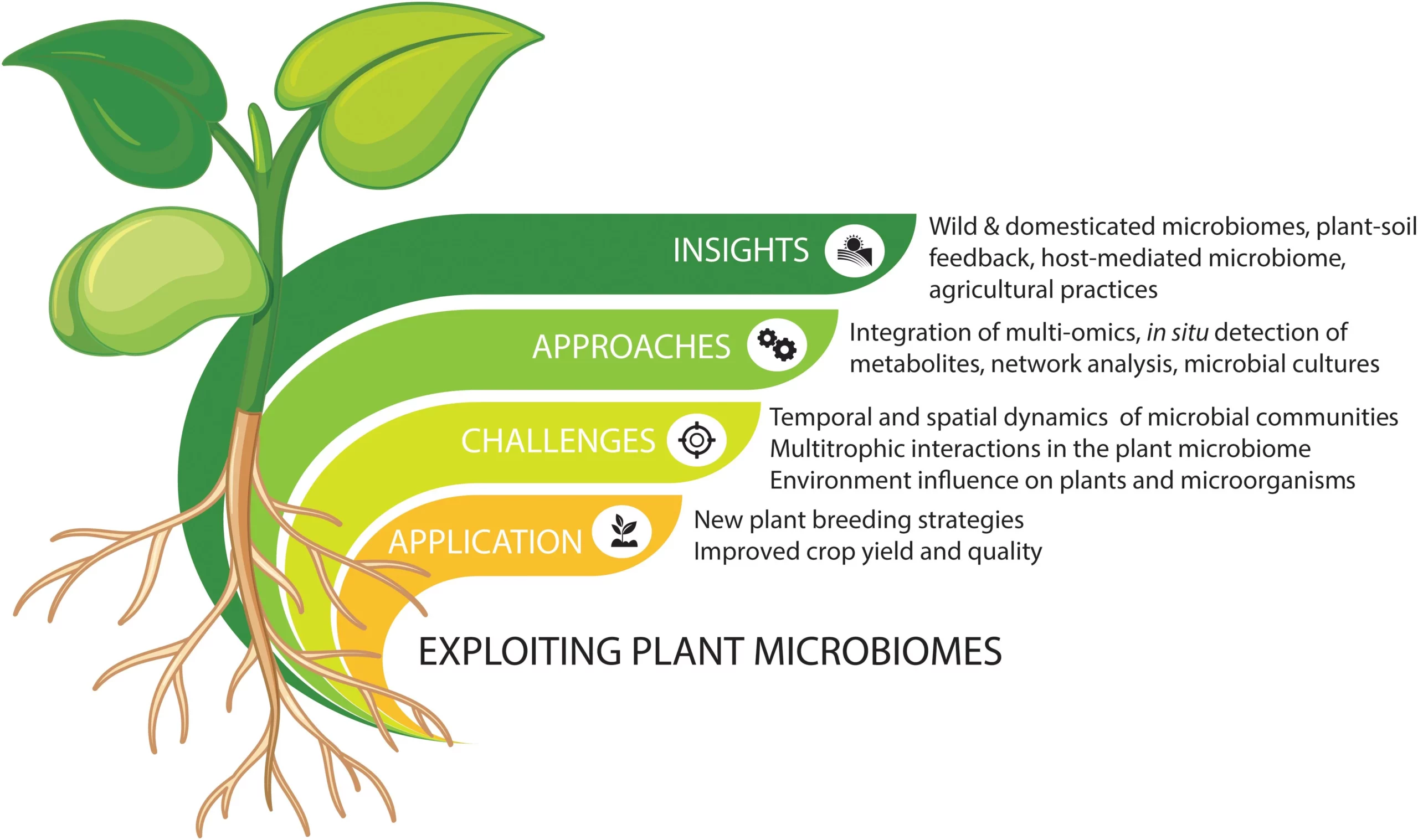
- Investigate soil biodiversity’s role in soil structure, nutrient cycling, water management, and pest control.
- Explore interactions between soil organisms, crops, and the environment to boost plant health and productivity.
- Develop and test innovative, site-specific soil management practices.
- Establish demonstration sites to validate and promote soil biodiversity benefits.
- Assess the socio-economic and environmental impact of proposed solutions.
- Create capacity-building materials and organize knowledge-sharing activities.
The MIC and European joint projects
We have extensive experience with European joint research proposals and have been an SME partner in over 50 granted projects to date. We will be glad to participate in your project! Besides Mission Soil, we are particularly interested in the following calls but remain open to any collaboration:
- Mission Cancer: Accessible and affordable tests to advance early detection of heritable cancers in European regions
- Mission Soil: Soil health, pollinators, and key ecosystem functions
- EIC Pathfinder: Solar-to-X devices for the decentralized prosumption of renewable fuels, chemicals, and materials as a climate change mitigation pathway
Deadlines of European Programmes 2026/2027
Get the MIC Horizon Europe 2026/2027 Calls Calendar:
-All Horizon Europe deadlines (by cluster and call).

The MIC already brings its expertise in microfluidics to Horizon Europe:
H2020-NMBP-TR-IND-2020

Microfluidic platform to study the interaction of cancer cells with lymphatic tissue
HORIZON-MISS-2022-SOIL-01

Development of soil remediation techniques and soil analysis using microfluidics

FAQ - The plant microbiome in pest control
What does the practical definition of the plant microbiome have?
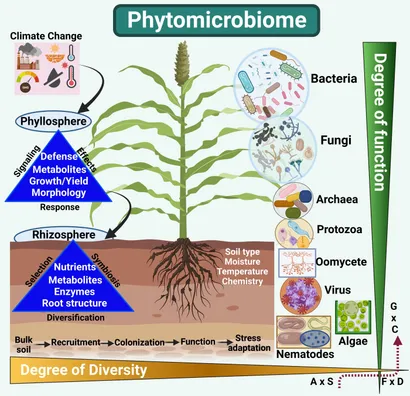
Consider it as the protruded physiology of the plant: bacteria, fungi, archaea, and protists that are on roots (rhizosphere), on the inside (endophytes), or on the outside (phyllosphere) of the leaf. This interaction modulates nutrient uptake, stress tolerance, growth signaling, and pest suppression.
This is connected to the EU Mission, A Soil Deal for Europe.
The Mission advocates for place-based Living Labs and Lighthouses that will achieve soil-health outcomes by 2030. The work of plant-soil microbiomes is at the core: restoring biological functioning, reducing external inputs, and demonstrating effects in practice (not just in vitro). Multi-actor co-creation, standardized monitoring, and site-soil replication are normally expected during calls.
What are the most suitable types of project: RIA, IA, or CSA?
The majority of the projects of biological mechanisms and tool-building become RIAs (100% funding of approved direct costs). IAs are typically demonstrated and deployed with farmers (70 percent with for-profits and 100 percent with non-profits). The territory of CSA is capacity building or networking (100%). Evaluators in microbiome proposals seek a clear path from the hypothesis to the prototype bioinoculant or practice, to the field effect, and to quantified benefits.
What is a competitive plant-microbiome proposal?
There are three ingredients which recur: (i) causal evidence across scales (omics – isolate/consortium tests – mesocosm/field), (ii) transparent statistics with pre-specified success thresholds (e.g. ≥ 15% yield stability under water stress or ≥ 30% drop in pest incidence versus local practice), and (iii) plausible engineering that makes experiments recoverable across soils, seasons and operators.
What are the common indicators of impact in the sector?
The best approach will be a balanced scorecard, which will include agronomic (yield stability, reduction of inputs per hectare) and soil-health (aggregate stability, microbial diversity/functional gene abundance, respiration), resilience (time-to-recovery after heat or drought), and pest/disease control (incidence, severity index). Include practical considerations, such as cost per hectare, applicability, shelf life, etc., so the findings apply to the ideas.
In what respect is it applicable to microfluidics?
Microfluidics compresses the discovery loop. You can: (i) screen hundreds of plant-associated strains and consortia under gradients of conditional conditions (pH, root exudates, antimicrobials), (ii) image root-microbe chemotaxis and biofilm formation at the single-cell scale, (iii) prototype delivery formats (droplets, hydrogels, encapsulation) that resist desiccation and UV, and (iv) executable automated assays that recapitate rhizosphere dynamics. This saves weeks of strain selection and de-risks field pilots.
What is actually being offered by MIC in such projects?
Our products include the design and development of tailored microfluidic chips, the integration of pumps, valves, and sensors, and the automation of assays that reveal plant outcomes in relation to microbial functions. The prototyping and validation core and backbone that we tend to lead (or co-lead) in Living Labs includes translating user demands into tools, repeatedly creating b-prototypes, field-trial instrumentation of clean data, and SOPs packaging. As an SME, we also contribute to work-plan architecture, TRL gating, and risk assessment.
Pitfalls that evaluators tend to indicate about microbiome proposals?
Some of the microbiome proposals overlap: generalizing from one soil, mixing nutrient effects with actual microbial activity, inconsistent metadata, and poor storage/delivery plans for inoculants. The replication must span at least two edaphic settings: an abiotic control site, and weather, management, and predefined conservation and delivery conditions (e.g., viability ≥80% after 3 months at ambient) must be included.
Regulation, ethics, and data governance: how do we cope with them?
Compliance with GMO/GMM where applicable, transparent biocontrol registration roadmaps, and bio-safety in the management of plant pathogens. Adhere to FAIR principles, prepare a Data Management Plan in advance, and coordinate protocols by site.
What TRLs are realistic?
Discovery and lab validation TRL 3-4. Mesocosm and first on-farm pilots normally target TRLs of 5-6 by mid-term of the project, and multi-site validation and near-market formulations by the end of the project, at TRLs of 6-7. Microfluidic tooling can also increase the number of hypotheses that you test in the same time period and produce strong and similar datasets.
What would a 36-month workable plan look like?
Months 0-6: isolate/consortium selection, assay automation, baseline soil measures. 6-12: formulation and delivery tests, first mesocosms. 12-24: expanded field validation, shelf-life and logistics tests, regulatory dossier preparation, and exploitation planning (licensing, manufacturing, training kits). The 0-12 window is normally compressed by MIC using parallel rapid-prototyping lines.
What do we need to prepare before contacting MIC?
A little blurb with (i) crop and farming background, (ii) threats to targets (e.g., root pathogens, drought), (iii) measurable outcomes that you are interested in, (iv) candidate locations, soil limitations, and management, and (v) topic identification and likely results in the case that a particular call is made. Using this, we can suggest an architecture, partners, budget logic, and an instrumentation plan that maintains a tight learning loop.
Bio-based experiments used to de-risk plant-microbiome interactions?
Microreactors. Root-on-a-chip chemotaxis assays on controlled exudate gradients; droplet microreactors: high-throughput co-culture compatibility; micro-encapsulation: temperature, UV, desiccation stress tests; micro-porous soil analogues: motility, colonization. These, paired with image and signal analysis aided by ML, provide early, discriminative readouts that correlate with field results.